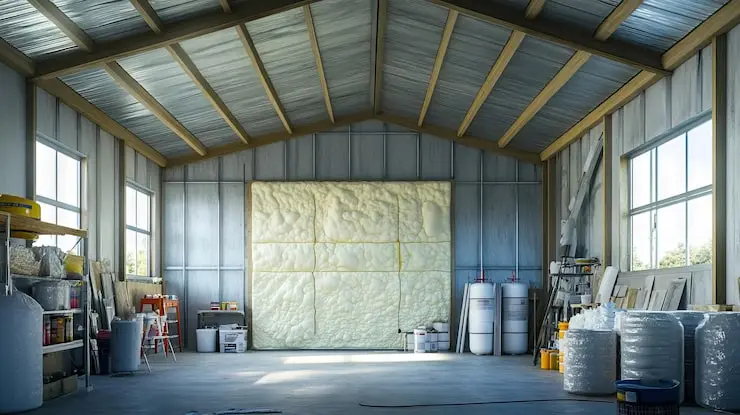
Insulating a garage is one of those home projects that sounds simple until you actually look into it. Some people do it to stay warm in winter. Others want to protect stored items, reduce energy bills, or turn the garage into usable space. The problem is that most advice online skips over the real questions homeowners have, like whether insulation is even worth it for their garage, what type actually works, and how much it really costs. This guide walks through everything you need to know about insulating a garage, from deciding if it makes sense to choosing materials, understanding R-values, and avoiding common mistakes. Whether you plan to do the work yourself or hire a professional, you’ll leave with a clear plan instead of guesswork. Do You Really Need to Insulate Your Garage? Before getting into materials and steps, it’s worth asking a simple question: do you actually need to insulate your garage? The answer depends on how your garage is built and how you use it. Attached vs detached garages If your garage is attached to your house, insulating it usually makes sense. Heat moves easily through shared walls and ceilings. A cold garage can make nearby rooms harder to heat in winter and hotter in summer. Insulating garage walls and ceilings can reduce that energy loss and improve comfort inside the home. Detached garages are different. If you only use the space for parking and basic storage, insulation may not provide much benefit. But if you spend time out there or store temperature-sensitive items, insulation can help stabilize conditions. How you use the space Insulating a garage makes the most sense if you: Use it as a workshop or home gym Store tools, paint, or electronics Have plumbing that could freeze Plan to convert it into living space Want better temperature control year-round If the garage is rarely used and completely separate from the house, insulation may not be a priority. How Much Does It Cost to Insulate a Garage? Budgeting is where most homeowners get stuck. In 2026, material prices have stabilized, but labor remains at a premium. Here is a breakdown of what you can expect for a standard 2-car garage (~400 sq. ft.). 2026 Cost Comparison Table Material Type Material Cost (per sq. ft.) Total DIY Cost (Est.) Professional Cost (Installed) Fiberglass Batts $0.40 – $1.50 $800 – $1,200 $1,800 – $2,500 Mineral Wool $1.40 – $3.50 $1,300 – $1,900 $2,400 – $3,200 Rigid Foam Board $1.00 – $2.50 $900 – $1,500 $2,000 – $3,000 Spray Foam (Closed Cell) $1.50 – $4.50 N/A (Pro only) $3,500 – $6,000 PRO TIP: When calculating how much does it cost to insulate a garage, don’t forget to budget $200–$400 for a dedicated garage insulation kit for your door. It is the single most important part of the project. How Do I Prepare to Insulate My Garage? Preparation is the difference between a project that lasts 30 years and one that rots your studs in five. Declutter the Perimeter: You need full access to the wall studs. Remove all shelving, hooks, and wall-mounted racks. The “Leak Audit”: Insulation stops heat transfer, but it doesn’t stop air. Use a can of expanding foam to seal gaps where wires penetrate the top plate and around window frames. This is a critical step in how to insulate a garage effectively. Moisture Check: Look for “efflorescence” (white powdery salt) on concrete walls. If your garage has moisture issues, you must fix the exterior drainage or apply a waterproof masonry sealer before installing batts. What Type of Insulation Should I Choose? Choosing the right garage insulation r value depends entirely on your climate. R-value measures a material’s resistance to heat. Fiberglass Batts: The go-to for insulating garage walls. It’s DIY-friendly but requires a vapor barrier in cold climates. Mineral Wool: Brands like Rockwool offer superior fire resistance and soundproofing. It doesn’t sag over time and repels water. Reflective Foil: In places like Florida or Arizona, the best way to insulate a garage door is using radiant barriers to reflect the sun’s heat back outward. Recommended R-Values for 2026 Walls: Aim for R-13 to R-15 in the South; R-19 to R-21 in the North. Ceilings: Aim for R-30 to R-40. What Are the 6 Steps to Insulate a Garage? Follow this checklist to ensure a professional-grade finish. Step 1: Seal the Gaps Before you touch the insulation, seal every crack. Use high-quality caulk for small gaps and expanding spray foam for larger holes around plumbing and electrical outlets. Step 2: Install Attic Baffles (Ceiling Only) If you are insulating the ceiling, you must maintain airflow to your roof. Staple foam baffles (rafter vents) to the roof sheathing to prevent your new insulation from blocking the soffit vents. Step 3: Fit the Insulation Snugly When how to insulate garage walls, “snug” is the keyword. Cut your batts about a half-inch wider than the stud cavity. Tuck them in so they are flush with the studs. Crucial: Do not compress the material. Squishing insulation kills its R-value by removing the air pockets that trap heat. Step 4: Add the Vapor Barrier In colder regions, stapling a 6-mil poly vapor barrier over the studs prevents your breath and car exhaust moisture from condensing inside the walls, which leads to mold. Step 5: Insulate the Garage Door The door is a giant thermal hole. Use a specialized garage insulation kit or cut rigid foam boards to fit the panels. This is often cited as the best way to insulate a garage door because it significantly reduces the vibration and noise of the door as well. Step 6: Cover with Fire-Rated Drywall In most jurisdictions, you cannot leave insulation exposed. It is a fire hazard. Install 5/8-inch Type X drywall. Not only is this safer, but it also gives your garage a finished, professional look. Common Garage Insulation Mistakes Even good materials won’t help if installation is done poorly. Skipping air sealing: Insulation without air sealing allows
- (559) 908-2189
- junkmasterz@yahoo.com
- Fresno, CA 93725
- (239)-543-217-0108