Commercial Junk Removal

How Much Does an Estate Cleanout Cost in 2026?

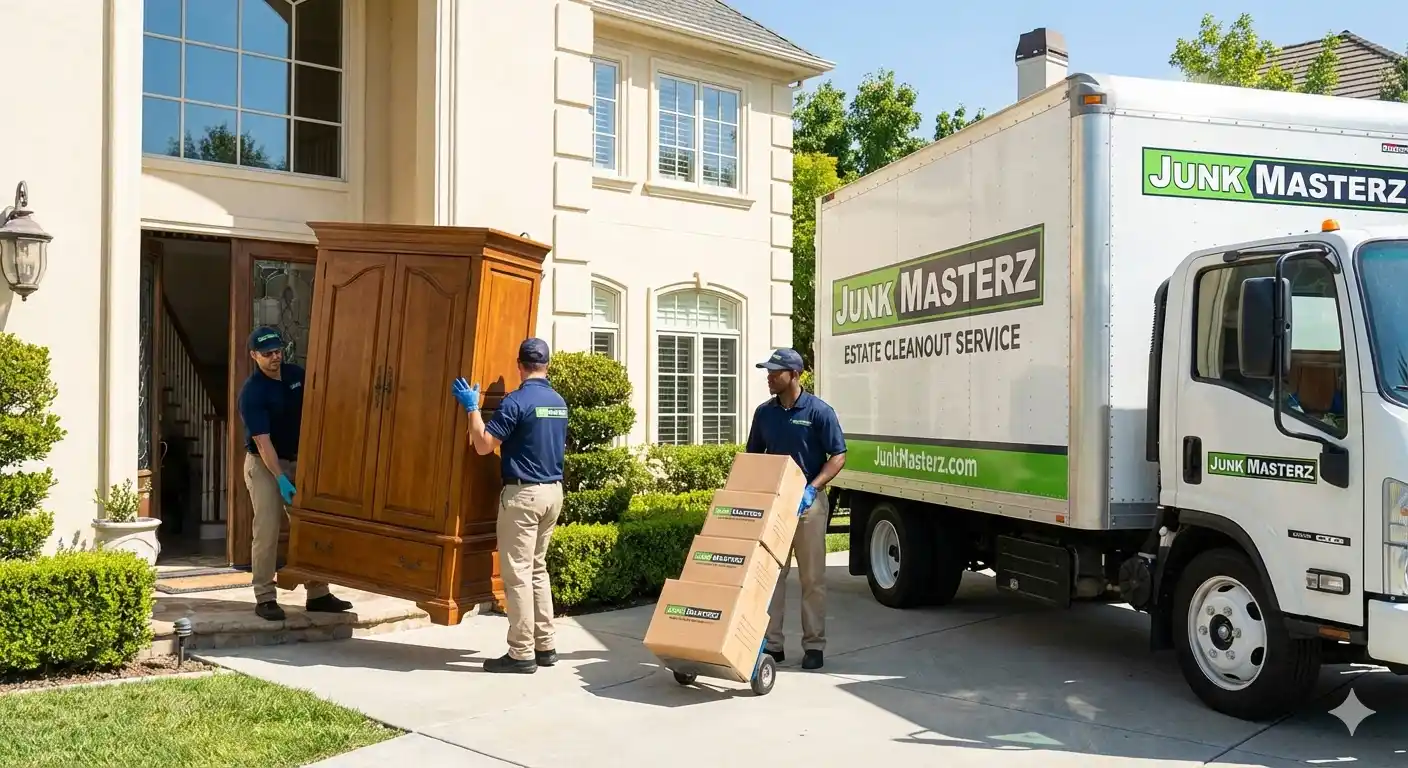
Clearing out a home after a death in the family, a move to assisted living, or a foreclosure is rarely just about hauling furniture. It’s decades-old boxes, a closing date that won’t wait, and one question that keeps coming up: how much does an estate cleanout cost? At Junk Masterz, we’ve cleared hundreds of these homes across Fresno and the Central Valley, and pricing depends on far more than square footage. Most estate cleanouts run between $900 and $6,000. Small apartments can start near $600, while large or heavily cluttered homes can top $8,000, depending on what’s inside and how fast it needs to go. Key Takeaways Estate cleanout services cost typically falls between $900 and $6,000 for most homes. Labor hours and disposal volume affect the price more than square footage alone. Hidden charges like stair fees and long carry fees can add hundreds of dollars if they aren’t discussed upfront. Donating usable items can lower your final invoice and may qualify for a tax deduction. Hoarding, biohazards, or structural damage raise estate cleanout costs significantly. Average Estate Cleanout Cost by Home Size Property Type Average Cost Studio or 1-Bedroom $600 to $1,300 2-Bedroom Home $900 to $2,200 3-Bedroom Home $1,500 to $3,800 4 to 5 Bedroom Home $2,800 to $5,800 Hoarder Estate $4,000 to $10,000+ Luxury Estate $5,500 to $12,000+ These ranges cover labor, hauling, and standard disposal. Specialty work such as biohazard cleanup or document shredding is usually quoted separately once a crew has seen the property. What Actually Drives Estate Cleanout Cost Property Size and Content Density Square footage sets a baseline, but density decides the real number. A one-bedroom apartment packed floor to ceiling after forty years of accumulation can cost more to clear than a lightly furnished four-bedroom house. Two homes with the same floor plan can land $2,000 apart once a crew actually starts loading, simply because of what’s inside them. Labor, Accessibility, and Disposal Fees A ground-floor home with driveway access clears faster and cheaper than a third-floor walk-up where every box has to be carried down by hand. Add stairs, narrow hallways, or limited parking, and labor hours climb. Disposal fees also shift with what’s inside: electronics, appliances with refrigerant, and mattresses often carry their own separate charges. Specialty Items and Hidden Fees Pianos, gun safes, hot tubs, and pool tables need extra hands and sometimes special equipment, which is why they’re priced as add-ons rather than folded into a flat rate. Ask for these upfront. Long carry fees, stair fees per flight, and rush fees for same-day scheduling are the most common charges that catch families off guard when they weren’t spelled out in the original quote. What’s Included (and What Isn’t) in Estate Cleanout Services Cost Most full-service cleanouts include room-by-room removal, garage and attic clearing, donation drop-off coordination, and a basic broom sweep once the home is empty. What typically isn’t included: deep carpet cleaning, antique or jewelry appraisal, mold remediation, and any repair work. Asking about these exclusions before booking saves you from a surprise on invoice day. Estate Cleanout vs Junk Removal vs DIY Junk removal crews haul what you point at. An estate cleanout team sorts an entire household into keep, donate, and dispose piles, which is a different job entirely and explains why estate cleanout cost runs higher than a standard pickup. DIY can look cheaper on paper, but truck rental, dump fees, and several lost weekends add up fast, especially when there’s a closing date attached to the property. For executors or property managers handling more than one unit at a time, this decision gets more complex. Junk Masterz also provides Commercial Junk Removal Fresno CA for landlords and property managers clearing multiple units on the same timeline, which is often more efficient than scheduling separate estate cleanouts unit by unit. Legal Basics: Who Can Authorize the Cleanout Before anyone loads a truck, confirm who has legal authority to order the work. In most cases, the executor named in the will directs the process. Without a will, state intestacy laws determine who that person is. Many companies also give family members a short window to walk through and claim personal items before the crew starts, since sentimental pieces can get overlooked once boxes start moving. A Recent Fresno Estate Cleanout Example A three-bedroom home in Fresno had a packed garage and an attic full of boxes dating back to the 1990s, with a family living out of state and one week before the property hit the market. A four-person crew worked eight hours, filled four truckloads, and set aside about a third of the items for donation. The invoice came to $2,900, with every item photographed and logged for the family’s records. When Estate Cleanout Cost Increases A handful of situations push pricing above the standard range: biohazard cleanup, mold that needs containment before items can be moved, pest infestations requiring extermination first, hoarding density, structural damage, leftover agricultural chemicals common across Central Valley properties, and medical waste like needles or oxygen tanks that require licensed handling. How to Reduce Estate Cleanout Cost Sorting keepsakes yourself before the crew arrives saves labor hours immediately. Donating usable furniture can cut $100 to $500 off the total and may qualify for a tax deduction if you keep receipts. Getting three written quotes instead of one phone estimate routinely saves families $100 to $1,000 or more. Scheduling during a non-rush week also avoids same-day and weekend surcharges. Questions to Ask Before You Sign a Quote Ask whether the quote includes disposal fees or adds them later, whether the company is insured for damage during removal, and whether stairs or long carries were factored into the number you were given. A company that can walk you through exactly how they built your quote is worth trusting more than one that hands you a flat number with no explanation. Conclusion So, how much does an estate cleanout cost? For most families, somewhere between $900 and $6,000, shaped

How to Dispose of Fire Extinguisher: Complete Guide

How to Dispose of Old Fire Extinguishers: Complete Guide That red cylinder in the corner of your garage looks harmless, but it is a sealed pressure vessel packed with a chemical agent. Tossing it in the bin can injure a sanitation worker, and anyone searching for how to dispose of old fire extinguishers runs into conflicting advice. Some sources say to empty it and throw it away, while others say never to touch it.  The right answer depends on the type and condition of your unit. This guide from Junk Masterz explains what is safe, what is not, and where each type should go, so you can clear it safely.  Quick answer: Take full, partly full, damaged, or unidentified units to a household hazardous waste (HHW) site or a licensed fire equipment service. Never use household trash or curbside recycling. Only a fully empty cylinder that meets your local rules belongs in scrap metal. Why Proper Disposal Matters Fire extinguishers hold their agent under pressure. A cylinder crushed in a garbage truck can rupture, or its valve can fail and blast powder at the nearest worker. The agents can also reach soil and storm drains, and in California, household hazardous waste is not allowed in regular trash. That makes fire extinguisher disposal a hazardous waste question first and a junk question second. The U.S. EPA’s household hazardous waste guidance explains why products like this need separate handling. How To Dispose Of Old Fire Extinguishers? Confirm the unit is ready to retire, then choose the route that matches its condition. Signs it is time to dispose: Age: Check the manufacture date on the label or cylinder base. Most disposable home units are retired after roughly 10 to 12 years. Gauge: The needle sits in either the red zone or the gauge is missing or broken. Damage: Dents, rust, cracks, bulges, or a corroded valve. Use: Any discharge, even a short burst, because pressure can keep dropping afterward. Recall: Check the model number on the Consumer Product Safety Commission recall list. Expired does not mean empty. How to dispose of an expired fire extinguisher is therefore the same question as for any pressurized unit, and the answer is HHW or a licensed service. Your disposal options: Recharge or service. A licensed technician can refill many metal-valve units. Plastic-valve disposables cannot be refilled. HHW site or collection event. Best for full, partly full, or unknown units. Check Fresno County or your city’s solid waste page for current sites and hours, and call before you go. Licensed fire equipment service. The right choice for CO2, wet chemical, halon, and commercial units. Local fire department. Some accept old units. Call the non-emergency line first. Scrap metal yard. Only for a fully discharged cylinder that meets the yard’s rules. Junk removal. Junk Masterz does not haul units that still hold pressure or contents, but our Residential Junk Removal crew can clear the rest of the cleanout and point you to the right drop-off. Replace first, then dispose. Mount the new unit before the old one leaves, so you are never unprotected. Which Situation Are You In? (Decision Table) Your extinguisher Best next step Green gauge, under about 10 years, no damage Keep it and schedule an inspection Rechargeable, used or low Licensed service for recharge Disposable, used, expired, or low HHW drop-off Dented, rusted, bulging, or leaking Do not discharge it. Call HHW or a licensed service first CO2, wet chemical, halon, or Class D Licensed service or HHW only Unknown age, type, or contents Treat it as full and pressurized What should you do with a partially used extinguisher? Treat it like a full one. A half-spent unit still holds pressure and agent, so it goes to HHW or a licensed service, not into a weekend project of emptying it at home. Types of Fire Extinguishers & Type-Specific Disposal The label shows the class letters and the agent. Each type is handled differently. ABC Dry Chemical. The common home and garage unit, filled with monoammonium phosphate powder that irritates eyes and lungs. Full units go to HHW, and a verified empty steel cylinder can usually be scrapped. CO2. Usually has no gauge and a hard horn instead of a hose. The cylinder holds very high pressure, so leave it to HHW or a licensed service. Wet Chemical (Class K). Built for kitchen fires and filled with an alkaline potassium solution. Treat it as hazardous waste and never pour it down a drain. Water and Foam. Plain water units are the simplest. Older foam agents can contain fluorinated chemicals, so keep foam out of the ground and storm drains and take it to HHW. Halon and Clean Agent. Older halon units, sometimes found in vehicles or equipment rooms, contain ozone-depleting gas whose release is restricted. A licensed service must recover the agent. Class D. Industrial units for metal fires, filled with specialty powders. Service and disposal are professional-only. Also Read: How to dispose of old gas cylinders  How to Remove Pressure Safely? Not every unit should be discharged, and many HHW sites prefer a full unit as is. Consider it only for an undamaged stored-pressure ABC or water unit when a recycler asks for an empty cylinder. Call the HHW site or scrap yard and ask whether they want it full or empty. Wear goggles, gloves, long sleeves, and an N95 or better mask. Go outdoors to open ground, upwind, away from people, pets, vehicles, and storm drains. Pull the pin, aim at bare ground or gravel, and squeeze in short bursts until nothing comes out. Wait a day or two, then squeeze again outdoors to check for leftover pressure. Leave valve removal to the recycler or a technician, because unscrewing a valve on a pressurized cylinder is dangerous. If you hear hissing at the valve or see damage, stop and call a licensed service. Once a cylinder is verified empty, tape on a note with the word EMPTY and the date. What to do

How to Dispose of an Old Laptop Safely: A Step-by-Step Guide for 2026

An old laptop in a drawer is not as harmless as it looks. It can still hold saved passwords, tax files, family photos, and a lithium-ion battery that does not belong in a garbage truck. If you have been putting off how to dispose of old laptop gear because every answer online feels half-finished, this guide covers the whole job in the right order, from backing up your files and wiping your data to choosing a safe drop-off or recycling option.  Junk Masterz wrote it for anyone who wants to clear the clutter without creating a privacy or fire problem.  The Short Answer: Safest Way to Get Rid of an Old Laptop Copy what you want to keep, sign out of every account, and run a full reset that wipes the drive. Then donate the laptop if it still works, or send it to a certified electronics recycler if it does not. Keep it out of household trash, because the battery can ignite and the metals inside can contaminate soil and water. Before You Dispose of It: Keep, Repair, or Repurpose? Disposal is the last step, not the first. Ask three quick questions. Does it still boot? Would one inexpensive part, like more memory or a new solid-state drive, fix your real complaint? Could a lightweight operating system make it useful again? If any answer is yes, a second life can beat any recycling program. A slow laptop still works as a homework machine, a photo backup station, or a dedicated media player. One limit applies: a laptop that no longer gets security updates should stay away from banking and email. When none of this fits, you can focus on what to do with old laptop computers that have truly reached the end. Find Your Path: Match Your Laptop’s Condition to the Right Option The best choice depends on the state of the machine. Use this table as a starting point. Condition Best option What to avoid Works fine Sell, trade in, or donate Handing it over before a full reset Old but working Donate to a refurbishing program or school Assuming nobody wants it Slow or outdated Repurpose, or recycle if repairs cost more than it is worth Selling for parts without wiping Cracked or broken Certified recycler Tossing it in the trash Won’t turn on Certified recycler with documented data destruction Skipping data protection because it is “dead” Swollen battery Battery drop-off, handled with care Charging, pressing, or puncturing it Look at the “won’t turn on” row again. A dead motherboard does not mean a dead drive. The storage often survives and can be read from another machine, so a broken laptop needs the same data care as a working one. Why Proper Laptop Disposal Matters Three risks are involved. The first is your data. Deleting files or emptying the recycle bin only removes the pointers, and recovery software can often bring the files back. A buyer, a repair shop, or a thief can run that software in minutes. The second is the battery. Lithium-ion cells can short out when crushed, which is exactly what happens inside a garbage truck. The third is the materials. Laptops hold metals worth recovering and substances that should stay out of landfills, and the U.S. Environmental Protection Agency explains how electronic waste recycling keeps them in use. Anyone researching how to safely dispose of a laptop is really solving all three problems at once, which is why the order of the steps matters. Pick Your Data-Risk Level Before You Wipe Not every laptop needs the same treatment. Decide which level fits yours. Level 1, everyday use: Browsing, streaming, and personal photos. A full reset with the clean-drive option is enough. Level 2, banking, work, or client files: Turn on full-disk encryption first, then run the reset, so anything left behind is unreadable without the key. If the drive is removable, consider destroying it instead. Level 3, confidential or regulated data: Medical, legal, or financial records belong here. Skip the DIY reset and use a recycler that follows the NIST 800-88 media sanitization guidelines and gives you a written certificate, or destroy the drive physically. Pre-Disposal Checklist: Back Up, Sign Out, Unpair Whatever your plan for how to dispose of old laptop hardware, start here. Back up to two places. Check Downloads, Desktop, browser bookmarks, saved passwords, and local email archives. Open a few files from the backup to confirm they work. Sign out and remove the device from cloud storage, device-location services, your password manager, and any software that limits licensed devices. Unpair Bluetooth accessories and remove SD cards, USB drives, and SIM cards. How to Wipe a Laptop: Software Reset vs Physical Destruction A software reset suits laptops that run. Physical destruction suits laptops that do not, or data that cannot risk exposure. Laptops That Still Turn On On Windows, open Settings, then System, then Recovery, choose Reset this PC, pick Remove everything, and switch on the option that cleans the drive. Newer Macs offer Erase All Content and Settings, while older Intel models need Recovery mode and Disk Utility. On a Chromebook, run a Powerwash. Drive type matters. Overwriting tools work on spinning hard drives but are unreliable on solid-state drives, which spread data across memory cells. For an SSD, rely on the built-in reset plus encryption. When it finishes, the laptop should boot to a fresh setup screen. Take a photo of it for your records. Laptops That Won’t Power On or Have Soldered Storage Check whether the drive is removable. Many laptops hide it behind a bottom panel held by small screws. A spinning drive can be destroyed by drilling through the platters. With an SSD, the damage must reach the memory chips, and one hole through the board is no guarantee. Wear eye protection either way. Thin laptops often have storage soldered to the board. For a unit like that which will not power on, the practical answer to how to dispose of laptop computer models

How Much Does Mattress Removal Cost in 2026

Getting an old mattress out of the house is rarely as simple as it sounds. It is heavy, awkward through hallways, and most curbside services will not take it without special arrangements. If you have ever wrestled a queen mattress down a flight of stairs alone, you understand why so many people search for how much mattress removal costs before attempting it.  The honest answer: cost depends on size, material, distance to the truck, condition, and location. At Junk Masterz, we haul dozens of mattresses from Fresno-area homes monthly, and real pricing patterns often differ from generic national averages published elsewhere. Quick Answer Mattress removal typically costs between $75 and $180 for professional pickup, depending on size, weight, and access difficulty. DIY drop-off at a landfill or recycling center usually runs $20 to $60, while donation is often free if the mattress is in good condition. In Fresno, CA, most homeowners pay between $80 and $150 for a standard queen or full mattress pickup. Quick Cost Summary National Average at a Glance Across the U.S., professional mattress removal generally falls between $75 and $160 per mattress. Larger sizes like king and California king push toward the higher end, especially in cities with limited disposal facilities. Fresno, CA Average at a Glance Locally, Fresno pricing tends to run slightly below major metro averages because of lower labor and fuel costs. A standard twin or full mattress usually costs $75 to $110, while a queen or king runs $100 to $160 depending on access. Cost Factors That Affect Mattress Removal Pricing Several variables combine to determine your final mattress removal cost. Understanding them helps you get an accurate quote instead of a rough guess. Size Larger mattresses weigh more and take up more truck space, which raises the price. Mattress Size Professional Removal DIY Drop-Off Twin $75 to $90 $20 to $30 Full/Double $85 to $110 $25 to $35 Queen $100 to $130 $30 to $40 King $120 to $160 $35 to $50 California King $130 to $175 $40 to $60 Material Denser materials are harder to move and process at recycling facilities, so they typically cost more to remove. Mattress Type Removal Cost Why Innerspring $90 to $120 Lightest; metal coils have resale value Memory Foam $110 to $140 Very dense, 20 to 30 lbs heavier than innerspring Hybrid $105 to $135 Labor-intensive to separate springs from foam Latex $125 to $150 Heaviest and most difficult to process Access and Removal Difficulty The path from your bedroom to the truck matters as much as the mattress itself. Stairs can add $15 to $30 per flight, narrow hallways can add $20 to $40, and long carry distances beyond the first 50 feet often add another $15 to $25. A third-floor walk-up with no elevator can realistically add $60 to $90 to your final bill because it takes longer and often requires a third crew member for safety. Geographic Location Factors Where you live shapes your mattress removal cost in ways that go beyond simple supply and demand. Major metropolitan areas Cities like Los Angeles and San Francisco see rates of $150 to $200 because of higher operating costs, parking restrictions, and stronger demand. Suburban areas Suburbs typically fall between $90 and $140, with easier parking and access offsetting slightly lower competition. Rural areas Rural pricing varies widely. Some areas charge less because of lower overhead, while others charge more due to long travel distances between jobs. State and local regulations States like California fund mattress recycling programs through small fees collected at purchase, which often lowers or eliminates drop-off costs at approved sites. Disposal facility availability Areas with more recycling centers and donation sites tend to have more competitive pricing, since haulers have more affordable places to take the mattress. Condition Good condition mattresses Clean, stain-free mattresses with no structural damage often qualify for donation, which can save $75 to $150 in removal costs. Minor wear and tear Standard wear does not usually trigger extra fees. Expect typical rates of $90 to $130. Bed bugs or pest infestations Infested mattresses require sealed bagging and special handling, adding $50 to $100 to the total. Severe damage, mold, or biohazard contamination Mattresses with mold or bodily fluids require specialized disposal and can cost $150 to $250 or more. Wet or water-damaged mattresses Water adds significant weight, often adding $20 to $40 to the price and disqualifying the mattress from donation. Tipping Tipping is optional but appreciated, especially when a crew navigates stairs or tight hallways. Most customers tip $10 to $20 per mover. What’s Included in Professional Mattress Removal Standard Inclusions A full-service pickup usually covers carrying the mattress from wherever it sits inside your home, loading it onto the truck, transporting it, and disposing of it properly at a donation center, recycling facility, or transfer station. What’s NOT Included (and costs extra) Box spring or bed frame removal, extermination services for pest-infested items, and same-day rush scheduling are typically billed separately unless you confirm them upfront. Always ask what is bundled into the quoted mattress removal cost before the crew arrives, so there are no surprises at the door. Real Job Example: Queen Mattress Pickup Cost Breakdown in Fresno, CA To give you a realistic picture rather than a generic estimate, here is how a typical Junk Masterz queen mattress pickup breaks down in the Fresno area. Labor + Fuel + Disposal Fee Breakdown A recent job involved a queen innerspring mattress on the second floor of a home with a narrow stairwell. The base removal fee was $95, a $20 stair surcharge applied for the second-floor carry, and disposal at a certified recycling partner added $15. There was no contamination or pest issue, so no additional fees applied. What the Customer Actually Paid The final total came to $130, which the customer paid on-site after confirming the price matched the phone quote. Jobs like this are common enough that we can say with confidence: most Fresno queen mattress pickups without major

How Much Does Junk Removal Cost? [2026 Complete Pricing Guide + Calculator]

Staring at a garage full of broken furniture, old appliances, and boxes you’ll never open again? Before you start hauling anything to the curb, the first question on your mind is probably how much does junk removal cost. The honest answer is that it depends on how much you’re getting rid of, what it is, and where you live, but most homeowners land somewhere between $150 and $600 per job.  At Junk Masterz, we get this question daily from homeowners across Fresno, so we put together a clear, no-nonsense breakdown of what you’ll actually pay in 2026. Quick Answer: How Much Does Junk Removal Cost? For a single item or a small pile, expect to pay $100 to $225. A half truckload typically runs $350 to $500, and a full truckload can reach $600 to $900 or more. This is the average cost of junk removal most companies quote, and it’s based primarily on how much space your items take up in the truck, not just the number of pieces you’re hauling away. Average Junk Removal Pricing in 2026 Load Size Typical Cost Minimum Pickup $100 to $175 1/8 Truck $150 to $225 1/4 Truck $225 to $325 1/2 Truck $350 to $500 3/4 Truck $500 to $650 Full Truck $600 to $900+ These numbers shift based on your city, the type of debris, and any special handling your items need. If you’re wondering how much is junk removal for your specific situation, a quick call for a free estimate will give you a firmer number than any generic chart. Junk Removal Cost by Item Sometimes you don’t need a full pickup, just one or two things gone. Here’s what individual items typically cost to remove: Furniture: Couches run $75 to $200, mattresses $50 to $150, dining sets and recliners $75 to $200 each. Appliances: Refrigerators and washers cost $75 to $200; water heaters $90 to $200. Freon-containing units like fridges and AC units sometimes carry a small extra handling fee. Electronics and e-waste: TVs, monitors, and printers usually run $50 to $150, since many contain materials that require special recycling. Specialty and heavy items: Pianos cost $200 to $500, hot tubs $200 to $600, safes $150 to $400, and pool tables $200 to $400 due to the disassembly involved. Yard and construction debris: Priced by weight or truckload, typically $100 to $800 depending on volume and material type. Junk Removal Cost by Job Type The kind of cleanout matters just as much as the volume. Here’s what different projects usually cost: Job Type Typical Cost Garage or Basement Cleanout $200 to $600 Estate Cleanout $400 to $1,200+ Eviction or Foreclosure Cleanout $300 to $900 Hoarder House Cleanout $600 to $2,500+ Office or Commercial Cleanout $300 to $1,000+ Storage Unit Cleanout $150 to $500 Estate and hoarder cleanouts sit at the higher end because they usually involve full-property access, sorting, and multiple truckloads. If you’re a business owner clearing out an old office or warehouse space, our Commercial Junk Removal Service Fresno CA handles these larger, more complex jobs with a dedicated crew. What Affects Your Final Price Location and Access Urban areas generally cost 10 to 20 percent more than rural ones because of higher disposal fees and labor costs. Within your own home, ground-floor items with easy truck access cost less than items stuck in an attic or up several flights of stairs. Hidden Fees to Watch For Stairs typically add $25 to $100 depending on floors and item weight. Hazardous materials like paint, batteries, and automotive fluids are priced separately, often $1 to $4 per pound, because they can’t go to a regular landfill. Same-day or weekend service usually adds 10 to 25 percent to your quote, so booking a few days out can save you money. Sample Pricing Scenarios (Illustrative Examples) To make these numbers more concrete, here’s how typical jobs break down. These are illustrative examples based on common job patterns, not specific invoices. A single-room furniture pickup (a couch, a mattress, and a side table) generally falls in the $150 to $250 range, since it’s roughly an eighth to a quarter of a truckload. A half-truck garage cleanout (boxes, old tools, a broken bike, some yard debris) typically lands between $350 and $500, depending on how much sorting and lifting is involved. A full estate cleanout (an entire house of furniture, appliances, and belongings) usually runs $600 to $1,200 or more, since it often requires a full truckload and sometimes multiple trips. How to Save Money on Junk Removal A few practical habits can meaningfully lower your bill. Move items to your driveway or curb yourself to cut labor costs. Book mid-week instead of weekends, and avoid the busy spring and early-summer season if your schedule allows. Separate anything sellable or donatable before the crew arrives, since less volume means a smaller bill. And always get two or three quotes, since prices for the same job can vary significantly between companies. DIY vs. Professional Junk Removal Renting a truck and hauling items yourself might cost $100 to $300 once you add gas and landfill fees, but it also costs you a full day of heavy lifting. For small, light loads, DIY makes sense. For anything involving stairs, heavy appliances, or a full house, hiring professionals is usually safer and, once you factor in your own time, not much more expensive. If you’re asking how much does it cost for junk removal versus doing it yourself, the real difference often comes down to how much your time and back are worth to you. Why Choose Us Junk Masterz offers upfront pricing with no surprise fees, fast scheduling, and a crew trained to handle everything from single-item pickups to full estate cleanouts. We prioritize recycling and donating usable items rather than sending everything straight to the landfill. Homeowners looking for reliable, transparent service can check out our Residential Junk Removal Services in Fresno, CA for pricing tailored to your specific cleanout. Conclusion So, how much

Color Palette