Recycle

How Much Estate Cleanout Services Cost in 2026

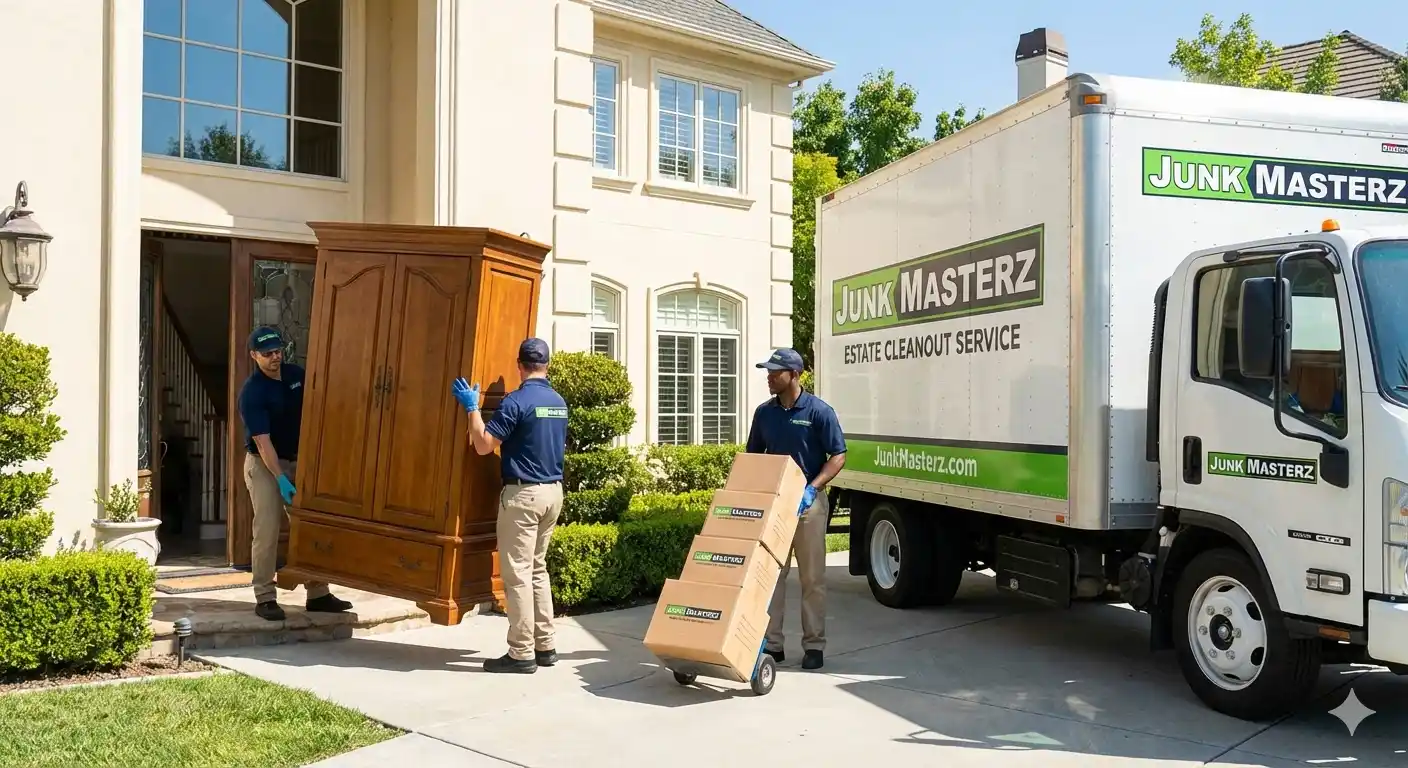
Dealing with an estate cleanout after losing a loved one or helping family move to assisted living is never easy. The emotional weight is heavy enough without worrying about costs. But here’s the reality: understanding estate cleanout services cost helps you plan better and avoid surprise bills during an already difficult time. Whether you’re clearing out a small apartment or a large family home, knowing what to expect financially gives you control. In this guide, we’ll break down everything about estate cleanout pricing, from average costs to hidden fees, helping you make smart decisions that honor your budget while respecting your loved one’s belongings. 2026 Estate Cleanout Cost Overview The national average estate cleanout cost in 2026 sits around $1,250, but that number tells only part of the story. Most families spend between $500 and $3,000, depending on key factors. Small apartments run $300 to $800, while three-bedroom houses cost $1,000 to $2,500. Large estates with five or more bedrooms? You’re looking at $2,500 to $6,000 or more. What drives these numbers? The more stuff to sort, haul, and dispose of, the higher the price. Labor makes up the biggest chunk of estate cleanout pricing, with companies charging $25 to $50 per hour per worker. Small cleanouts need two workers for six hours ($300 to $600), while bigger jobs require four or five crew members working several days. Location matters significantly. New York City or San Francisco costs run 40-60% more than national averages due to higher labor costs and disposal fees. Rural areas have lower hourly rates but add travel fees. Item types impact cost too. Regular household items get standard pricing. But pianos need special handling ($400 removal), hazardous materials require proper disposal ($100 to $500), and hoarding situations come with premium charges. One family paid $600 for a tidy one-bedroom condo, while another spent $4,200 clearing a cluttered four-bedroom home. Estate cleanout cost per square foot isn’t how professionals calculate anymore. They focus on volume instead. A 2,000 square foot minimally furnished home costs less than a 1,200 square foot home packed floor to ceiling. The whole house cleanout average depends on fullness, not size. Foreclosure clean out pricing typically runs $500 to $2,000 for average properties. Abandoned homes with damage or illegal dumping reach $5,000. Banks usually cover these costs, but buyers should factor this into budgets. What Is Estate Cleanout? Estate cleanout is the complete clearing of a home after someone passes away, moves to assisted living, or during major life transitions like divorce or downsizing. It involves sorting through belongings, identifying valuables, coordinating donations, and disposing of unwanted items leaving the property empty and ready for sale or new occupants. What’s Included in Estate Cleanout Services Professional estate cleanout services go beyond basic junk removal. They include sorting personal belongings into organized categories (keep, donate, sell, discard), identifying valuable items such as antiques, collectibles, or jewelry, hauling and disposal of unwanted materials using proper methods, donation coordination with local charities like Goodwill or Habitat for Humanity, estate liquidation assistance if you’re selling items for profit, basic cleaning after all items are removed, document shredding and disposal for sensitive paperwork and records, organizing and packing items you decide to keep, and deep cleaning services to prepare the home for sale or new tenants. The key difference from regular house cleanout is the emotional component. Estate cleanout after death demands sensitivity and care. Professional workers understand that every item has meaning to someone. They carefully separate family photos from trash, search drawers and hidden spaces for valuables, and handle sentimental belongings with respect. Timeline varies, small spaces take one day, while large family homes need a week or more. Complete Cost Breakdown To understand your estate cleanout cost breakdown, you have to look at the four “pillars” of pricing: Labor, Volume, Disposal, and Specialty Fees. By understanding these, you can see why a 2,000-square-foot home might cost $2,000 to clear in one scenario and $7,000 in another. 1. Labor Hours and Manpower Labor is almost always the most expensive part of the bill. In 2026, the standard estate cleanout hourly rate ranges from $35 to $75 per worker. A typical 3-bedroom house usually requires a crew of three people working for two full days. The Sorting Factor: If the home is disorganized, the team has to spend more time on item categorization. This is the process of separating keep items from toss items. Expertise Premium: If you require estate paperwork sorting and disposal, you are paying for a higher level of trust and attention to detail. This ensures that tax documents, stock certificates, and deeds are not accidentally thrown away. 2. Volume of Items Most companies calculate their primary fee based on how much space the items take up in their trucks. In 2026, a standard professional hauling truck holds about 14 cubic yards of debris. Quarter Truck ($150–$250): Good for a single room or a very sparse apartment. Half Truck ($350–$500): Enough for a small living room and a bedroom. Full Truck ($650–$850): A typical full-service truckload. The Multi-Truck Estate: A standard family home that hasn’t been decluttered in 20 years usually generates 4 to 6 full truckloads. This alone can put the base cost between $2,600 and $5,100. 3. Disposal and Recycling Fees Once the truck is loaded, it has to go somewhere. Landfills and recycling centers charge tipping fees based on weight. Weight-Based Charges: Heavy items like construction debris or stacks of old books are charged per pound. In 2026, expect to pay $0.10 to $0.25 per pound for heavy loads. Environmental Surcharges: Many cities now charge a Carbon Tax for items going to a landfill. This is why donation coordination is so important. Donated items don’t incur these fees, which helps lower your total estate cleanout price. Hazardous Material Estate Cleanout Cost: Items like old cans of paint, motor oil, cleaning chemicals, and old tube televisions cannot be put in a regular dumpster. Professional disposal for these items usually costs an

How to Dispose of Box Spring Quickly and Legally

If you have an old box spring taking up space, you might be wondering what to do with it. A box spring is heavy, awkward, and not easy to move. And you can’t just toss it in the trash like normal garbage. Many cities treat box springs as bulky items, and they must be handled in a special way. This guide will show you how to dispose of a box spring safely, including the best disposal methods, how to dismantle it, and where to recycle or donate it. You’ll also learn how to avoid fines, save money, and keep the environment cleaner. Box Spring Disposal Rules: Why You Can’t Just Toss It in the Trash You might be tempted to treat your old bed base like a regular piece of trash, but most cities have strict municipal regulations regarding bulky items. Unlike a bag of kitchen scraps, a box spring is made of mixed materials steel, wood, and fabric that don’t break down easily in a landfill. Understanding Local Ordinances Before you set your box spring out, you must check your city waste department website. Many areas now have curbside pickup rules that require you to “schedule” a bulk collection rather than just leaving it out on a random Tuesday. If you ignore these local ordinances, you could face a hefty fine. Some cities even have a “Mattress Recycling Council” (MRC) mandate where specific laws dictate how these items enter the waste stream diversion process. The Problem with Landfill Fees If you decide to drive it to the dump yourself, be prepared for landfill fees. Because box springs take up so much “airspace” (they don’t squash down easily), many dumps charge a premium for them. This is part of a larger effort to reduce the environmental impact of large furniture. Health and Safety: Bed Bug Prevention One of the biggest reasons for strict rules is bed bug prevention. In many urban areas, you are legally required to wrap your box spring in a specialized plastic bag before it ever touches the sidewalk. This prevents pests from spreading to the neighborhood or the sanitation workers. Always check if your box spring trash pickup requires a sealed plastic cover. Disposal Method of Box Spring: Your Top 5 Options When you decide to eliminate box spring clutter, you have several paths to choose from. Each method has different costs and levels of effort. Here is a breakdown of the most common ways to get it done in 2026. 1. The Curbside Route Most people prefer box spring trash pickup. You should call your local waste provider to see if they offer a “Free Bulk Day.” Many towns allow one free pickup per quarter. If they don’t, you might have to pay a small fee ($10–$30) to have them come out specifically for your mattress box spring disposal. Read More: How Much Does Mattress Removal Cost in 2026 2. Retailer Haul-Away  If you are buying a new bed, check with the store. Many retailers, such as Mattress Firm or IKEA, will dispose of mattress and box spring units for a fee when they deliver the new one. In states with MRC laws, they are often required to offer this service. It is often the most convenient Experience-led solution for busy homeowners. 3. Hire Professional Junk Removal If you don’t have a truck and don’t want to break your back, a junk removal service is your best bet. A junk removal employee can come into your home, carry the heavy item out, and ensure it goes to a mattress recycling center instead of just a dump. This saves you from the heavy lifting and the planning. Read More: What do Junk removal companies do with Junk 4. Self-Hauling to the Landfill or Transfer Station You can take it to the dump yourself if you have a large vehicle. Be prepared to pay landfill fees. These fees vary based on your location. Always check the hours of operation first, as many dumps have specific “bulky item” hours. 5. Scrap Metal Salvage Because a box spring is mostly metal springs, it is valuable to scrap hunters. You can often list your item for “Free” on Facebook Marketplace with the title Box spring for free – for scrap. Local scrappers will often come pick it up just to get the steel. Step-by-Step: How to Dismantle a Box Spring If you want to eliminate box spring bulk and save money, taking it apart yourself is the best Experience-led solution. This is the perfect path if you are wondering how to take apart a box spring for recycling or if you need it to fit into a standard household trash can to avoid extra fees. 1. The Preparation Phase (Tools and Space) You don’t need fancy tools for it, just simple basic tools and the right gear required for it.  Space: You need a flat area, like a garage or a driveway. Do not do this on a carpeted floor, as old staples and wood splinters will get lost in the rug. Safety Gear: Wear gloves and eye protection. Old steel coils can be under tension and might snap back. Tools: A sharp utility knife, a pair of heavy-duty pliers, a hammer, and a hand saw (or a power saw if you are comfortable with one). 2. Stripping the Dust Cover and Fabric Flip the box spring so the bottom is facing up. Use your utility knife to cut away the thin dust cover. This is usually a thin black or gray piece of fabric. Underneath, you will see the upholstery and padding. Cut along the edges of the box spring to remove the side fabric. This fabric is often heavily stapled. You don’t need to remove every staple yet; just cut the cloth away. This fabric usually goes into the regular trash, though some areas are starting to experiment with textile recycling for these materials. 3. Detaching the Wood Slats from the Frame Once the fabric is gone, the skeleton

Do You Tip Junk Removal Guys? The Complete Guide

Hiring a junk removal service can make clearing out your home or office feel effortless. But one question often lingers: do you tip junk removal guys? It’s something many people wonder about, especially if you’ve never hired a hauling crew before. While tipping is never mandatory, it is a way to show appreciation for hard work. Let’s break it down so you know exactly what to do when the job is done. Why Tipping Junk Removal Workers Matters Junk removal workers often handle heavy lifting, maneuvering large items, and working in challenging environments. Unlike some service jobs, the effort they put in isn’t always obvious from a casual glance. That’s why tipping can make a real difference. Showing appreciation with a tip does more than reward the team =it helps foster goodwill and encourages excellent service. Workers who feel recognized are likely to provide even better service next time. Many homeowners feel good about tipping because it’s a tangible way to say “thank you” for the effort that goes into clearing your space. It’s also worth noting that tipping norms for junk removal vary across regions. Some areas have a strong culture of tipping service workers, while in others, it’s less common. Knowing local expectations can help you decide whether to tip and how much. How Much Should You Tip Junk Haulers One of the most common follow-up questions after asking do you tip junk removal guys is, “How much should I give?” The answer depends on the size of the job, the difficulty involved, and the number of workers on site. Suggested Ranges Here’s a helpful guideline to determine how much to tip junk removal: Job Type Suggested Tip Notes Small haul (<1 hour) $10–20 Light items, minimal effort Medium haul (1–3 hours) $20–50 Includes furniture or heavier items Large/multiple rooms 10–15% of total cost Consider extra for exceptionally heavy lifting or challenging spaces These numbers are similar to tipping norms for other service workers. For instance, asking how much to tip cleaning crew or how much to tip trash collector often falls into a comparable range. The key is to match the tip to the effort and complexity of the task. Factors That Affect the Tip Several factors can influence your decision on tip junk removal: Difficulty of the job: Moving heavy furniture or navigating narrow stairways deserves a higher tip. Size of the crew: Divide the tip fairly among workers. If you have a team of three, make sure each person gets a share. Speed and professionalism: Efficient, careful, and courteous service can warrant a larger tip. Special circumstances: For instance, emergency jobs or last-minute requests might justify a higher tip than usual. How to Tip Junk Removal Guys Once you’ve decided on an amount, the next question is, “How do I give the tip?” Here are some practical junk removal tips for tipping properly: Cash in hand Most workers prefer cash, as it’s immediate and flexible. Handing each worker their portion personally adds a personal touch. If you’ve asked do you tip junk haulers and want to show appreciation without awkwardness, having cash ready is simple and effective. Digital Options Some services now allow tips through apps like Venmo or PayPal. If you choose this method, make sure the tip goes directly to the workers and not the company. A quick confirmation from the crew can prevent misunderstandings. Timing Matters Tipping is typically done after the job is completed, once you’ve seen the service in action. This ensures that you are tipping for the actual quality and effort, not just the expectation. Be Specific When giving a tip, a simple “thank you for your hard work” can go a long way. It shows that your tip is not just money but also a genuine acknowledgment of the effort. Many homeowners ask for advice from professionals on junk removal tips, and emphasizing politeness always comes up as a recommendation. Do You Have to Tip? One of the biggest misconceptions about tipping is that it’s required. In reality, tipping junk removal workers is optional. However, if the team goes above and beyond, a tip is a kind gesture that can make their day. Situations When Tipping May Not Be Necessary Promotions or discounts: If the service is already discounted or part of a special offer, tipping is still appreciated but not required. Self-service options: Some junk removal services let you do the loading yourself. Since workers aren’t physically lifting, tipping may not apply. Company policy: A few companies include gratuity in the total cost. Checking this upfront helps avoid double-tipping. Even when tipping isn’t mandatory, small gestures like offering water or snacks can also show appreciation. It’s about respect and acknowledgment rather than obligation. Tips for Making Tipping Easy and Comfortable Some homeowners feel awkward about tipping. These simple strategies can help: Include the tip in your budget: Factor in the cost of tipping when planning the service. Divide among workers: If you have a crew, ensure each worker gets their fair share. Use a tip envelope: Handing an envelope with each person’s name can be a simple and polite approach. Consider job complexity: If the team handles heavy or awkward items, a higher tip reflects the added effort. Additional Junk Removal Tips Beyond tipping, there are other ways to make your junk removal experience smoother: Prep Your Space: Remove obstacles to make hauling easier and safer. Label Items: Clearly indicate which items are being removed to avoid confusion. Communicate Special Needs: Let the crew know if any items are fragile, heavy, or hazardous. Provide Parking Access: A clear route for trucks and equipment helps the crew work efficiently. These small steps can make the job faster, safer, and more efficient. And when the team sees you’ve prepared and appreciated their effort, tipping becomes a natural extension of gratitude. Conclusion So, do you tip junk removal guys? The answer is yes, if you feel the service warrants it. Tipping is optional but appreciated, and it recognizes the

Color Palette