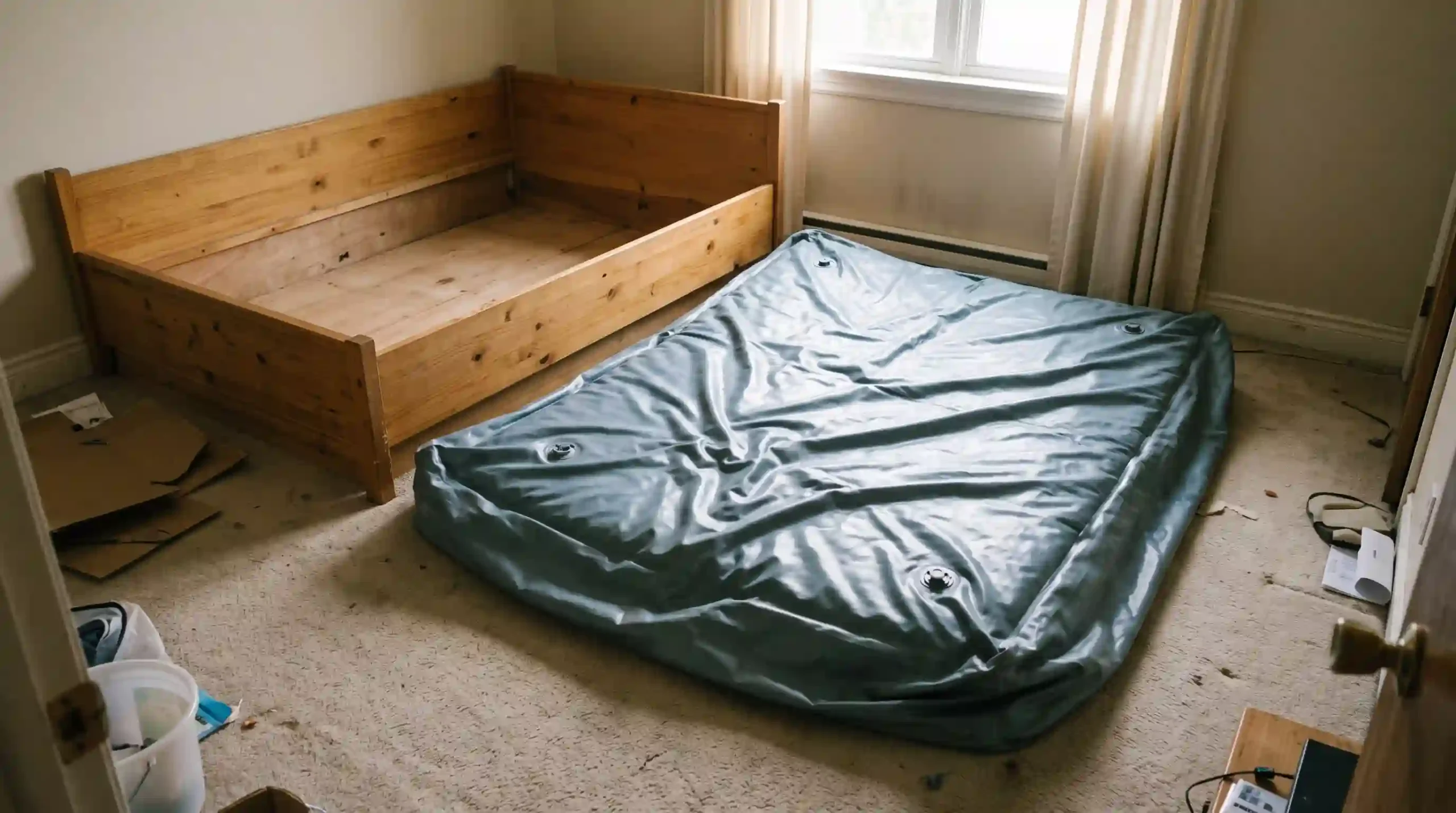
Getting rid of a waterbed isn’t like tossing out a regular mattress. Between the vinyl shell, the internal water bladder, and (in older models) a wooden frame, figuring out what to do with old waterbed mattress takes a bit more planning than dragging it to the curb. If you’re staring at a deflated or leaking waterbed right now, wondering whether it’s trash, treasure, or somewhere in between, this guide walks you through every realistic option. And if you’d rather skip the heavy lifting entirely, Junk Masterz handles waterbed removal so you don’t have to. Decide First: Repurpose, Recycle, or Dispose? Before you touch a single tool, it helps to make one decision: is this mattress worth saving in some form, or is it done? A quick framework: Repurpose if the vinyl is intact, free of major tears, and you have a specific project in mind (pet bed, air mattress, planter liner). Recycle if the material is sound, but you don’t want to reuse it yourself, and your area has vinyl or textile recycling options. Dispose if the mattress is torn, moldy, or has been sitting unused for years with visible degradation. This decision matters because it changes your entire next step. Repurposing means draining and cleaning. Recycling means sorting materials. Disposal means scheduling a pickup. Skipping this step is the most common reason people end up doing double work. Step 1: How to Safely Drain a Waterbed Mattress Before anything else, the mattress has to be drained, and how you do it depends on the type. Hardside waterbeds sit inside a wooden frame and typically hold more water, sometimes 200 gallons or more. Softside waterbeds use a foam frame with a vinyl bladder inside, holding less water but often being harder to access. To drain either type: Attach a garden hose to the drain valve (most waterbeds have one built in). Run the hose to a floor drain, sump pump, or outside through a window or door. If there’s no built-in valve, use a small submersible pump, sometimes called a waterbed pump, to speed things up. Once mostly drained, press gently on the remaining sections to push out residual water and air. Draining a full-size hardside waterbed usually takes 45 minutes to over an hour, depending on your hose diameter and drainage point. Never try to move a partially drained waterbed. Even a small amount of remaining water makes it dangerously heavy and awkward, which is one of the main reasons people call in a professional team like Junk Masterz instead of attempting a DIY move alone. Repurposing Ideas: Give It a Second Life If the vinyl is still in good shape, an old waterbed mattress has more uses than most people realize. Pet bed: Cut the drained mattress down to size, fold and seal the edges with a heavy-duty vinyl adhesive, and you have a durable, waterproof base for a dog or cat bed. Camping or air mattress conversion: Instead of filling it with water, inflate it with air using a standard pump. It won’t be as firm as a purpose-built air mattress, but it works in a pinch for backyard camping or overflow guest sleeping. Floating platform: A drained and re-inflated waterbed mattress can double as a pool float or pond platform. This works best with softside models since the material is generally more flexible. Bean bag filling: Drain the mattress completely, cut it open, and use the vinyl shell (after cleaning) as the outer casing for a homemade bean bag chair, filled with foam pellets. Outdoor planters: If you’re disposing of a hardside frame rather than the bladder itself, the wood can be repurposed into raised garden beds or planter boxes with minimal modification. Recycling Options: By Material Type A waterbed isn’t one material; it’s several, and each one has a different recycling path. Vinyl recycling: The mattress bladder itself is typically PVC vinyl. Not all municipal recycling programs accept vinyl curbside, so you’ll usually need to locate a facility that specifically processes PVC or flexible plastics. Wood frame and metal hardware: Hardside waterbed frames are usually solid wood or particleboard, both of which are accepted at most standard wood recycling or waste-to-energy facilities. Metal hardware like bed rails or brackets can go to scrap metal recyclers. Textile layer: Some waterbeds include a fabric-covered foam pad on top. This layer can sometimes be separated and recycled through textile recycling programs, depending on the fabric composition. Finding a local recycling center: Search your city or county’s waste management website for “bulky item recycling” or “vinyl recycling near me.” Many areas have separate facilities for construction materials, textiles, and plastics, so one center may not accept everything. Donation: When Is It Actually Possible? Donating an old waterbed mattress sounds like the responsible choice, but it’s often harder than people expect. Most charitable organizations and thrift stores won’t accept waterbed mattresses at all, and here’s why: liability concerns around water damage, difficulty verifying the mattress hasn’t been damaged internally, and general policies against accepting mattresses that can’t be easily inspected for bedbugs or mold. If you want to try, look for: Local theater or film production companies (sometimes used as props) Community groups building DIY furniture projects Online marketplace listings, where individual buyers are more flexible than organizations Condition matters more here than almost anywhere else. No visible tears, no odor, and no signs of past leaks are basically non-negotiable if you’re hoping someone else will take it. Responsible Disposal: When Nothing Else Works Sometimes a waterbed mattress is simply past the point of reuse, and that’s fine. The goal at this stage is disposing of it correctly rather than illegally dumping it or damaging your local waste system. Curbside bulky item pickup: Many cities offer scheduled bulky waste pickup, but you’ll want to call ahead specifically about waterbeds. Some municipalities exclude them because of the vinyl content or size restrictions. Junk removal services: This is usually the fastest and least physically demanding route, especially for a full hardside
- (559) 908-2189
- junkmasterz@yahoo.com
- Fresno, CA 93725
- (239)-543-217-0108