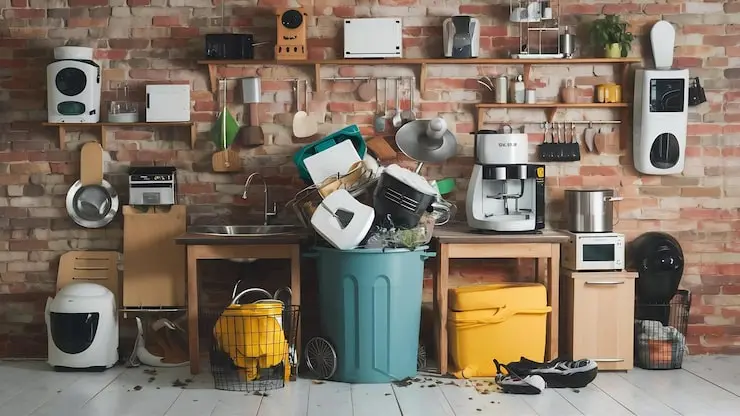
Getting rid of old gadgets and devices around the house can feel overwhelming. But knowing how to dispose of small appliances properly doesn’t have to be complicated. Whether it’s a toaster, blender, or handheld vacuum, each item has a safe and responsible path for disposal.
In this guide, we’ll show you practical methods, step-by-step preparation tips, and clever tricks to save time and money, so you can get rid of old appliances efficiently while protecting the environment. By the end, you’ll have everything you need to handle your small appliance disposal confidently.
What Counts as Small Appliances?
Small appliances are basically any plug-in gadgets that help you around the house. If it’s electrical, portable, and you can carry it yourself, it probably counts.
Kitchen appliances include:
- Toasters and toaster ovens
- Blenders and food processors
- Coffee makers and electric kettles
- Mixers (both hand and stand models)
- Air fryers and slow cookers
- Microwaves (the smaller ones)
- Rice cookers and electric grills
Personal care items like:
- Hair dryers and straighteners
- Curling irons
- Electric toothbrushes
- Electric razors and trimmers
Around-the-house helpers such as:
- Vacuum cleaners (especially the smaller ones)
- Space heaters and fans
- Humidifiers and dehumidifiers
- Irons and garment steamers
- Electric alarm clocks
- Desk lamps
Most of these contain recyclable materials like copper, aluminum, and steel. Some also have batteries or small electronic components that need special handling. Knowing what you have helps you figure out where to take it.
Why Proper Disposal Matters
Throwing small appliances into the regular trash might seem like the easiest option, but it can create real problems for both the environment and your community. Many appliances contain metals, plastics, and electronic components that don’t break down safely in landfills. Some older devices may even have hazardous materials, like mercury or certain chemicals, that can seep into soil and water if not handled correctly.
Proper disposal ensures these materials are recycled or disposed of safely, preventing pollution and conserving resources. Recycling metals, plastics, and electronics reduces the need to extract new raw materials, saving energy and lowering emissions. Beyond environmental benefits, responsible disposal also protects your household from potential safety hazards, like electrical shorts or chemical exposure.
By understanding how to dispose of small appliances the right way, you not only get rid of unwanted items but also help create a cleaner, safer community for everyone.
7+ Disposal Methods

Let’s break down your options for getting rid of old appliances. Some are free, some might even pay you, and all are better than throwing stuff in the trash.
Municipal Recycling Programs
Many cities offer free recycling for small appliances. Call your local waste management department or check their website to see if they have drop-off locations or special pickup days for electronics.
Some cities host quarterly “e-waste collection events” where you can bring old electronics and appliances. These events are usually free and accept almost anything electrical. Mark your calendar when they announce the dates.
Retailer Take-Back Programs
Big box stores make disposing of small appliances super convenient. Best Buy accepts most electronics and small appliances at their recycling kiosks just walk in and drop them off. They take up to three items per day per household, completely free.
Home Depot and Lowe’s also run recycling programs, though their policies vary by location. Call ahead to confirm what they accept. Some manufacturers like Dyson and KitchenAid offer mail-in recycling programs for their products. Check the brand’s website for details.
Special E‑Waste and Recycling Events
Communities sometimes host periodic recycling days or e‑waste collection events. These events let residents bring multiple items at once, often at no charge. They’re worth checking in community bulletins or local government sites.
Donation Options
If your appliance still works, someone probably wants it. Goodwill and The Salvation Army accept working small appliances at most locations. They test items before reselling them, so make sure yours actually functions.
Local shelters, community centers, and churches often need household items. College students moving into their first apartments love free appliances. Post on your neighborhood Facebook group or Nextdoor you’d be surprised how fast people respond.
Sell or Give Away for Free
Selling on local marketplaces or giving appliances away through community groups can be one of the cheapest ways to get rid of old appliances and even earn a little cash. Buyers or takers may pick them up, saving you a trip.
Scrap Metal Yards
For broken appliances with metal components, scrap yards will actually pay you (though not much). They buy items by weight and pay current metal prices. You won’t get rich, but you’ll get a few dollars and know your appliance got recycled properly.
Call ahead to ask what they accept and whether they require you to remove certain parts. Some yards want cords cut off or batteries removed first.
Repair Cafés and Fix-It Clinics
Before throwing anything away, consider repair. Repair Café hosts free community events where volunteers help fix broken items. You might discover your appliance just needs a simple fix.
These events happen in cities across the country. You bring your broken item, volunteers diagnose the problem, and you learn how to fix it yourself. Even if the repair doesn’t work, you’ll know you tried before recycling.
Professional Junk Removal Services
When you’re clearing out lots of stuff or can’t transport items yourself, junk removal companies will pick everything up for a fee. Services like Junk Masterz charge based on volume but handle all the work.
These companies sort items after pickup. Working appliances often get donated, recyclables go to proper facilities, and only true garbage ends up in landfills. Expect to pay $150-300 for a truck load, depending on your location.
Also Read: How Does Junk Removal Work?
Step-by-Step Preparation Guide
Don’t just grab your old appliance and run out the door. A few minutes of prep makes disposal easier and safer for everyone handling your items.
Clean Everything First
Nobody wants your crusty toaster or coffee maker with old grounds stuck inside. Give appliances a quick clean wipe down surfaces, empty crumb trays, and rinse out containers. This matters especially for donated items. Would you want to receive someone’s grimy appliance?
Remove Batteries Safely
Take out any batteries, especially lithium‑ion or button cells. Batteries pose safety risks and must go to battery recycling points or hazardous waste sites. Many household e‑waste sites accept these separately.
Unplug and Check Cords
Make sure appliances are unplugged and completely cooled down. Check the power cord for damage. If you’re scrapping the item for metal, some yards want cords removed first. Keep this in mind before heading out.
Keep Parts Together
If your appliance came with accessories, attachments, or removable parts, keep everything together. Bundle items with rubber bands or put small pieces in a bag taped to the main unit. This helps especially when donating—complete items are more useful.
Data Concerns for Smart Appliances
Newer appliances with WiFi or Bluetooth might store personal information. Factory reset any smart coffee makers, connected kitchen scales, or similar devices before disposal. Check the manual or manufacturer’s website for reset instructions.
What NOT to Do
Skip these common mistakes: Don’t leave appliances outside in bad weather (even for pickup). Don’t take apart items unless specifically required this creates safety hazards. Don’t mix appliances with regular curbside recycling they damage sorting equipment. And definitely don’t throw appliances with batteries in the trash.
Read More: How To Dispose of Air Fryer?
Advanced Tips & Tricks
Now for some insider knowledge that saves time and maybe even makes you money.
Look for Take‑Back Incentives
Retailers sometimes offer small vouchers or discounts when you bring in old appliances for recycling, even if you aren’t buying a new one. It’s worth calling ahead or checking online.
Combine Trips with Other Recycling
Plan your appliance drop‑off on the same day you take other recyclables or hazardous waste items like paint or batteries. Many centers accept multiple categories concurrently.
Check for Local Freebies
Community organizations and neighborhood groups sometimes post free pickup offers for still‑working appliances. This can be the lowest‑effort way to get rid of things.
Know When Professional Help Is Needed
Older appliances with refrigerants, large compressors, or hazardous components often require certified technicians to remove those elements safely before recycling. Don’t attempt to do this yourself.
Conclusion
Properly handling how to dispose of small appliances is more than just tidying up it’s about protecting the environment, reclaiming valuable materials, and making sure hazardous components don’t end up in the wrong place. In this guide, we covered what counts as small appliances, why responsible disposal matters, practical disposal methods, step-by-step preparation, and advanced tips to make the process easier and safer.
At Junk Masterz, we make small appliance disposal simple and stress-free. Whether you need guidance on recycling, donation, or pickup, our team is ready to help. Don’t let old appliances sit around. Contact us today for a free quote or schedule a pickup and get rid of your small appliances responsibly and efficiently.
FAQs
Can I put small appliances in regular trash?
Most small appliances should not go into regular trash. They often contain metals, plastics, and electronic components that can harm the environment if landfilled. Items like toasters, blenders, or handheld vacuums should be recycled, donated, or taken to an approved e-waste collection center.
How much do small appliances sell for used?
The resale value depends on the appliance type, brand, and condition. Common items like blenders, coffee makers, or toasters may sell for $5–$30, while specialty devices like high-end mixers can fetch $50–$200. Working condition and brand reputation are key factors.
Which appliances are banned from landfills?
Certain appliances are prohibited from landfill disposal because they contain hazardous materials. These include:
- Refrigerators and freezers with Freon
- Air conditioners and dehumidifiers
- Appliances with batteries (especially lithium-ion)
Local regulations vary, so check with your municipal waste department.
Do recycling centers pay for small appliances?
Some certified e-waste or scrap metal recyclers may offer a small payment for certain appliances, particularly those with valuable metals like copper or aluminum. However, most general household small appliances yield minimal cash, so donation or responsible recycling is often the preferred route.
What happens to recycled appliances?
Recycled appliances are disassembled, sorted by material (metal, plastic, electronics), and processed to recover reusable parts. Metals are melted down for reuse, plastics are remanufactured, and electronic components are handled safely to prevent pollution. This reduces landfill waste and conserves resources.
How do I remove batteries safely?
Before disposal, remove all batteries from appliances. For lithium-ion, alkaline, or button cell batteries:
- Use gloves if batteries are damaged or leaking
- Place them in a sealed plastic bag
- Take them to a local battery recycling drop-off or e-waste facility
Never throw batteries into regular trash.
Are smart appliances recyclable?
Yes. Smart appliances can be recycled through e-waste programs, though you should wipe personal data if the appliance connects to Wi-Fi or stores user information. Check with certified e-waste recyclers who accept electronics with data storage.
What about appliances with lithium batteries?
Appliances with lithium batteries (like cordless blenders or small vacuums) must be treated carefully. Remove the battery if possible and take both the appliance and battery to a certified recycling facility that handles lithium-ion products safely.
How to dispose of appliances with Freon?
Appliances with Freon (like mini-fridges, air conditioners) require professional handling. Certified technicians recover the refrigerant before recycling the rest of the appliance. Never vent Freon into the air it’s harmful to the ozone layer.
Can broken appliances be donated?
Generally, donation is only accepted if appliances are in working condition. Some organizations may accept broken items for repair or parts, but most shelters and charities prefer fully functional appliances.
Are there pickup services for small appliances?
Yes, some companies specialize in appliance and e-waste pickup, either for free or for a small fee. Junk removal services like Junk Masterz can handle multiple items, including small appliances, ensuring proper recycling.
What parts of appliances can be recycled?
Metals (steel, copper, aluminum), plastics, glass, and electronics can be recycled. Batteries and hazardous components like Freon need separate handling.
How long does appliance recycling take?
Processing times vary by facility. Local drop-off centers may recycle items within a few weeks, while mail-in programs or large facilities may take longer, depending on volume and material type.