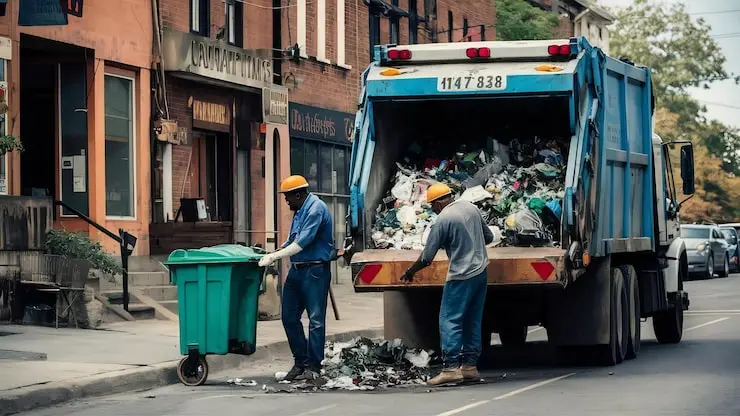
Junk rarely piles up on purpose. A broken dresser goes to the garage “for now,” a few boxes follow, and a year later you cannot reach the shelves. If you are staring at a space like that and wondering what to do with old junk, a removal crew is often the fastest way out.
So, how does junk removal work? You book a time, the crew quotes a price based on truck space, carries everything out, and sorts the items for donation, recycling, or disposal. Junk Masterz wrote this guide to show each stage, including the parts most guides skip.
What Is Junk Removal (and How Is It Different From Trash Pickup)?
Junk removal is a hauling service where a crew comes to your property, lifts and loads the items you no longer want, and handles transport and disposal.
Trash pickup only covers what fits in your bin on collection day, within your city’s size and weight limits. Junk removal covers what doesn’t: sectional sofas, mattresses, old appliances, fence panels, leftover tile, and general overflow from a garage or basement.
The real difference sits behind the truck. A proper waste removal process means sorting items, sending each one to the right facility, and keeping restricted materials out of the load.
Junk Removal vs. Dumpster Rental vs. DIY Hauling
The right choice depends on who does the lifting, how long the project runs, and how much space you have.
| Full-Service Removal | Dumpster Rental | DIY Hauling | |
| Who lifts | The crew | You | You |
| Who handles disposal | The crew | Company collects the full dumpster | You, at a drop-off site |
| Best for | Cleanouts, heavy items, deadlines | Weeks of steady debris | A few small, light items |
| Watch for | Fees for special items | Permits, weight limits | Fuel, drop-off fees, your time |
A dumpster suits a project that creates debris for weeks, such as a kitchen remodel. Placing one on a public street often needs a permit, and weight limits can turn a load of tile or roofing into an unexpected charge. DIY hauling looks cheapest on paper, but fuel, vehicle space, your own time, and drop-off fees add up, and some sites restrict certain items. Full service wins when items are heavy, bulky, upstairs, or tied to a deadline like a move-out.
How Does Junk Removal Work? The 7-Step Process
Here is how it runs when you book with Junk Masterz. Most reputable companies follow a similar order.
- Book the pickup. You call or send a form and describe what is going on, where it sits, and when you want the crew. Same-day and next-day slots depend on the schedule.
- Share photos. A few wide shots plus close-ups of big items let the office estimate truck space before anyone drives out. This is a ballpark, not a final price.
- Crew walks the job. The team confirms what goes, what stays, and how to get items out: stairs, tight turns, gates, and truck parking.
- Approve a firm price. Pricing is usually based on truck space. You hear the number before lifting starts and can decline.
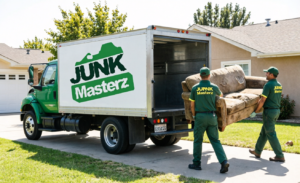
- Loading. The crew carries everything out, takes apart pieces that will not fit through doors, and loads heavy items first.
- Hauling and sorting. Items go to donation partners, recyclers, or a disposal site based on condition and material.
- Cleanup and payment. The crew sweeps the area, checks that nothing else needs to go, and you pay when the job is done.
A Typical Job Timeline, From Truck Arrival to Broom-Clean
Here is what a mid-size cleanout, such as a garage, can look like. These times are approximate and change with job size and access.
| Time | What happens |
| 0:00 | Crew arrives and confirms the job with you |
| 0:05 to 0:15 | Walkthrough and truck-space estimate |
| 0:15 | Firm price given and approved |
| 0:15 to 1:00 | Loading, heavy items first |
| 1:00 to 1:15 | Final sweep and check for leftovers |
| 1:15 to 1:30 | Payment and wrap-up |
Picture a two-car garage with old shelving, a broken treadmill, a few boxes, and a worn sofa. Everything is on one level near the driveway, so the walkthrough is quick. The treadmill and shelving take the longest because they are heavy and may need to come apart. The same volume spread across an upstairs bedroom and a basement could take noticeably longer, which is why access affects both time and price.
How to Prepare Before the Crew Arrives
You do not need to organize everything, but a few minutes of prep makes the job faster and the quote more accurate.
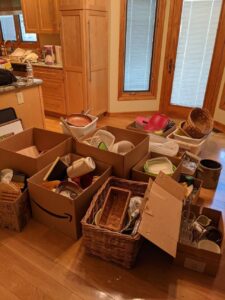
- Photograph the pile from several angles, including large items.
- Mark what stays with sticky notes, or group removal items in one area.
- Clear a path and a parking spot close to the entrance. In apartments, ask whether you need to reserve an elevator or loading dock.
- Set restricted items aside, such as paint or chemicals, so they are not mixed in.
- Check drawers and boxes for documents, keys, or valuables.
If you are unsure what to do with old junk that still works, pull out anything you want to donate yourself before the quote. Fewer items on the pile means less truck space to pay for. For a longer checklist, read our guide on how to prepare for junk removal pickup.
What Junk Removal Companies Take and Don’t Take
Items Usually Accepted
Most crews take furniture, mattresses, appliances, electronics, yard debris, and renovation waste such as drywall, lumber, flooring, and cabinets. Our Residential Junk Removal Fresno, CA service covers these items from inside the home, garage, basement, or yard, so nothing has to be dragged to the curb.
Refrigerators and air conditioners contain refrigerant, and electronics hold materials that should stay out of landfills, so they usually follow a separate disposal route. Some companies add a small handling fee for these items.
Items Usually Refused
Most companies decline hazardous or regulated items: paint and solvents, pesticides, automotive fluids, asbestos, medical waste and needles, propane tanks, gasoline, fireworks, and ammunition. Some batteries fall in this group too. Rules vary by company and local regulation, so ask about specific items when you book. If something is refused, your local waste authority can usually point you to a household hazardous waste drop-off. It is better to sort that out before the truck arrives than to have the item pulled from the load on the day.
What Happens to Your Junk After Pickup?
This is the question most customers care about, and few guides answer well. What does junk removal do with the junk? A responsible crew sorts it into three paths: donate, recycle, or dispose.
Where do junk removal companies take the junk? It depends on the item:
- Donation and reuse partners receive furniture and household goods in good shape.
- Recycling facilities take metal, cardboard, wood, and electronics.
- Transfer stations and landfills receive what cannot be reused or recycled. A transfer station consolidates loads and sends them onward.
On a busy day, one truck may make several stops. Donation items often go first so they stay clean, recyclables next, and general waste last. The exact order depends on routes and facility hours.
What do junk removal companies do with the junk nobody wants?
Mixed or damaged material usually ends up at a transfer station or landfill. The waste removal process also differs by item, which is why a solid couch and a water-damaged mattress can end up in very different places. For more detail, see what junk removal companies do with your junk.
How Much Does Junk Removal Cost?
Most companies price by volume, meaning the share of the truck your items fill. A standard junk truck often holds roughly 15 to 18 cubic yards. These are typical estimates, not quotes, and they vary by city and company.
| Load size | Typical job | Estimated price |
| Single item | One sofa, mattress, or appliance | $75 to $150 |
| Quarter load | A few furniture pieces or boxes | $150 to $250 |
| Half load | Garage or one-room cleanout | $250 to $400 |
| Three-quarter load | Multiple rooms | $400 to $600 |
| Full truckload | Estate cleanout or renovation | $600 to $800+ |
Your real number comes from a written quote after the crew sees the job. Our breakdown of the cost of junk removal goes deeper.
What Makes a Quote Go Up or Down
- Weight and density. Concrete, tile, and soil are heavy for their size, and disposal sites may charge by weight, so a small pile can cost more than it looks.
- Access. Stairs, long carries, and tight spaces add labor time.
- Disassembly. Taking apart sheds, large furniture, or fixtures adds work.
- Special disposal. Refrigerant appliances, mattresses, and electronics may carry extra fees.
- Timing. Same-day or weekend service can cost more.
- Prep. Items already grouped in one spot can speed up the job and sometimes lower the price.
How to Choose a Junk Removal Company (and Red Flags to Avoid)
Ask for proof of license and insurance, a written price before work starts, and a specific answer about disposal. On the phone, try asking, “What do junk removal companies do with the junk from jobs like mine?” and listen for details, not vague reassurance. When reading reviews, look for comments about punctuality and how the crew treated floors and walls, not just star ratings.
Watch for these red flags:
- The price changes after the truck is loaded
- No clear answer on where items go
- No proof of insurance when you ask
- Pressure to decide on the spot
- Vague answers about restricted items
Some operators dump illegally to cut costs. If a company cannot say where your items end up, treat that as a warning.
Conclusion
If you came here asking, “How does junk removal work?”, the answer is a simple trade: you approve a clear price, and a crew handles the lifting, hauling, sorting, and disposal. Knowing the steps, the timeline, and the right questions to ask makes deciding what to do with old junk far less stressful. If you are in Fresno and ready to clear space, Junk Masterz offers free quotes and fast scheduling. Contact us to book your pickup.
FAQs
How does junk removal work if I only have one or two items?
The process is the same, just faster. You share a photo, get a single-item price, and the crew removes it, often in under half an hour.
What does junk removal do with the junk if my items are still in good shape?
Usable furniture and household goods are typically set aside for donation or reuse. Ask when you book if you want specific items donated.
Where do junk removal companies take the junk that can’t be recycled?
It goes to a transfer station or landfill. Responsible companies treat this as the last option after donation and recycling.
Do I need to be home during the pickup?
Usually yes, at least at the start, so you can approve the price and point out what goes. If everything is outside and accessible, some companies can work without you. Confirm this when you book.
Is it cheaper to sort items myself before the crew arrives?
Often yes. Removing items you plan to keep or donate yourself shrinks the pile and the truck space you pay for.