Most people don’t think twice before tossing a burned-out bulb into the trash. But knowing how to dispose of old light bulbs correctly is more important today than ever before.
Modern lighting options have changed. While traditional incandescent bulbs were relatively harmless, newer types like CFLs and fluorescent tubes contain small amounts of mercury — a toxic substance that can contaminate water, soil, and air if handled incorrectly.
Improper disposal can:
-
Harm the environment
-
Violate local waste regulations
-
Pose safety risks inside your home
-
Lead to fines in some states
This complete guide explains how to properly dispose of light bulbs, covers every bulb type, addresses safety concerns, answers common Google questions.
By the end, you’ll know exactly what to do — safely and responsibly.
How to Dispose of Old Light Bulbs
If you’re looking for a fast answer:
-
Incandescent bulbs → Wrap and dispose in household trash
-
Halogen bulbs → Wrap and dispose in trash
-
LED bulbs → Recycle if possible
-
CFL bulbs → Must be recycled (contain mercury)
-
Fluorescent tubes → Take to hazardous waste facility
Now let’s explore this in detail.
Understanding Different Types of Light Bulbs
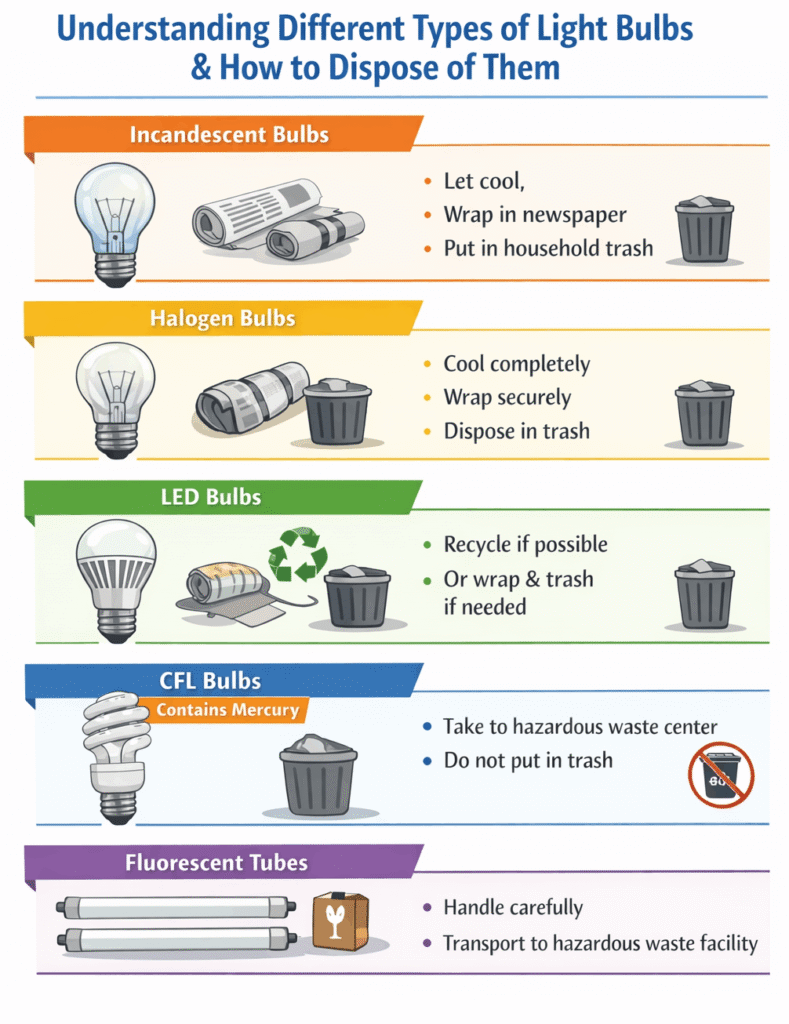
Before learning how to dispose of light bulb types correctly, you must identify what kind you have.
1. Incandescent Bulbs
These are the traditional bulbs with visible filaments inside.
Disposal Method:
-
Let bulb cool fully.
-
Wrap in newspaper or cardboard.
-
Place in regular household trash.
They do not contain hazardous materials, but wrapping prevents injury.
2. Halogen Bulbs
Halogen bulbs are similar to incandescent but burn hotter and brighter.
How to dispose of a light bulb (halogen):
-
Allow it to cool completely.
-
Wrap securely to prevent breakage.
-
Dispose in household trash.
Never place them in glass recycling bins.
3. LED Bulbs
LED bulbs are energy-efficient and long-lasting. They do not contain mercury but include electronic components.
How to properly dispose of light bulbs (LED):
-
Best option: Recycle at electronics recycling centers.
-
Acceptable alternative: Wrap and place in trash if recycling unavailable.
Recycling helps recover metals and reduces landfill waste.
4. CFL (Compact Fluorescent Lamps)
These spiral-shaped bulbs contain small amounts of mercury.
How to safely dispose of light bulbs (CFL):
-
Never throw in trash.
-
Take to hazardous waste recycling center.
-
Many hardware stores accept them for recycling.
This is legally required in some states.
5. Fluorescent Tube Lights
Common in offices, garages, and commercial buildings.
How to dispose of old light bulbs (fluorescent tubes):
-
Do not break.
-
Store carefully.
-
Transport to approved hazardous waste facility.
Businesses may have stricter regulations for bulk disposal.
Why Mercury in Light Bulbs Is Dangerous
Mercury is a toxic heavy metal. Even small amounts can:
-
Contaminate drinking water
-
Damage the nervous system
-
Affect children and pregnant women
-
Harm wildlife
The Environmental Protection Agency (EPA) strongly recommends recycling mercury-containing bulbs to prevent environmental contamination. If you are replacing multiple fluorescent or CFL bulbs during a home cleanout, you may also want to explore options for how to get free junk removal, especially through local recycling events, municipal bulk pickup programs, or community hazardous waste collection days that accept mercury-containing items at no cost.
You May Also Read: How to get free junk removal
What to Do If a Mercury Bulb Breaks Indoors
Accidents happen. If a CFL or fluorescent bulb breaks:
-
Open windows immediately.
-
Leave the room for 10–15 minutes.
-
Wear gloves.
-
Use stiff cardboard to collect fragments.
-
Use tape for smaller pieces.
-
Place debris in sealed plastic bag.
-
Take bag to hazardous waste facility.
Never vacuum immediately — it spreads mercury vapor.
Where to Recycle Light Bulbs
If you’re searching how to dispose of light bulbs near me, consider:
-
Local hazardous waste facilities
-
Municipal recycling programs
-
Home improvement stores
-
County collection events
If you’re handling bulk lighting from renovations or property cleanouts, professional teams Junk Masterz is offering comerical junk removal services can simplify the process while ensuring compliance.
Local Laws and Regulations
Disposal rules vary by state and municipality.
Some regions:
-
Ban CFL disposal in regular trash
-
Require commercial recycling
-
Impose penalties for improper disposal
Always check your local waste authority website.
Commercial & Business Light Bulb Disposal
Businesses upgrading lighting systems must follow stricter guidelines.
Commercial disposal requires:
-
Proper storage before transport
-
Licensed recycling facilities
-
Compliance documentation
For larger cleanouts, working with experienced providers ensures proper disposal and regulatory compliance.
Sustainable Practices: Reduce Future Waste
The best approach to waste is reduction.
Consider:
-
Switching fully to LED lighting
-
Buying quality bulbs with longer lifespans
-
Recycling consistently
-
Avoiding over-purchasing
LEDs can last up to 25,000 hours, dramatically reducing waste.
Common Mistakes to Avoid
- Throwing CFL bulbs in tras
- Placing bulbs in glass recycling bins
- Breaking fluorescent tubes intentionally
- Ignoring local hazardous waste laws
- Storing broken bulbs carelessly
Avoiding these protects your home and environment.
When Professional Help Makes Sense
You may need help if you have:
-
Office lighting upgrades
-
Property cleanouts
-
Commercial renovations
-
Large volumes of fluorescent tubes
During major cleanout projects, Junk Masterz helps homeowners and businesses manage responsible disposal efficiently and safely.
Conclusion
Knowing how to dispose of old light bulbs properly protects your home, your community, and the environment.
To recap:
-
Incandescent & halogen → Trash (wrapped)
-
LED → Recycle preferred
-
CFL & fluorescent → Hazardous waste recycling required
Simple awareness makes a big difference. Whether you’re replacing one bulb or managing a full renovation, responsible disposal ensures safety and compliance.
Small steps today prevent environmental damage tomorrow.
Frequently Asked Questions
1. Can I throw light bulbs in the trash?
Incandescent and halogen bulbs can go in the trash if wrapped safely.
CFL and fluorescent bulbs must be recycled due to mercury content.
2. How do I dispose of a light bulb safely?
Identify the bulb type first before disposal.
Wrap non-hazardous bulbs and recycle mercury-containing ones.
3. Are LED bulbs recyclable?
Yes, LED bulbs are recyclable at electronics centers.
They contain valuable metals that should not go to landfill.
4. Is it illegal to throw CFL bulbs away?
In some states and cities, yes it is restricted.
Check local waste management regulations to confirm.
5. What happens if a CFL bulb breaks?
Ventilate the area and avoid vacuuming immediately.
Carefully collect debris and dispose of it as hazardous waste.
6. Can light bulbs go in glass recycling bins?
No, light bulbs use treated glass not suitable for recycling plants.
They can contaminate glass recycling batches.
7. How do businesses dispose of fluorescent tubes?
They must use approved recycling or hazardous waste facilities.
Improper disposal may lead to regulatory penalties.
8. Why can’t fluorescent bulbs go in regular trash?
They contain mercury which contaminates soil and water.
Proper recycling prevents environmental damage.
9. What is the safest way to dispose of light bulbs?
Recycling is always the safest and most environmentally responsible option.
It protects health and conserves materials.
10. How long do LED bulbs last?
Most LED bulbs last between 15,000 and 25,000 hours.
That is significantly longer than incandescent bulbs.