
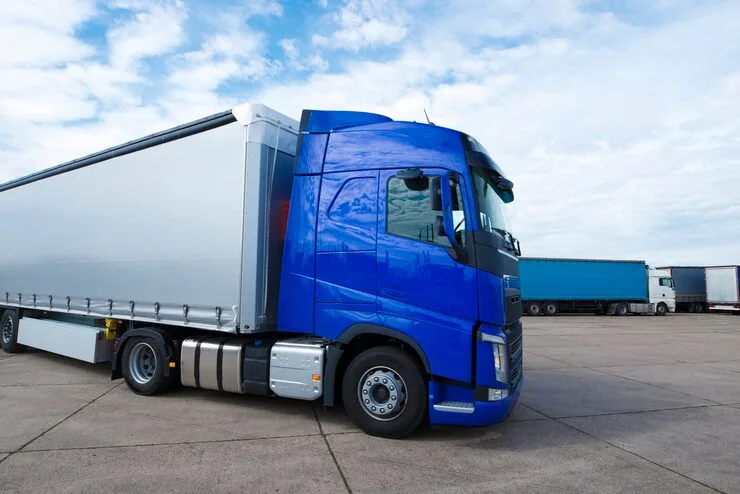
Box truck weight limits are one of the most misunderstood parts of commercial driving. Many drivers focus on space, but weight matters just as much. Going over the legal limit can lead to fines, safety risks, and serious damage to the truck. Understanding box truck weight limits helps you protect your cargo, your license, and your business. This guide explains weight limits in plain language. You will learn how weight is measured, how different box truck sizes compare, and what the law requires. If you want clear facts without confusion, this guide is for you. Box Truck Weight Limits and GVWR GVWR stands for Gross Vehicle Weight Rating, and it’s the most important number you need to know about your box truck. This rating tells you the maximum total weight your truck can safely handle when it’s fully loaded. The GVWR includes everything: the truck itself, the driver, passengers, fuel, and all the cargo you’re hauling. Every box truck has a GVWR assigned by the manufacturer based on the vehicle’s design, frame strength, suspension system, and braking capacity. You’ll find this number on a sticker inside the driver’s side door frame or in your owner’s manual. This isn’t a suggestion—it’s a hard limit set for safety. Here’s how GVWR works in practice. If your box truck has a GVWR of 14,000 pounds and the empty truck weighs 8,000 pounds, you can only load 6,000 pounds of cargo. That 6,000 pounds includes everything you put in the truck bed, plus the weight of fuel, the driver, and any passengers. Go over that limit, and you’re breaking the law and risking serious safety issues. Understanding your GVWR helps you plan jobs better. When you know exactly how much weight your truck can handle, you can avoid overloading and make smarter decisions about what equipment or materials to bring on each trip. The curb weight (empty weight) of your truck is subtracted from the GVWR to give you your actual payload capacity. The difference between GVWR and actual payload capacity confuses many people. Your payload is what you can actually haul after accounting for the truck’s own weight. A 26,000-pound GVWR doesn’t mean you can load 26,000 pounds of junk or furniture. If the truck weighs 14,000 pounds empty, you only have 12,000 pounds available for cargo. Why GVWR Matters for Your Safety Exceeding your GVWR creates multiple dangers. Your brakes take much longer to stop the vehicle. The tires can overheat and blow out, especially on highways or in summer heat. Your suspension system gets damaged faster, leading to expensive repairs. Steering becomes harder, and the truck doesn’t handle turns or lane changes well. Insurance companies won’t cover accidents that happen when you’re overweight. If you crash while hauling more than your GVWR allows, you’re personally responsible for all damages. Police can impound your truck at the scene, and you’ll face fines that start at several hundred dollars and go up from there. Box Truck Weight Classifications Box trucks fall into different weight classes based on their GVWR. The U.S. Department of Transportation uses these classifications to set regulations and requirements. Knowing which class your truck falls into helps you understand what rules apply to you. Light-Duty Box Trucks (Class 1-3) These are the smaller trucks you see for local deliveries. They drive a lot like a big SUV or a pickup truck. Class 1: These are very small, usually under 6,000 pounds. Most box trucks start higher than this. Class 2: These weigh between 6,001 and 10,000 pounds. Many “step vans” or small delivery trucks are in this group. Class 3: This is a very common group. These weigh between 10,001 and 14,000 pounds. These are often called light-duty box trucks. They are great for small jobs because they can fit into tight driveways. Medium-Duty Box Trucks (Class 4-6) This is where most box trucks live. If you rent a truck to move your house, it will likely be in this group. Class 4: 14,001 to 16,000 pounds. These are getting bigger and often have dual rear wheels to help hold the weight. Class 5: 16,001 to 19,500 pounds. Class 6: 19,501 to 26,000 pounds. This is a huge category. Most 26-foot trucks are built to be right at 26,000 pounds. This is because of a special rule about licenses that we will talk about later. Heavy-Duty Box Trucks (Class 7-8) These are the giants of the box truck world. Class 7: 26,001 to 33,000 pounds. These trucks are very big and very strong. Class 8: Anything over 33,001 pounds. While most Class 8 trucks are semis, some very large straight trucks (trucks where the box and engine are on one frame) fall here. When you look for the weight limit for box truck use, you must know your class. It tells you if you have to stop at scales or if you need special insurance. It also changes how much you pay for tags and plates. Different Types of Box Trucks, Weight Limits, and Sizes The size of the box on the back usually tells you how much it can carry, but not always. You have to look at the box truck sizes and the frame separately. A long truck doesn’t always carry more weight than a short one; it might just have more room for light things like pillows. 10 Foot Box Truck This is the smallest size. It is great for a studio apartment or a small office move. It is often built on a van frame. Average GVWR: Around 8,600 to 10,000 lbs. Cargo capacity: About 2,000 to 3,000 lbs. Cargo volume: You have about 400 cubic feet of space. Best use: Picking up a new couch or moving a dorm room. 12 Foot Box Truck A step up from the 10-footer. It is a bit wider and taller. Average GVWR: 10,000 to 12,000 lbs. Payload capacity: roughly 3,000 to 4,000 lbs. Loading space: Good for a 1-bedroom apartment. Fact: These are very popular for “last-mile”
- (559) 908-2189
- junkmasterz@yahoo.com
- Fresno, CA 93725
- (239)-543-217-0108