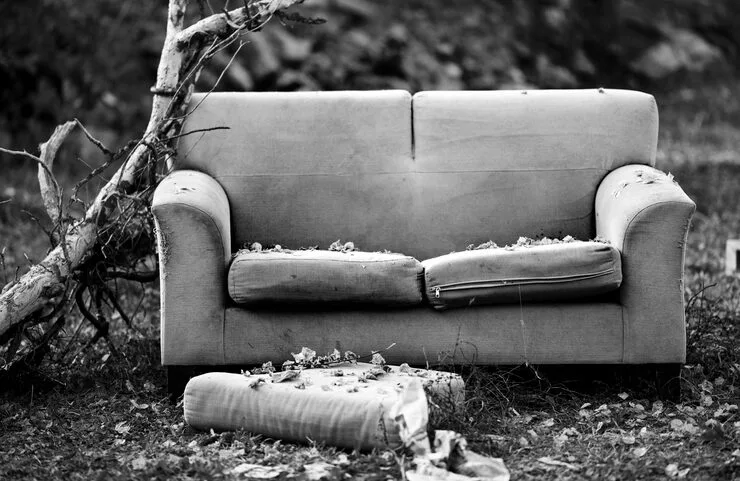
Getting rid of old furniture isn’t always as simple as tossing it out. If you’ve got a worn-out sofa, a bulky dresser, or a bed frame that’s seen better days, figuring out how to dispose of old furniture can feel tricky. Do you donate it, recycle it, or call in a junk removal service?
This guide covers all the options, from donation centers and online marketplaces to recycling facilities and municipal bulk pickup programs. You’ll also find tips on eco-friendly disposal, handling large or heavy items, and navigating local rules and costs. By the end, you’ll know exactly where to dispose of furniture safely, responsibly, and efficiently. Whether you’re decluttering, moving, or simply upgrading, this article gives practical, real-world solutions to make clearing out old furniture stress-free and maybe even a little satisfying.
Check the Condition of Your Furniture
Before you pick a method for disposal, take a careful look at what you have.
Determine Condition
- Good condition: No major stains, breaks, or structural issues. These pieces might still be useful to someone else.
- Fair condition: Furniture has wear but could be repaired, upcycled, or salvaged for parts.
- Poor condition: Broken, stained, or unsafe items that likely can’t be donated or reused.
Knowing where your furniture falls on that spectrum helps you decide how to dispose of old furniture in the most responsible way.
What Can Be Reused, Donated, Recycled, or Trashed
- Reuse or donation: Beds, sofas, dining tables, chairs, or dressers that are stable and clean are often accepted by charities or thrift stores.
- Recycling: Materials like metal, wood, or untreated parts can sometimes go to recycling centers.
- Trash: Items that are unsafe, infested, or beyond repair will probably need disposal through city services or a landfill.
Ways to Dispose of Furniture

When you are figuring out where to dispose of furniture, you have four main paths. Choose based on your timeline and your physical ability to haul heavy items.
1. Donation Options
Donating is the best way to ensure your old items don’t end up in a landfill.
- Habitat for Humanity ReStore: They love large furniture and often offer free pickup for items they can resell to fund housing projects.
- The Salvation Army & Goodwill: These are staples for how to get rid of old furniture. However, be aware that since late 2024, many locations have become stricter. If there is a single cat scratch on that sofa, they might reject it.
- Local Shelters: Many domestic violence or homeless shelters need functional furniture to help families move into new homes. This is a direct way to help your community.
2. Sell or Give Away
If you want to know how can I get rid of old furniture for free or even make a buck the internet is your best friend.
- Facebook Marketplace / Nextdoor: List it as a “Curb Alert.” If you price a decent dresser at $20 or “Free,” it will usually vanish within two hours.
- Buy Nothing Groups: These hyper-local communities are obsessed with keeping items out of the trash. It’s a great way to meet a neighbor and clear your garage simultaneously.
3. Professional Junk Removal
If you have a massive sectional or a heavy armoire, junk sofa removal services are worth the investment.
- Costs: In 2025, the national average for a single furniture item removal ranges from $80 to $200.
- Why pay? They do the heavy lifting, navigate the stairs, and ensure the item is disposed of according to local environmental laws. Companies like Junk Masterz or local independent haulers are the gold standard here.
4. Recycling Centers
Did you know that 80% of a sofa can actually be recycled?
- Metal: Springs and frames are easily processed.
- Wood: Can be turned into mulch or particleboard.
- Foam: Certain centers can clean and repurpose foam for carpet padding. Search for “Bulky Item Recycling” on your city’s .gov website to find drop-off points.
Eco-Friendly Disposal & The Landfill Problem
We have a fast furniture problem. Much like fast fashion, cheap particleboard furniture isn’t built to last. When you throw away furniture, it doesn’t just go away. It sits.
Repurposing Ideas
Before you toss it, ask if it can be something else.
- An old dresser can become a bathroom vanity.
- A broken wooden ladder can become a trendy bookshelf.
- Old chair cushions can be restuffed to make pet beds for local animal shelters.
Avoiding Landfills
Methane emissions from decomposing wood in landfills are a significant contributor to climate change. By choosing to recycle or donate, you are directly reducing your carbon footprint. In 2025, many “Zero Waste” initiatives are offering incentives or rebates for residents who prove they recycled their bulky waste instead of dumping it.
Cost Considerations & Local Regulations
Disposal isn’t always free. If you are planning how to dispose of large furniture, you need to account for hidden fees.
- Municipal Bulk Waste: Most US cities offer 1–2 free “Bulk Days” per year. Outside of those dates, you may have to pay a “Gate Fee” at the local transfer station, which can range from $25 to $75 per load.
- Retailer Take-Backs: In 2025, many major US retailers (like IKEA or Costco) offer furniture take-back programs when you buy new items. Check if your delivery fee includes “Old Item Haul-Away.”
- Illegal Dumping Fines: Leaving a couch in a Seattle alley or an NYC sidewalk outside of trash day can result in fines upwards of $500. It’s never worth it.
The Ultimate Step-by-Step Disposal Checklist
Use this checklist to handle how to dispose of large furniture like a pro.
- Measure the Exits: Don’t wait until the haulers arrive to realize the sofa won’t fit through the door.
- Clean the Item: Wipe down surfaces. No one wants to buy or take a dusty, cobweb-filled chair.
- Check for Hazards: Remove any glass tops or sharp protruding nails.
- Take High-Quality Photos: If selling or donating online, good lighting adds value.
- Schedule the Pickup: Whether it’s the city or a private company, get it on the calendar 48 hours in advance.
- Disassemble: If you can take the legs off or break a bed frame down, it’s much easier (and cheaper) to transport.
Conclusion
Getting rid of the old to make room for the new is a cathartic experience. When you’re exploring how to dispose of old furniture, planning is the key whether you choose a professional junk removal service or spend a Saturday morning at a U.S. donation center. By following these steps, you can protect your wallet, your back, and the environment.
At Junk Masterz, we specialize in making this process seamless. If you’ve cleared out your old furniture and realized you need a full-scale property cleanout or just a hand with that heavy sectional, we are here to help. We provide expert junk removal services to ensure your home or office is decluttered and ready for its next chapter.
Ready for a fresh start? Get a Quote and Free Estimate from Junk Masterz today and let’s make your space shine!
FAQs
How do I get rid of a big piece of furniture?
Donate or sell if in good condition; schedule municipal bulk pickup; take it to a landfill or transfer station; hire a junk removal service; rent a dumpster for multiple items.
What is the best way to get rid of unwanted furniture?
Donate or sell for free pickup; schedule city or county bulk collection; hire a professional junk removal service.
How much does got junk charge to remove furniture?
Junk Masterz? doesn’t list fixed prices because their cost depends on how much truck space your items take.
Is it illegal to leave a couch on the side of the road?
Yes, it’s generally illegal dumping; allowed only on scheduled bulk pickup days or with permission.
Is it illegal to throw furniture away in a dumpster?
Allowed in your own rented dumpster or with permission; illegal in private/shared dumpsters without permission.
How do I get rid of a piece of furniture?
- Donate or sell if usable.
- Check local bulky pickup schedules.
- Offer it online for free pickup.
- Hire a junk removal service.
- Take it to a landfill or transfer station.
What is the best way to dispose of an old couch?
Donate or sell if in good condition; schedule municipal bulky pickup; hire a junk removal service; DIY drop-off at a landfill or transfer station.