Glass seems harmless enough when it’s sitting on a shelf. But when it breaks or needs to be discarded, it can become dangerous. Sharp edges can cut skin, and improper disposal may contaminate recycling or pose risks to workers. This article breaks down how to dispose of glass the right way, including how to dispose of broken glass, what types you can recycle, and where you should never put glass in normal recycling bins.
We’ll keep things clear and practical, using real data and guidelines that match what recycling facilities and environmental groups recommend. You’ll get straight answers without extra fluff.
Understanding Different Types of Glass
Not all glass is created equal. The chemical composition and manufacturing process determine whether glass can be recycled or must be thrown away.
Glass You Can Recycle
Container Glass (Food & Beverage)
- Beer, wine, and liquor bottles
- Soda and juice bottles
- Food jars (pasta sauce, pickles, jelly)
- Condiment containers
- Glass spice jars
Container glass is infinitely recyclable because it’s made from soda-lime glass with consistent melting points. According to the Glass Packaging Institute, recycling one ton of glass saves 1,300 pounds of sand, 410 pounds of soda ash, and reduces CO2 emissions by 20%.
Identifying Recyclable Glass: Look for clear, green, or brown bottles and jars with smooth surfaces. If it held food or drinks, it’s likely recyclable.
Glass You Cannot Recycle
Flat Glass
- Windows and window panes
- Mirrors
- Picture frame glass
- Shower doors
- Glass tabletops
Flat glass contains different chemicals and has a different melting point than container glass, making it incompatible with standard recycling processes.
Heat-Resistant Glass
- Pyrex cookware
- Corning ware
- Ceramic bakeware
- Coffee pots
These products are treated to withstand high temperatures, which changes their chemical structure and melting point.
Specialty Glass
- Automotive glass (windshields, car windows)
- Crystal glassware
- Drinking glasses and mugs
- Light bulbs (except CFLs with special programs)
- Glass decorations
- Ceramics and porcelain
Why These Can’t Be Recycled: These glass types contain additives like boron, lead, or special coatings that contaminate recycling batches. Even a small amount can ruin an entire batch of recyclable glass.
How to Recycle Glass Bottles and Jars Properly
Recycling glass correctly ensures it actually gets processed instead of contaminating other materials.
5-Step Preparation Process
Step 1: Empty and Rinse Remove all contents and give containers a quick rinse. You don’t need to sterilize them a brief rinse removes food residue that attracts pests and causes odors.
Step 2: Remove Lids and Caps Metal caps, plastic lids, and corks should be separated. Metal caps can often be recycled separately if they’re steel or aluminum. Check your local guidelines.
Step 3: Remove Labels (Optional) While not required by most programs, removing labels helps create cleaner recycled glass. Labels typically burn off during the melting process but can increase emissions.
Step 4: Don’t Break the Glass Keep glass intact for curbside recycling. Broken glass poses safety risks to collection workers and can contaminate other recyclables.
Step 5: Check Color Sorting Requirements Some programs want glass sorted by color (clear, green, brown). Others accept mixed glass. Verify your local requirements.
Cost Comparison: Disposal Methods
| Method | Cost | Best For |
| Curbside recycling | Free | Bottles and jars |
| Drop-off center | Free | All recyclable glass |
| Trash pickup | Free | Small amounts, wrapped |
| Bulk pickup | $0-$50 | Large items with notice |
| Junk removal | $100-$300 | Large quantities, convenience |
| Bottle deposits | +$0.05-$0.10 per bottle | Redemption states |
How to Throw Away Glass Safely
Throwing away glass goes beyond just tossing it in a bag. Sharp edges are dangerous for sanitation workers and anyone handling the waste later. Let’s walk through how to throw away glass step by step.
Step‑By‑Step: Safe Disposal
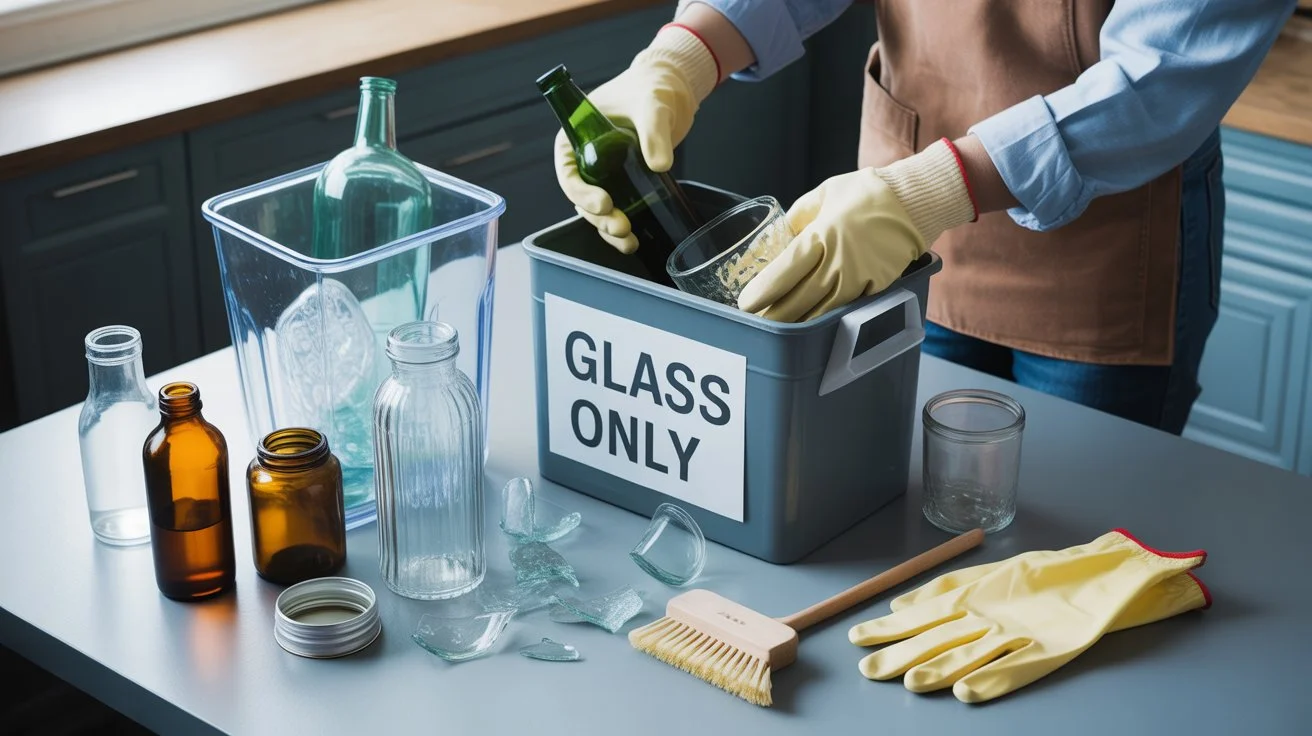
- Wear protection
Always wear thick gloves when handling broken or loose glass to avoid cuts. - Collect pieces carefully
Use a broom and dustpan or a thick towel to gather shards. Never pick up broken pieces with your bare hands. - Contain the glass
Place broken pieces into a strong container like a rigid cardboard box or sealed plastic bag. Label it clearly as “Broken Glass”.
- No curbside recycling for broken shards
Curbside systems are not designed to handle loose broken glass. It can escape packaging and cut workers or contaminate other recyclables. - Check local rules
Some recycling centers accept broken glass at designated drop‑off locations. Contact your local waste authority to find out where to take it. - Wrap mirrors and non‑recyclable glass
Mirror pieces and other non‑recyclable glass should be wrapped the same way, then placed in general trash following your local regulations
These steps tell you how do you dispose of broken glass and how to safely dispose of broken glass without risking injury.
What to Do With Broken Glass

Even though this sounds familiar, it’s different from recycling intact bottles. Broken glass can’t usually go in your bin because it doesn’t get sorted safely or effectively at recycling facilities.
Here’s what to do:
- Use sturdy packaging
Make double or triple layers of cardboard or wrap before sealing. - Label the box clearly
Mark it as “Broken Glass” so waste handlers know what’s inside. - Take it to a drop‑off center
Some communities accept broken shards at specialized recycling drop‑offs. Always check before you drive over.
If recycling isn’t an option locally, follow your municipality’s disposal instructions and use the general waste collection. Proper containment protects others and prevents injuries.
Are Mirrors Recyclable?

Many people wonder are mirrors recyclable or can mirrors be recycled. The short answer is that most mirrors cannot go into curbside glass recycling. The reflective backing and coatings interfere with the recycling process.
But don’t toss them carelessly. You can:
- Donate mirrors in good condition to thrift stores or reuse organizations.
- Wrap broken mirrors securely for trash disposal.
- Ask your local recycling center if they accept mirrors separately.
Some centers recycle mirrors if they have systems for separating coatings, but this varies widely.
Environmental Impact of Glass Waste
Glass may look simple, but improper disposal affects both communities and ecosystems.
Long‑Term Problems with Landfill Disposal
Glass can take thousands of years to break down in landfills. Unlike organic waste, it doesn’t rot or shrink over time, so it just sits there, taking up space.
Risks from Improper Throw‑Away Habits
Broken or loose glass left in regular waste presents hidden hazards:
- Injuries for sanitation workers and animals
Sharp fragments hurt people and animals, especially when hidden in bags. - Recycling contamination
Non‑recyclable glass mixed with recyclable materials can spoil whole batches, forcing recyclers to landfill them. - Lost resources
Glass that could be recycled becomes waste, meaning more raw materials and energy are used to make new glass.
Recycling bottles and jars prevents raw material extraction, helps cut energy use, and reduces greenhouse gas emissions. Glass can be recycled endlessly without losing quality, which makes proper disposal an easy win for the planet.
Conclusion
Learning how to dispose of glass safely protects your home, family, and the environment. Proper handling of broken bottles, jars, mirrors, or other glass items prevents injuries and ensures recyclable materials are reused responsibly.
For professional service, trust Junk Masterz for Eco Friendly Recycling in Fresno. Get a Quote Today and let our team make glass disposal safe, simple, and hassle-free.
Frequently Asked Questions
Can you put glass in regular trash?
Non-recyclable glass can go in regular trash if properly wrapped to prevent injury. Recyclable glass should always go to recycling, never trash.
Is broken glass recyclable?
Broken container glass (bottles/jars) may be recyclable at drop-off centers, but most curbside programs won’t accept it due to worker safety concerns. Always call first.
Should I separate glass by color?
This depends on your local program. Some require separation (clear, green, brown), while others accept mixed glass. Check your municipality’s guidelines.
Can I recycle a mirror?
No. Mirrors contain reflective backing that contaminates recycling. Wrap safely and dispose in trash, or donate if usable.
What about window panes?
Window glass is not recyclable in standard programs due to different chemical composition. Some specialty recyclers accept it check locally.
Are drinking glasses recyclable?
No. Drinking glasses, mugs, and drinkware have different melting points than container glass and cannot be recycled with bottles and jars.
Can Pyrex go in recycling?
No. Heat-resistant glass like Pyrex has a different chemical structure and melting point. Donate if usable or wrap and trash.
How do I dispose of a large mirror safely?
Apply duct tape across the surface in an X pattern, wrap in cardboard or bubble wrap, label “GLASS,” and place beside your trash. For mirrors over 4’x4′, call for special pickup.
Do I need to remove labels before recycling glass?
Not required by most programs. Labels burn off during processing, though removing them reduces emissions slightly.
What’s the difference between container glass and flat glass?
Container glass (bottles/jars) uses soda-lime formula designed for recycling. Flat glass (windows/mirrors) contains different chemicals and coatings that prevent standard recycling.
How much does professional glass disposal cost?
Junk removal services typically charge $100-$300 depending on volume. Some waste services offer free bulk pickup with notice.
Can glass be recycled indefinitely?
Yes. Glass is 100% recyclable with no quality loss, meaning one bottle can become new bottles forever.
Why don’t some cities accept glass in recycling?
Single-stream recycling (all materials together) can cause glass to break and contaminate paper/cardboard. Some cities find separate collection more cost-effective.