If you’re staring at a treadmill that hasn’t moved in months or a home gym setup that’s now just an expensive coat rack, you’re probably wondering how to dispose of exercise equipment without wrecking your back or your weekend. The good news is that most fitness equipment doesn’t have to end up in a landfill.
Between donation centers, resale marketplaces, scrap recyclers, and professional removal crews like ours at Junk Masterz, there’s a disposal path for almost every piece of equipment and every budget. This guide walks through every realistic option, what actually works in practice (not just in theory), and how to pick the right method for your specific situation in under five minutes.
Quick Answer: Which Disposal Method Fits Your Situation?
Before you spend an hour reading a wall of text, here’s the short version. If your equipment still works and you have a week to spare, sell it or donate it. If it’s broken but heavy on metal, scrap it. If it’s electronic (touchscreen bikes, app-connected treadmills), it needs an e-waste path, not a regular trash bin. If you just want it gone today with zero lifting, call a removal crew.
| Method | Cost | Speed | Effort | Eco-Impact |
| Donate | Free to low cost | 1 to 3 days | Medium (you transport it) | High |
| Sell | Free (time cost) | Days to weeks | Medium to high | High |
| Scrap/Recycle | Free to low cost | Same day to a few days | Medium | High |
| Junk Removal | $75 to $500+ | Same day | Low | Medium to high, depending on the company’s recycling rate |
Why Proper Exercise Equipment Disposal Matters
Gym equipment disposal isn’t like tossing out a broken lamp. Most machines combine steel frames, rubber belts, foam padding, plastic housings, and in newer models, circuit boards and lithium batteries. Dumping that mix at the curb or in a regular dumpster creates real environmental problems and, depending on where you live, legal ones too.
Environmental Impact
Steel and aluminum from a single treadmill frame can be melted down and reused almost indefinitely. When that same frame goes to a landfill instead, the metal is gone for good, and any circuit boards or wiring left inside can leach heavy metals into the soil over time.
Local Regulations and Fines
Many California cities, including Fresno, restrict what curbside bulk pickup will actually take, and electronics are almost always excluded from regular trash. Illegal dumping citations in Fresno County can run from $250 for a first offense up to $1,000 or more for repeat violations, and that’s before factoring in towing or cleanup fees if the item is left on public property.
Benefits of Doing It Right
Handled correctly, disposal keeps usable materials in circulation, avoids fines, and in the case of donations, can support a tax deduction. It also frees up garage or basement space faster than trying to sell something nobody wants to buy.
Know Your Equipment Before You Choose a Method
Not every machine disposes of the same way, and knowing the category up front saves a lot of wasted phone calls.
Large cardio machines (treadmills, ellipticals, stationary bikes, rowers) are heavy, often 150 to 350 pounds, and usually contain a motor plus wiring.
Strength equipment (benches, squat racks, home gyms, dumbbells) is mostly solid metal and among the easiest to scrap.
Small accessories (mats, resistance bands, kettlebells) are light enough to donate directly or toss in with regular recycling in most cases.
Quick reference table:
| Equipment | Typical Weight | Disposal Difficulty |
| Treadmill | 150 to 350 lbs | High |
| Elliptical | 150 to 250 lbs | High |
| Exercise Bike | 50 to 130 lbs | Medium |
| Rowing Machine | 40 to 90 lbs | Low to Medium |
| Home Gym System | 200 to 400 lbs | High |
| Weight Bench | 30 to 80 lbs | Low |
One thing most guides skip: newer connected equipment with built-in touchscreens or Wi-Fi modules counts as electronic waste, not scrap metal, once separated from the frame. That screen needs to go through an e-waste recycler, even if the rest of the machine goes to a metal yard.
Where to Donate Fitness Equipment
If the motor still runs and the belt isn’t shredded, donating is usually the fastest way to know exactly where to donate fitness equipment without it sitting in a garage for months.
Community centers, youth sports leagues, and local churches in the Fresno area regularly take working cardio and strength equipment, especially anything that folds for storage. Most organizations want the item clean, functional, and ideally with its original power cord or manual if it’s electronic. Some equipment manufacturers also run trade-in or take-back programs when you buy a replacement model, which is worth asking about before you assume donation is your only free option.
Donating isn’t just convenient. It also extends the equipment’s life by years and, in many cases, qualifies for a charitable tax deduction. Keep a receipt from the organization if that matters to you.
Selling Your Used Exercise Equipment
Selling works best for mid-range and premium equipment less than five years old. Facebook Marketplace and OfferUp move fitness equipment faster than general classified sites because local buyers can see it in person before committing to hauling it themselves.
Photos matter more than most sellers expect. Equipment shot in daylight, wiped down, with the display panel turned on if it’s electronic, sells noticeably faster than a dark garage photo. Price is driven mostly by brand recognition, current condition, and how recently a similar model launched, since fitness equipment loses value quickly once a newer version hits the market.
Recycling Exercise Equipment Responsibly
When equipment is too worn out to sell or donate, recycling is the next best move, and it’s a major part of responsible gym equipment disposal.
Steel frames, weight plates, and metal brackets are accepted by most scrap yards and often pay out a small amount per pound. Circuit boards, motors, and power cords need to go through a certified e-waste recycler instead, since standard scrap yards don’t always process electronics safely.
Recycling rules also shift by state. California treats certain electronic components under its e-waste recycling fee program, which is part of why some recyclers ask for a small handling charge on machines with digital displays, while purely mechanical equipment like a basic weight bench has no such restriction.
How to Dispose of Broken Exercise Equipment
Before scrapping anything, it’s worth a five-minute gut check on repair versus replace. A snapped resistance band or a worn treadmill belt is often a $30 fix. A dead motor on a ten-year-old elliptical usually isn’t worth repairing.
For equipment that’s done, disassembly makes disposal easier and sometimes cheaper. Unplug it, remove any batteries, and separate the metal frame from plastic housing and electronic parts where you can. Non-repairable machines then split into two piles: metal goes to a scrap yard, electronics go to e-waste recycling.
How to Dispose of a Treadmill, Step by Step
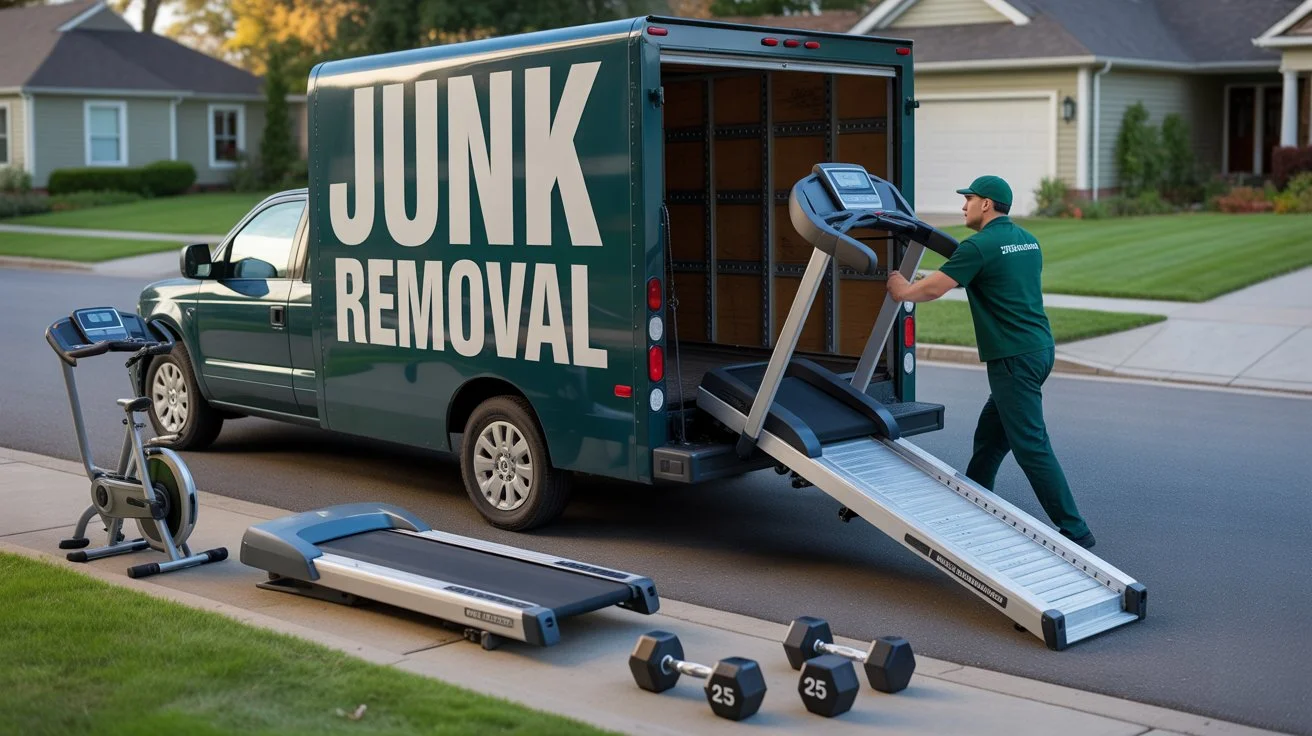
Treadmills are the single hardest piece of equipment we get called about, and there’s a reason. A full-size treadmill weighs 200 to 350 pounds, doesn’t fold through a standard doorway easily, and often has to come down a staircase.
Basic breakdown steps our crews use in the field:
- Unplug and unfold the deck if it’s a folding model.
- Remove the safety key and any loose weights or attachments.
- Detach the console from the frame using the bolts underneath the handlebars.
- Separate the motor housing from the deck if you’re planning to scrap the frame separately.
- Wrap the belt or secure it so it doesn’t unroll during transport.
Once it’s ready to move, you have the same four options as any other machine:
Donate It: Works best if the belt and motor are in good shape and the unit folds for transport.
Sell It: Recognizable brands hold resale value even a few years in.
Recycle It: Split the frame from the electronics and take each to the right facility.
Hire Professionals: For anything on an upper floor or down a narrow stairwell, this is usually faster and safer than doing it yourself.
Municipal Bulk Pickup and Free Disposal Options
Some Fresno-area waste programs will take large items during scheduled bulk pickup weeks, though most cap the weight or number of items per household and exclude anything with a motor or electronics. Check your city’s sanitation page before setting a treadmill at the curb, since an unapproved bulk item can sit there for weeks or trigger a fine instead of a pickup.
If you want equipment gone at no cost and bulk pickup isn’t an option, local giveaway groups and community swap pages move surprisingly fast, especially for anything under 100 pounds that a buyer can carry themselves.
Hiring a Junk Removal Service
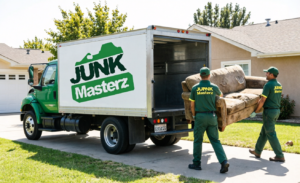
When the equipment is too heavy, located upstairs, or you simply don’t have a truck, professional removal is the practical answer. This is where we come in. At Junk Masterz, we handle everything from a single stationary bike to a full commercial gym cleanout, and we sort what we collect into donation, scrap metal, and e-waste instead of sending it all to one dumpster. If you need equipment gone alongside other household items, our Waste Removal Services Fresno CA team can usually combine both into a single pickup.
Typical removal costs we quote in Fresno:
| Equipment | Average Cost |
| Exercise Bike | $75 to $150 |
| Treadmill | $100 to $250 |
| Home Gym System | $150 to $500 |
| Full Gym Cleanout | $300 to $1,000+ |
DIY Disposal Tips
If you’re moving equipment yourself, use a dolly for anything over 100 pounds, keep the load low and stable, and never attempt a treadmill or home gym down a staircase alone. A socket wrench set and an adjustable wrench cover most disassembly needs without buying specialty tools.
Eco-Friendly and Creative Alternatives
Old weight plates make surprisingly solid garden edging, and treadmill decks get repurposed into workshop benches more often than you’d expect. If reselling or donating isn’t practical, these small upcycling projects at least keep the material out of a landfill a while longer.
Common Mistakes to Avoid
The biggest one we see is leaving equipment at the curb without checking local rules first, which usually just means it sits there or gets fined. A close second is tossing electronic components straight into household trash instead of an e-waste stream, and the third is skipping donation entirely on equipment that a local charity would have taken in ten minutes with a phone call.
Final Thought
Knowing how to dispose of exercise equipment really comes down to matching the equipment’s condition to the right method: sell or donate what still works, recycle what doesn’t, and call in help for anything too heavy or awkward to move safely. Whatever you decide to do with old exercise equipment sitting in your garage, you don’t have to figure it out alone. Contact Junk Masterz today and we’ll handle the heavy lifting, sorting, and responsible disposal for you.
Frequently Asked Questions
What should I do with broken gym equipment?
Separate the metal frame from any electronic parts, then take the metal to a scrap yard and the electronics to a certified e-waste recycler. If the damage is minor, it’s worth getting a repair quote before assuming it’s a total loss.
Can scrap yards take exercise equipment?
Yes, most scrap yards accept steel-framed equipment like weight benches, squat racks, and treadmill frames once the electronics are removed. Call ahead since some yards have size limits for bulky items.
Is donating exercise equipment tax-deductible?
In many cases, yes, if the donation goes to a qualified nonprofit and you keep a receipt. Deduction rules vary, so it’s worth checking with a tax professional for your specific situation.
Do fitness equipment brands recycle old machines?
Some manufacturers run trade-in or take-back programs when you purchase a new model, though this varies widely by brand and isn’t standard across the industry. It’s worth asking directly before assuming it’s an option.
What happens if I illegally dump exercise equipment?
Fines in the Fresno area can range from around $250 for a first offense to $1,000 or more for repeat violations, plus possible cleanup costs. It’s rarely worth the risk when donation, recycling, or removal all cost less than the fine.