Cleaning up after a home project is often harder than the work itself. You look at the pile of white boards in your garage and wonder what to do next. You cannot just throw it in the regular trash. Most cities have strict rules about construction waste. If you are trying to figure out how to dispose of drywall, you are in the right spot.
This guide explains the best ways to get rid of your mess. We will look at recycling, safety, and local laws. Whether you have a few small scraps or a whole room of old walls, you need a plan. Doing it the right way keeps you safe and avoids big fines. Let’s look at the steps to clear your space and finish your job.
Is Your Drywall Safe to Remove?
Before you begin removing drywall, it’s essential to ensure it’s safe. Not all drywall is created equal, and some older boards may contain hazardous materials. Here’s what to check before you start:
Check for Hazardous Materials
Some drywall in homes built before the 1980s may contain asbestos. Disturbing asbestos can release dangerous fibers into the air, posing serious health risks. If you suspect your drywall may contain asbestos, it’s best to hire a professional to handle removal.
Beware of Dust and Gas
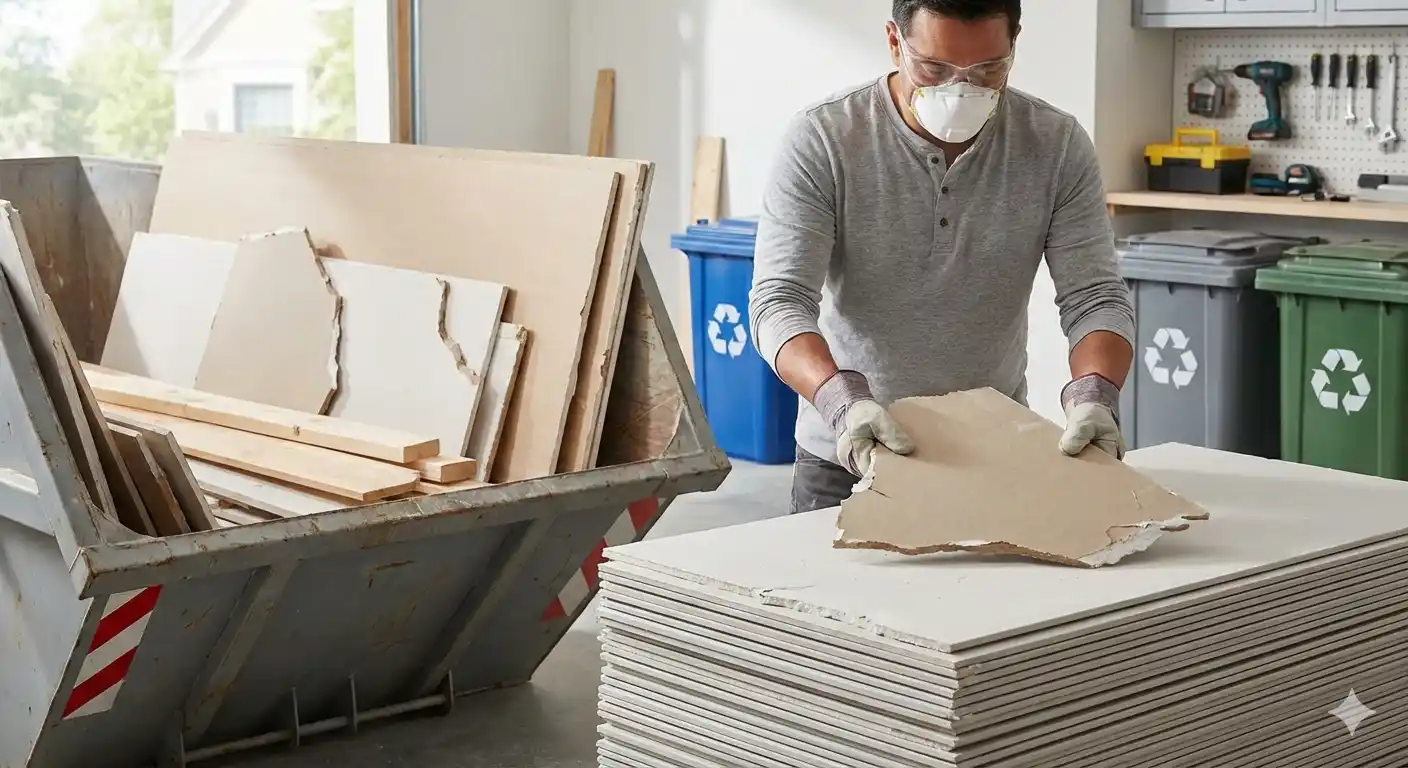
Drywall dust is not just messy; it can irritate your eyes, skin, and lungs. In rare cases, old or wet drywall can release hydrogen sulfide gas. This makes wearing a dust mask and eye protection essential. Long sleeves and gloves are also recommended.
Turn Off Utilities
Before removing drywall, turn off electricity in the area. Cutting into drywall without checking for hidden wires can be dangerous. Similarly, be aware of plumbing behind walls to prevent accidental damage.
Decide DIY vs. Professional Help
Small projects may be handled safely at home, but larger demolition or renovation projects benefit from professional services. Junk Masterz specializes in safe drywall removal, helping you avoid injuries and ensuring your drywall is disposed of correctly.
Taking these precautions first can prevent accidents and make your drywall disposal process smoother.
How to prepare drywall for disposal
Getting your waste ready is the most important step. If you just throw everything in a pile, it will be much harder to move later. Proper drywall prep for disposal also helps you save money at the dump.
Removing Metal and Hardware
Drywall is usually held up by nails or screws. Before you take it to a recycling center, you should pull all of those out. Use a hammer or a pry bar. Also, look for metal corner beads. These are the long metal strips on the corners of walls. Recycling centers want clean gypsum. If there is too much metal, they might treat it like regular trash, which costs more.
Sorting by Type and Condition
Not all drywall is the same. You should make three different piles:
- Clean Scraps: These are brand-new pieces that have never been painted. These are the best for recycling.
- Painted Pieces: These are old pieces from your walls. They are harder to recycle but still okay for some landfills.
- Wet or Moldy Pieces: These must be kept separate. They are heavy and can contaminate other materials.
Cutting and Bagging
If you are taking the waste to the dump yourself, you need to make it easy to carry. Large sheets of drywall are hard to handle. Use a utility knife to cut them into squares that fit into contractor bags. Do not use thin kitchen bags. They will rip and leave a mess on your floor. For drywall mud disposal, make sure the mud is totally dry. If you have half-full buckets of wet mud, leave the lids off for a few days until they turn into solid blocks.
Step‑by‑Step Disposal Methods
There are many drywall disposal methods to choose from. Your choice depends on your budget and how much time you have.
Using a Roll-Off Dumpster
This is the most common way for big jobs. A company drops a big metal box in your driveway. You fill it up over a week or two. This is perfect for construction waste disposal. Just be careful not to overfill it. Drywall is very heavy, and dumpsters have weight limits. If the box is too heavy, the truck might not be able to pick it up.
Read More: How Much to Rent a Dumpster?
Hire Professional Junk Removal
If you don’t want to spend your weekend carrying heavy bags, a pro service is best. The junk removal guy will come into your home or garage. They pick up the heavy pieces and load them into their own truck. This is a fast way to get your space back. You don’t have to worry about driving to the dump or getting your own truck dirty. You can Contact Us to find out how much it would cost for your specific pile of debris.
Local Curbside Pickup
Some towns have a “bulk waste” day once a month. You can put large items on the curb. However, you must check your local disposal regulations first. Many cities will take a sofa but will not take bags of sheetrock. If you put it out without checking, it might sit there and get wet, making it even harder to move later.
Donation
If you bought too much and have full sheets left over, do not throw them away. You can donate drywall to groups that build low-cost housing. As long as the sheets are clean and not broken, they are very useful. This is the best way to help someone else while cleaning up your own home.
Landfill Disposal
As a last resort, drywall can be taken to a landfill. Keep in mind that many areas have drywall landfill restrictions to prevent environmental hazards like hydrogen sulfide gas. Contact your local landfill to understand any limits or special procedures.
By evaluating these options, you can choose the method that balances cost, convenience, and environmental impact.
Can You Recycle Drywall?
Many people ask this question because they want to be green. The answer is yes, but it is not always easy. Drywall recycling is a great way to help the environment.
The Problem with Landfills
When you put drywall in a regular landfill, it gets buried under other trash. There is no air there. When gypsum gets wet and has no air, it starts to break down. This creates a smell like rotten eggs. This is the hydrogen sulfide gas risk from drywall. This gas is not just smelly; it can be bad for the air we breathe. This is why many states are making new drywall landfill restrictions.
How Gypsum is Reused
Gypsum board recycling turns old walls into new products. Machines grind the gypsum into a fine powder. This powder can be used to make new drywall. It can also be used by farmers. Gypsum helps break up heavy clay soil. This lets water and air get to the roots of plants. If you are a gardener, you might even find uses for small, unpainted scraps in your own compost pile.
Finding a Recycling Center
You can use this to find a “C&D” (Construction and Demolition) recycling center near you. Just type in your zip code and ask for a place that takes gypsum. These centers focus on drywall segregation and sorting. They make sure the paper on the outside of the board is separated from the white mineral inside.
How Much Does Drywall Disposal Cost?
The cost of disposal depends on the method, amount, and your location. Here’s a breakdown:
| Method | Typical Price | Who it is For |
| Self-Haul | $40 – $100 | People with a truck and a strong back |
| Dumpster Rental | $350 – $550 | Major home flips or room additions |
| Junk Removal | $160 – $450 | People who want it gone fast |
| Recycling | $30 – $70 | Eco-friendly homeowners |
Planning your disposal method ahead of time prevents surprises and keeps your project on budget. Keep in mind that improper disposal can result in fines in some areas, making safe and legal disposal more cost-effective in the long run.
Safety and Legal Guidelines
You must play by the rules when dealing with construction and demolition debris. If you don’t, you could end up in legal trouble.
Following Local Laws
Every county has a set of rules for waste. Some places require you to have a permit just to have a dumpster on the street. Others have strict drywall landfill restrictions that say you cannot put gypsum in the regular trash. If you get caught dumping illegally, the fines can be thousands of dollars. It is much cheaper to pay a pro or a dump fee than to pay a fine.
Protecting Your Health
When you are moving drywall, you are creating dust. Even if it doesn’t have asbestos, the dust is not good for your throat or nose. Wear a mask the whole time. Also, remember that drywall is heavy. If you lift it the wrong way, you can hurt your back. Always bend your knees and never twist while you are holding a heavy load.
Final Thoughts
Proper drywall disposal requires planning, preparation, and awareness of local rules. By understanding safe drywall removal, prep methods, disposal options, and recycling, you can complete your project efficiently and responsibly.
For large projects or professional help, don’t hesitate to Contact Us at Junk Masterz. Our team handles drywall disposal, recycling, and cleanup, making your project safer, faster, and compliant with local regulations.
If you’re in Fresno, CA, and need expert help with construction debris, check out our Construction Debris Removal Services in Fresno, CA for reliable solutions. Let our team handle the heavy lifting so you can focus on completing your renovation safely and on time.
FAQs
What can I do with old drywall?
Old drywall can be recycled at local gypsum centers, reused if sheets are intact, donated to schools or nonprofits, or placed in a construction dumpster. Small amounts may qualify for curbside pickup, but always follow local disposal regulations.
Can I throw away old drywall?
Yes, but only in small quantities and following local rules. Large amounts should go to a construction dumpster or recycling facility. Avoid mixing with other debris if recycling is planned.
What’s the best way to get rid of drywall?
Recycling is the safest and most eco-friendly method. For large projects, dumpster rentals work well, while small, clean pieces can be donated. Always follow local disposal regulations.
Can you burn drywall to get rid of it?
No. Burning drywall releases toxic gases like sulfur dioxide and hydrogen sulfide. It’s unsafe and illegal in most areas. Use recycling, donation, or dumpster disposal instead.
How to tell if old drywall has asbestos?
Drywall installed before the 1980s may contain asbestos. Look for fibers in damaged areas, but testing by a professional is safest. If asbestos is found, hire a licensed removal contractor.