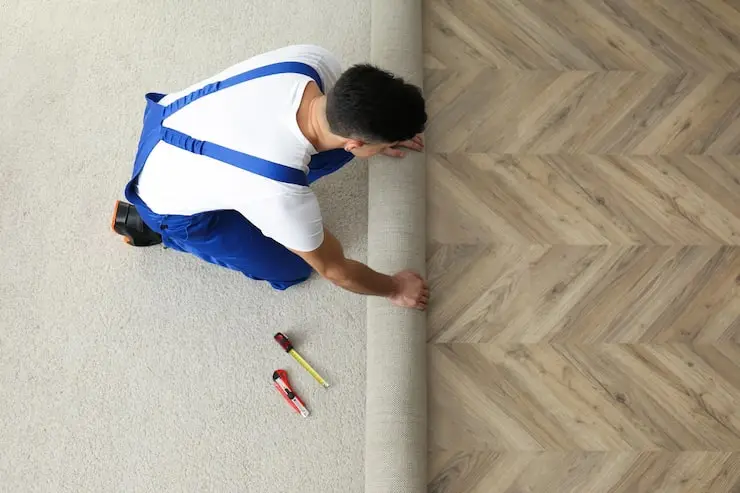
When you decide to refresh your home, one of the first things people notice is the floor. If your carpet is old, smelly, or stained, you might be asking: how much does carpet removal cost? It is a great question! Knowing the price helps you plan your budget. In 2026, many homeowners are looking for the best way to get rid of old flooring without overspending.
We know that every home is different. Some carpets are easy to pull up, while others are glued down tightly. Whether you want to do it yourself or hire a pro, we are here to help. This guide will break down the average cost to remove carpet, the factors that change the price, and how to know when it is time for a change.
National Cost Ranges
The average cost to remove carpet in the United States typically falls between $150 and $400 for a single large room. If you are looking at it by size, most professionals charge a carpet removal cost of $0.50 to $1.50 per square foot.
However, the price range for carpet removal can vary. If you have a small, simple room, you might only pay around $100. On the other hand, a large house with many stairs and heavy furniture could cost over $1,000.
Here is a quick look at the average carpet removal cost in 2026:
| Project Size | Square Footage | Average Price Range |
| Small Bedroom | 120 sq. ft. | $75 – $180 |
| Living Room | 250 sq. ft. | $125 – $375 |
| Master Suite | 400 sq. ft. | $200 – $600 |
| Full House | 1,500 sq. ft. | $750 – $2,250 |
Carpet Removal Cost Factors

Cost per Square Foot
This is the most common way companies price a job. Most carpet removal prices are based on how much material needs to be ripped up. In 2026, standard wall-to-wall carpet and padding usually cost between $0.70 and $1.60 per sq. ft. for both removal and disposal.
Location in Home
Removing carpet from high-traffic areas like stairs or basements often costs more. Stairs can range from $50 to $150 per flight, while basement carpet removal may require additional labor due to tight spaces and potential moisture issues. Cost to remove carpet from stairs is typically higher than open floor areas due to careful handling requirements.
Carpet Installation Method
The type of carpet installation directly affects removal costs. Stapled carpets are easier to remove than glued carpets. Cost to remove glued carpet may be higher, as it requires more labor and sometimes chemical treatments. Wall-to-wall carpeting, especially with padding, also takes more time and effort, affecting the price.
Labor
Labor costs make up a significant portion of carpet removal prices. Hiring experienced professionals ensures efficient removal and reduces the risk of damage to your subfloor. Professional carpet removal cost is generally higher than DIY projects, but it guarantees quality and proper disposal. For those who choose to DIY, labor is primarily your time and effort.
Carpet Disposal
Carpet disposal cost is another consideration. Some services include disposal in their estimates, while others charge extra depending on weight or local landfill fees. Carpet removal and disposal cost combined provides a clearer picture of your total investment.
Carpet Removal Costs by Type
Different carpet types require different removal approaches, affecting your total cost. Understanding these variations helps set realistic budget expectations.
Standard loop pile or cut pile carpet
represents the baseline for pricing. These common residential carpets cost $1 to $2 per square foot to remove when installed with traditional tack strips. They’re relatively straightforward projects that most professionals handle efficiently.
Plush or shag carpet
With thick padding sometimes costs slightly more $1.50 to $2.25 per square foot. The extra bulk makes rolling and hauling more difficult, and thick padding may stick to subfloors more stubbornly than standard thickness.
Berber carpet
typically falls into the standard price range unless it’s glued down. The looped construction doesn’t create special removal challenges, though very dense commercial-grade Berber might take slightly longer to cut and roll.
Commercial carpet
varies tremendously. Thin commercial carpet with minimal padding might cost less than residential ($0.75 to $1.50 per square foot), but commercial carpet is frequently glued, which increases costs to $2.50 to $4 per square foot as discussed earlier.
Carpet tiles
offer the easiest removal at $0.75 to $1.50 per square foot. Individual tiles lift separately, making the job less physically demanding and faster to complete.
Outdoor carpet
on decks, patios, or porches presents unique challenges. Weather exposure often degrades the backing, making it tear into small pieces during removal. Expect to pay $1.50 to $2.50 per square foot, especially if the carpet was glued to concrete.
Antique or specialty carpets
sometimes require careful removal to preserve the material for cleaning or donation. While not common in whole-house removal, this specialized service costs $3 to $5 per square foot when preservation matters.
Carpet with asbestos backing
requires certified professionals and costs $7 to $10 per square foot or more. Homes built before 1980 might have asbestos-containing carpet backing. Testing is essential before removal, and only licensed asbestos abatement contractors should handle these materials.
The condition of your carpet also matters. Deteriorated carpet that crumbles or shreds during removal takes longer to clean up, potentially adding $0.25 to $0.50 per square foot to your bill.
Additional Carpet Removal Cost Factors
Beyond the primary considerations we’ve covered, several other factors can impact your final carpet removal cost. Being aware of these helps prevent budget surprises.
- Tack strip removal isn’t always included in basic carpet removal quotes. These small wooden strips line room perimeters and have sharp tacks pointing upward. Leaving them in place works if you’re installing new carpet, but they must be removed for hardwood, tile, or laminate flooring. Removing tack strips adds $0.50 to $1 per linear foot to your project.
- Subfloor preparation and repair becomes necessary when you discover damage under your old carpet. Water stains, warping, squeaky boards, or rot need fixing before new flooring goes down. Simple repairs might cost $1 to $3 per square foot, while extensive damage could require $5 to $10 per square foot for replacement sections.
- Furniture moving impacts costs significantly. Most professional services expect empty rooms or charge extra for furniture. Moving furniture yourself saves $25 to $75 per room. If you need full furniture moving and replacement service, add $100 to $300 to your total depending on room size and furniture quantity.
- Geographic location drives significant price variations. Urban areas with higher costs of living see prices 30% to 50% above national averages. Rural areas often run 10% to 25% below national averages. California, New York, and Massachusetts typically have the highest rates, while costs in Mississippi, Arkansas, and Oklahoma run lower.
- Timing and scheduling can affect pricing. Many companies offer slight discounts during slower winter months (except December) when renovation projects decrease. Rush jobs or weekend service typically add 15% to 30% to standard rates.
- Company size and type influence pricing ,too. Large national chains might charge more but offer guarantees and insurance coverage. Smaller local contractors often provide better rates with personalized service. Handyman services typically offer the lowest per-square-foot prices but may lack specialized equipment or insurance.
- Project scope creates economies of scale. Removing carpet from one room costs more per square foot than removing carpet from an entire floor or house. If you’re planning multiple rooms, do them together rather than separately to maximize savings.
- Access and logistics matter in some properties. Apartment buildings above the first floor, homes with narrow hallways or doorways, or properties with limited parking for work vehicles can add $50 to $150 to your bill for the extra hassle.
- Underlayment condition affects removal difficulty. Old foam padding that has deteriorated into dust or pieces requires more cleanup time. Rubber padding stuck to wooden subfloors needs extra scraping. These conditions can add 20% to 40% to removal time and costs.
Signs You Need to Remove Your Carpet
Not sure if it’s time to remove your carpet? Look for these signs:
- Persistent odors or stains that don’t come out with cleaning
- Mold or mildew growth, especially in damp areas
- Worn or fraying edges
- Allergies triggered by dust and allergens
- Outdated appearance or style
Recognizing these signs early helps you avoid bigger repair costs later.
Repairing vs. Replacing Your Carpet
Should you just clean it? A professional cleaning costs less than a full removal, but it won’t fix structural issues.
- Clean it if: There is just one small spill or a little bit of surface dirt.
- Replace it if: The padding is flat, there are permanent pet odors, or the carpet is more than 10 years old.
If you decide it’s time to say goodbye to that old rug, doing a DIY carpet removal cost check is a good idea. You will save on labor but spend more on your own time and renting a truck for the dump. For most people, hiring a team like Junk Masterz is the easiest way to get the job done in one afternoon.
Conclusion
Understanding carpet removal cost involves more than just a per-square-foot number. Factors like installation method, location, labor, and disposal fees all play a role in your total expense. Whether you choose a DIY project or hire professionals like Junk Masterz, having a clear picture of costs helps you plan effectively. For personalized advice or a quote, Contact Us to get started with professional carpet removal services today.
FAQs
How much does it cost to pull up carpet?
Pulling up carpet yourself typically costs $0.50–$1 per square foot if DIY, mainly for tools and disposal. Professional carpet removal ranges from $1–$4 per square foot, depending on size and location.
How much does it cost to rip out carpet?
Carpet removal services charge $150–$400 per average room, including removal and disposal. For staircases, expect $50–$150 per flight. DIY removal can be cheaper but requires time and effort.
How much to rip up carpet?
The total cost depends on room size and carpet type. On average:
- Small rooms: $100–$300
- Large rooms or glued carpet: $250–$600
- Stairs: $50–$150 per flight
Is it cheaper to remove carpet yourself?
Yes, DIY carpet removal avoids labor fees and can save $100–$300 per room, but you must provide your own tools and handle disposal. Professional removal is faster and safer.
Is it cheaper to lay flooring or carpet?
It depends on material:
- Standard carpet: $3–$7 per sq ft installed
- Hardwood or laminate: $6–$12 per sq ft installed
- Vinyl or tile: $2–$10 per sq ft installed
Generally, carpet is cheaper upfront, but maintenance and lifespan affect long-term cost.
How much does it cost to carpet a 12×12 room?
A 12×12 room is 144 sq ft. Installation costs typically range:
- Carpet only: $300–$700
- Including padding: $400–$900
- Premium carpet or professional removal included: $500–$1,000
Do stairs increase carpeting costs?
Yes. Stairs are more labor-intensive, increasing cost by $50–$150 per flight, depending on carpet type and installation method.
How often should carpet be replaced?
Carpet typically lasts 7–12 years, depending on traffic, maintenance, and quality. High-traffic areas may need replacement sooner.
How long does carpet padding last?
Carpet padding lasts 8–10 years on average. High-quality padding can extend carpet life and improve comfort.