A dead microwave is easy to replace and surprisingly awkward to get rid of. It is too bulky for a small bin, too full of electronics for a casual toss, and too heavy to drag around without a plan. If you are wondering how do you dispose of a microwave without breaking local rules or hurting yourself, the answer depends on three things: whether it still works, where you live, and how easily you can move it.
The crew at Junk Masterz sees this question come up whenever a kitchen gets upgraded, so this guide covers the decisions in the order you will actually face them.
Quick answer
A microwave that still heats properly should be sold, given away, or donated. One that is dead belongs at a certified e-waste recycler, a retailer take-back counter, or a city bulky item collection. Keep it out of the curbside recycling bin and the regular trash unless your city says otherwise. Never open the case, because a part inside can still deliver a dangerous shock after the plug is pulled.
What Is the Best Way to Dispose of a Microwave?
The best option is the one that keeps the appliance in use or sends its materials back into manufacturing, while staying inside your local rules. In practice, that means choosing by condition.
If it still works:
- Offer it to a neighbor, relative, or coworker first, since this is the fastest exit.
- List it as free or cheap on a local resale or community group.
- Take it to a charity shop that accepts small appliances.
If it no longer works:
- Take it to an e-waste recycler or a municipal drop-off site.
- Ask a retailer whether it runs a take-back program.
- Book a city bulky pickup, or hire a hauler.
A microwave is classed as small electronic waste because it contains a circuit board, wiring, a transformer, and a metal cavity. That is why most areas want it handled differently from kitchen trash.
Which Disposal Option Fits Your Situation?
Most guides list every option and leave you to sort them out. This table starts from your situation instead.
| Your situation | Best route | Why it fits |
| Works fine, just replacing it | Give away or donate | Reuse beats recycling |
| Dead or sparking | E-waste drop-off or city pickup | Needs proper material recovery |
| Mounted above the stove | Careful removal, then hauler or drop-off | Heavy and bracketed to the wall |
| Replacing several appliances | One combined pickup | Saves repeated trips |
| No vehicle or can’t lift it | Scheduled pickup | Someone else does the carrying |
Can You Throw a Microwave in the Trash?
Sometimes, but it is the route most likely to cause trouble. Whether you can throw a microwave in the trash depends entirely on your local waste rules, and those differ by city and county. Some places accept it as bulky waste on a scheduled day. Others classify it as electronics and refuse it at the curb.
Before you set anything on the sidewalk, do three things:
- Read your city’s waste and recycling page for small appliance or e-waste rules.
- Call the waste department if the page is unclear.
- Ask whether bulky pickup needs an appointment or a fee.
Leaving an appliance at the curb against the rules can lead to a missed pickup, a notice, or a fine, depending on where you live. Also remember that the blue recycling bin is for packaging materials. Microwaves do not belong in it. If you are still unsure how to throw away a microwave legally, treat “ask first” as the rule and recycling as the fallback.
Is It Safe to Handle an Old Microwave?
Yes, if you handle it like a sealed unit and do not get curious. The main hazard is the high-voltage capacitor inside, which can hold a dangerous charge even when the cord is unplugged. That is why taking the case off to “see what’s inside” or salvage parts is a bad idea for anyone without training.
Safe handling is simple:
- Unplug it and let it cool if it was recently used.
- Remove the glass turntable and any loose rack, and wrap them separately.
- Coil the cord and tape it down so it does not catch on stairs or doors.
- Carry it upright with the door closed or taped shut.
- Never cut into the casing, and never use it as a step or shelf while it waits.
How to Dispose of a Microwave Step by Step
Here is how to dispose of a microwave in a sequence that avoids wasted trips:
- Unplug it and clear it out. Remove food, plates, and the turntable.
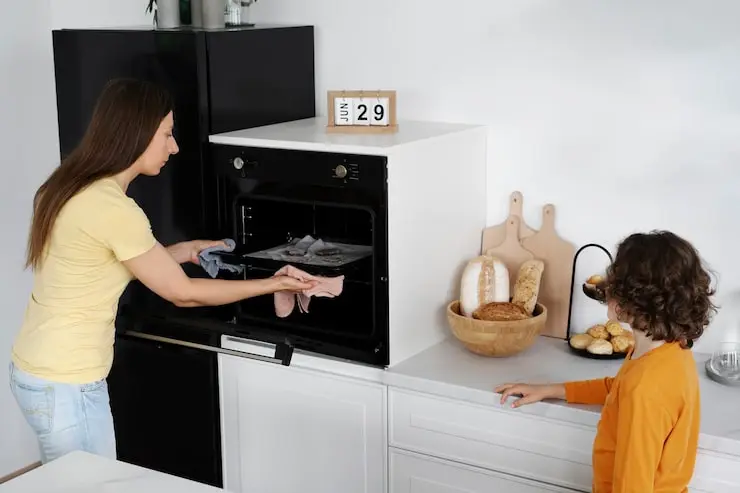
- Wipe the inside. A clean interior helps resale and is courteous to anyone handling it.
- Decide: reuse or recycle. Run a cup of water for a minute or two. If it heats and the door latches, reuse is realistic.
- Check your local rules. Look up the nearest drop-off site or bulky pickup policy.
- Call ahead. Confirm they take microwaves, and ask about fees and hours.
- Move it safely. Secure it in your vehicle, or book a pickup if lifting is a problem.
Where Can You Recycle a Microwave?
You have three main routes, and some areas offer all of them.
Municipal Drop-Off and E-Waste Facilities
Many cities and counties run electronics drop-off sites, and some transfer stations take small appliances. These are usually the most dependable places for a broken unit. The EPA publishes general guidance on electronics donation and recycling that is a good starting point for finding responsible options.
Retailer, Manufacturer and Utility Programs
Some stores take old appliances when you buy a replacement, and some manufacturers run mail-back or trade-in offers. Certain utilities also collect or reward the retirement of old appliances. These programs change often and are not available everywhere, so confirm the details before you rely on them.
Community Collection Events and Bulk Pickup Days
Many towns hold annual e-waste days or offer scheduled bulky item pickups. They are convenient if you can wait, but the dates are fixed, so plan around the calendar.
Questions to ask before you go:
- Do you accept microwave ovens, and does condition matter?
- Is there a fee, and does it change if I bring more than one item?
- Do I need an appointment or proof of residence?
- Should the cord and turntable stay attached or be removed?
If you are working out how to dispose of microwave oven models with built-in trim kits, mention that when you call, because some sites limit item size.
Can You Donate or Sell an Old Microwave?
You can, if it works. Charities generally want clean, fully functional appliances, and many turn away units that are visibly damaged, very old, or missing parts. A broken microwave given away as “a donation” just passes the disposal problem to someone else, so be honest about the condition.
Before you hand it over:
- Clean the interior and exterior thoroughly.
- Test that it heats and that the door closes firmly.
- Include the turntable and, if you have it, the manual.
- Ask for a donation receipt if you may want it at tax time, and check with a tax professional about whether it applies to you.
How to Remove and Dispose of an Over-the-Range Microwave
Wall-mounted units are a different job from countertop models. They are noticeably heavier, attached to a mounting bracket, and often wired or plugged in behind the unit. A few practical points:
- Switch off power at the breaker, not just at the unit.
- Have a second person support the weight before the last screws come out, because the unit can drop the moment it is free.
- Remove the turntable, tray, and any grease filters first, to cut weight and avoid breakage.
- Note how the vent or ductwork connects if a new unit is going in.
If you are not comfortable with lifting or wiring, hire someone for the removal. This is also where learning how to get rid of a microwave oven becomes a logistics question rather than a rules question.
Should You Repair Your Microwave Before Disposing of It?
Sometimes. A common rule of thumb is that if a repair quote approaches half the price of a comparable new unit, replacing is usually the better value. Simple faults like a worn door handle or a stuck button may be worth fixing.
Stop using it and replace it if you notice:
- A damaged or misaligned door, hinge, or latch
- Sparking inside the cavity
- A persistent burning smell
- Visible damage to the cord or casing
Why Should Microwaves Be Recycled?
A microwave holds steel, copper wiring, glass, plastic, and electronic components, and most of that has value as a material. When it ends up in a landfill, that value is lost. At a recycling facility, units are typically dismantled, with metals, glass, and plastics separated so they can go into new products, and circuit boards can be handled separately. Recycling also keeps electronic components out of places where they were never meant to end up.
How Much Does Microwave Disposal Cost?
Costs vary widely by location, so treat any figure you see online as a starting point and verify locally.
| Method | Typical cost | Effort | Environmental impact |
| Give away or sell | Free, may earn a little | Low to medium | Excellent (reuse) |
| Charity donation | Free | Medium | Excellent (reuse) |
| E-waste drop-off | Often free, sometimes a small fee | Medium | Very good |
| City bulky pickup | Free or fee, depends on city | Low | Good to very good |
| Hauling service | Paid, quoted per job | Lowest | Good when recycled |
| Regular trash (if allowed) | Usually free | Low | Poor |
When Should You Hire a Junk Removal Service?
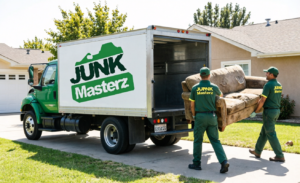
Hiring help makes sense when the microwave is not your only problem. We handle appliance pickups alongside furniture, mattresses, and general cleanout items, which is useful during a kitchen remodel, a move-out, or an estate cleanup. A single visit can clear the old microwave, the broken chairs, and the boxes in the garage.
A hauler is most useful when:
- You have no vehicle or cannot lift the unit.
- The microwave is wall-mounted and awkward to move.
- You are clearing several items and want one appointment.
- Your schedule does not match drop-off hours or collection days.
If you are in the Central Valley, our Residential Junk Removal Fresno CA page explains how pickups work. Whichever provider you choose, ask what happens to the appliance after it leaves your home, and whether eligible items go to recycling.
Common Microwave Disposal Mistakes to Avoid
- Setting it out without checking local rules. This is the most common reason it gets left behind.
- Taking the case apart. The internal charge makes this a real safety risk.
- Donating a broken unit. Charities cannot sell it and may have to pay to discard it.
- Dumping it somewhere “just this once.” Illegal dumping can bring fines and harms neighborhoods.
- Skipping the call-ahead. Showing up with a microwave a site does not accept wastes a trip.
Expert Tips for Responsible Microwave Disposal
- Photograph the unit’s condition before you list or donate it, so expectations are clear.
- Keep the model label visible, since some programs ask for it.
- Time your disposal with the replacement delivery if a retailer offers haul-away.
- Bundle small electronics with the microwave when a recycler accepts them.
- Before wall-mounted removal, clear a path and lay down protection for the floor.
Conclusion
Now you know how do you dispose of a microwave in a way that is safe, lawful, and sensible: reuse it if it works, recycle it if it does not, and never open the casing. Check your local rules first, call ahead, and match the method to your situation. If you would rather hand the job to someone else, contact Junk Masterz, and we will help you clear out the old microwave and anything else that is taking up space.
Frequently Asked Questions
Can microwaves be recycled?
Yes. Most can be taken to e-waste recyclers, municipal drop-off sites or participating take-back programs, where metals, glass, and electronics are recovered. Availability and fees depend on where you live.
Is a microwave considered electronic waste?
Generally, yes, because it contains a circuit board, wiring, and other electrical components. That is why many areas direct it away from regular household trash.
Can I donate a broken microwave?
Usually not. Most charities only accept clean, working appliances, so a broken unit should go to a recycler instead.
Can you throw a microwave in the trash if my city offers bulky pickup?
Only if your city’s rules say microwaves are accepted in that service. Confirm the requirements and any fee, because bulky pickup and regular trash are often treated differently.
Is it dangerous to open an old microwave?
Yes. A high-voltage capacitor inside can retain a harmful charge even when unplugged, so the casing should stay closed unless a trained technician is doing the work.