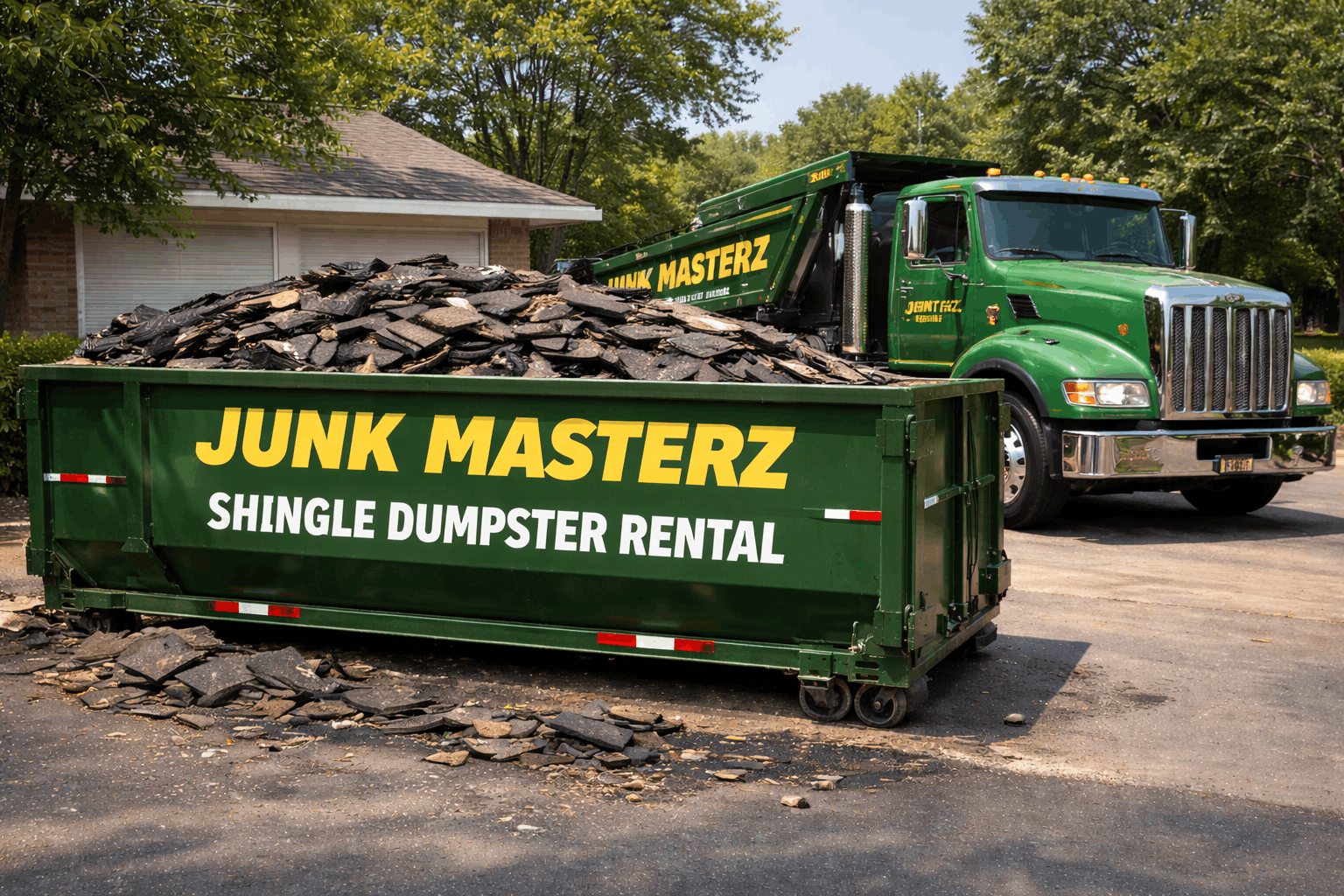
Replacing a roof is one of the biggest home improvement projects you’ll undertake, and it creates far more waste than many homeowners expect. Old asphalt shingles, roofing felt, nails, flashing, and other debris can quickly pile up, making cleanup difficult and potentially unsafe. That’s why a dumpster rental for roofing shingles is one of the smartest investments you can make before your roofing project begins.
Whether you’re replacing a few damaged sections or installing an entirely new roof, having the right dumpster on-site keeps your property organized, protects your landscaping, and allows contractors to work more efficiently. However, choosing the wrong dumpster size can lead to unexpected costs, overweight fees, or the inconvenience of ordering a second container.
Many homeowners ask questions like what size dumpster for roof shingles is best or how many square of shingles fit in a dumpster. The answer depends on several factors, including your roof’s size, the number of shingle layers being removed, and the weight limits set by your dumpster rental company.
In this guide, you’ll learn how to choose the right dumpster, estimate the amount of roofing debris your project will generate, understand rental costs, avoid common mistakes, and dispose of old shingles responsibly. By the end, you’ll be prepared to rent the right dumpster and keep your roofing project running smoothly from start to finish.
Understanding Roofing Waste: Why Proper Disposal Matters
What Are Roofing Shingles Made Of?
Most residential roofs use asphalt shingles, which are made from a mix of fiberglass, asphalt, and mineral granules. While durable, these materials are heavy and not biodegradable. Other roofing types like wood, slate, or metal also require specialized disposal methods.
Environmental Impact of Improper Disposal
Improper disposal of shingles contributes to landfill overcrowding and environmental damage. Many regions now encourage or require recycling, as old shingles can be reused in road construction and other applications. According to the U.S. Environmental Protection Agency, recycling asphalt shingles helps reduce landfill waste and supports sustainable infrastructure development.
Why You Should Never Use Regular Trash Services
Standard garbage services are not designed for roofing debris. Shingles are too heavy, and exceeding weight limits can lead to fines or rejected pickups. Renting a dedicated dumpster ensures safe and legal disposal. It’s also very important to understand the correct method of disposal for shingles, as improper handling can create environmental issues and may violate local regulations.
What Is a Dumpster Rental for Roofing Projects?
A dumpster rental for roofing projects is a temporary waste container specifically designed to handle heavy materials like shingles, underlayment, and nails.
How Roofing Dumpsters Work
- The dumpster is delivered to your location
- You fill it during your project
- The company picks it up and disposes of the waste
Types of Dumpsters for Roofing Jobs
- Roll-off dumpsters (most common for roofing)
- Construction dumpsters for larger commercial jobs
Who Needs a Roofing Dumpster?
- Homeowners replacing a roof
- Roofing contractors
- Property managers handling renovations
Using a dumpster for roofing helps contain debris, making your job site safer and more efficient.
Choosing the Right Dumpster Size for Roofing Shingles
Selecting the correct size is critical to avoid overpaying or running out of space.
Quick Size Guide
- 10-yard dumpster: Small roofs (1,000–1,500 sq ft)
- 20-yard dumpster: Medium roofs (1,500–3,000 sq ft)
- 30-yard dumpster: Large roofs or multi-layer tear-offs
How Many Shingles Fit in a Dumpster?
Roofing shingles are dense. Even if a dumpster looks half full, it may already be near its weight limit. For example, one roofing square (100 sq ft) can weigh 200–400 pounds.
Why Weight Limits Matter More Than Size
With roofing dumpsters, weight limits are often more important than volume. Overloading can result in expensive overage fees, so choosing the right size upfront is key.
Cost of Dumpster Rental for Roofing Shingles in 2026
Here’s your improved sentence with your idea added naturally and SEO-friendly:
Understanding pricing helps you budget your project more effectively. Understanding dumpster cost is also important because it helps you choose the right size, avoid hidden fees, and plan your roofing project without unexpected expenses.
Average Price Breakdown
- Small projects: $250–$400
- Medium projects: $400–$600
- Large projects: $600–$900+
Factors That Affect Pricing
- Location
- Dumpster size
- Rental duration
- Weight allowance
- Disposal fees
Hidden Fees to Watch Out For
- Overweight charges
- Extended rental periods
- Prohibited material penalties
How to Save Money
- Choose the correct dumpster size
- Avoid overfilling
- Schedule your rental carefully
A well-planned dumpster rental for shingles can significantly reduce overall project costs.
How to Load a Dumpster with Roofing Shingles Properly
Step-by-Step Guide
- Place the dumpster close to your work area
- Start loading evenly across the container
- Break shingle bundles into smaller loads
Safety Tips
- Wear gloves and protective gear
- Avoid lifting excessive weight at once
- Use proper tools to remove shingles
What NOT to Put in a Roofing Dumpster
- Hazardous chemicals
- Electronics
- Liquids
Following these steps ensures safe and efficient use of your roofing dumpster rentals.
Local Regulations and Permits You Should Know
Do You Need a Permit?
If you plan to place a dumpster on a public street, you may need a permit. Requirements vary by city. It’s a good idea to review general guidelines from trusted sources like HomeAdvisor and Angi, which explain when permits are required and how local rules can vary.
Disposal Regulations
Some areas require recycling of roofing materials or restrict landfill disposal. Regulations can differ significantly depending on your location, so confirming local waste management rules ahead of time can help you avoid fines and delays.
Who Is Responsible?
Contractors often handle permits, but homeowners should always confirm before renting. A reliable dumpster rental company will guide you through local requirements and help ensure everything is handled correctly.
Recycling Roofing Shingles: Eco-Friendly Options
Can Shingles Be Recycled?
Yes. Asphalt shingles are commonly recycled into road materials.
Benefits of Recycling
- Reduces landfill waste
- Supports sustainable construction
- May lower disposal costs
How to Find Recycling Centers
Check with your dumpster provider or local waste facilities to see if recycling is available in your area.
Dumpster Rental vs Junk Removal for Roofing Projects
Key Differences
- Dumpster rental: You load the waste yourself
- Junk removal: A team handles everything
Which Is Better?
For roofing jobs, dumpsters are usually more cost-effective because of the large volume of debris.
Cost Comparison
Dumpster rentals typically offer better value for full roof replacements, while junk removal is better suited to smaller repairs.
Pro Tips from Roofing and Waste Management Experts
Common Mistakes to Avoid
- Renting a dumpster that’s too small
- Ignoring weight limits
- Overloading beyond the fill line
Contractor Insights
Most professionals prefer 20-yard dumpsters for standard residential roofs because they balance capacity and cost.
Real-World Example
A 2,000 sq ft roof replacement typically requires a 20-yard dumpster, costs around $450, and takes 2–3 days to complete.
How to Choose the Best Dumpster Rental Company
Choosing the right company can make or break your roofing project. A reliable provider not only delivers on time but also helps you avoid hidden costs and unnecessary stress.
What to Look For
- Transparent pricing – Clear, upfront quotes with no surprises
- Positive customer reviews – Consistent feedback from real customers
- Flexible rental terms – Options that fit your project timeline
Pro Tip: Always choose a licensed and certified dumpster rental company that follows local waste disposal regulations. Certified providers ensure safe handling of roofing debris and compliance with environmental standards, giving you peace of mind throughout your project.
Questions to Ask Before Booking
- What is included in the price?
- What are the weight limits?
- Are there additional fees?
Expert Advice: Reputable companies will answer these questions clearly and provide written estimates. If a company avoids details, consider it a warning sign.
Red Flags to Avoid
- Hidden charges that appear after pickup
- Poor communication or delayed responses
- Lack of clear policies or written agreements
Trust Signal:
Here’s your revised paragraph with that idea added naturally and professionally:
A professional, fully insured, and certified dumpster rental provider will always be transparent about pricing, policies, and disposal methods. In addition to handling roofing materials, professional companies also dispose of all residential junk safely, following proper guidelines and environmental standards. This not only protects your budget but also ensures your roofing shingles and other waste are managed responsibly from start to finish.
Conclusion
Managing roofing waste doesn’t have to be complicated. With the right dumpster rental for roofing shingles, you can streamline your project, reduce stress, and avoid costly mistakes.
The key is planning—choose the right dumpster size, understand weight limits, and work with a reliable rental provider. Whether you’re replacing a small residential roof or handling a large-scale project, proper waste management will save you time, money, and effort.
By following the strategies in this guide, you’ll not only complete your roofing job more efficiently but also ensure safe and responsible disposal of materials.
FAQs
What size dumpster do I need for roofing shingles?
Most roofing projects require a 10-yard or 20-yard dumpster, depending on roof size and shingle layers.
How much does a roofing dumpster rental cost?
Prices typically range from $300 to $800, depending on size, location, and weight limits.
Can shingles go in a regular dumpster?
No, shingles are too heavy for standard waste bins and require specialized dumpsters.
How heavy are roofing shingles?
They usually weigh between 200 and 400 pounds per roofing square (100 sq ft).
How long can I keep a dumpster rental?
Most companies offer rental periods of 7 to 10 days, with extensions available.
Are there weight limits for roofing dumpsters?
Yes, exceeding weight limits can result in additional fees, so proper planning is essential.