Millions of mattresses reach the end of their lifespan every year. Unfortunately, many end up in landfills where they occupy significant space and contribute to environmental waste. As sustainability becomes increasingly important, more homeowners are looking for responsible ways to dispose of old mattresses.
But how are mattresses recycled? What happens to the materials inside them? Can mattresses be recycled completely?
This guide explains the mattress recycling process, the materials that can be recovered, the environmental benefits of recycling, and the best methods for recycling your old mattress responsibly.
Quick Answer: How Are Mattresses Recycled?
Mattresses are recycled by dismantling them into separate materials such as steel springs, foam, fabric, wood, and fibers. These materials are then processed and reused in new products, reducing landfill waste and conserving natural resources. In many cases, up to 80–90% of a mattress can be recycled.
Why Mattress Recycling Matters
The Growing Mattress Waste Problem
- Millions of mattresses are discarded annually worldwide.
- Mattresses can take decades to decompose.
- Bulky mattresses consume valuable landfill space.
- Illegal dumping creates environmental and public health concerns.
Environmental Impact of Landfilled Mattresses
- Why Traditional Disposal Is Harmful
- Increased landfill overcrowding
- Methane emissions from decomposing materials
- Wasted recyclable resources
- Additional transportation and waste management costs
Can Mattresses Be Recycled?
Understanding Mattress Recyclability
One of the most common questions homeowners ask is: “Can mattresses be recycled?”
The answer is yes. Most modern mattresses contain several recyclable components that can be recovered and reused.
Don’t let an old mattress take up valuable space in your home. Our professional mattress removal team in Fresno provides quick, affordable, and eco-friendly mattress pickup services. Whether you’re replacing a single mattress or clearing out multiple items, we’re here to help with hassle-free removal and responsible disposal.
How Are Old Mattresses Recycled? Step-by-Step Process
Step 1: Mattress Collection
- Collection Sources
- Residential pickup programs
- Recycling centers
- Retailer take-back programs
- Municipal waste facilities
Step 2: Inspection and Sorting
Assessing Mattress Condition
Workers inspect mattresses to determine whether they can be:
- Reused
- Donated
- Recycled
- Disposed of safely
Step 3: Manual Dismantling
Separating Mattress Components
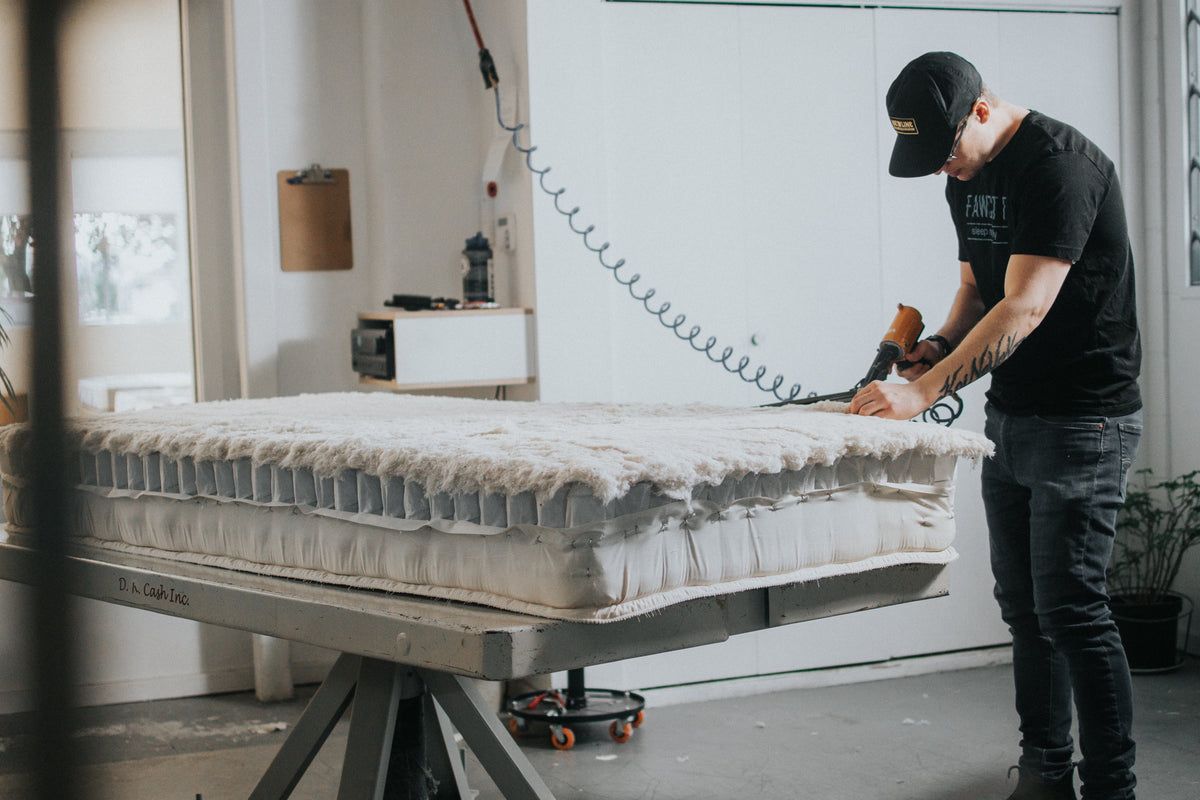
Most recycling facilities manually dismantle mattresses to maximize material recovery. During this process, workers carefully separate the steel springs, foam, fabric, wood, and fiber padding so that each material can be sent to the appropriate recycling stream. Manual dismantling helps increase recycling rates and reduces the amount of waste that ends up in landfills.
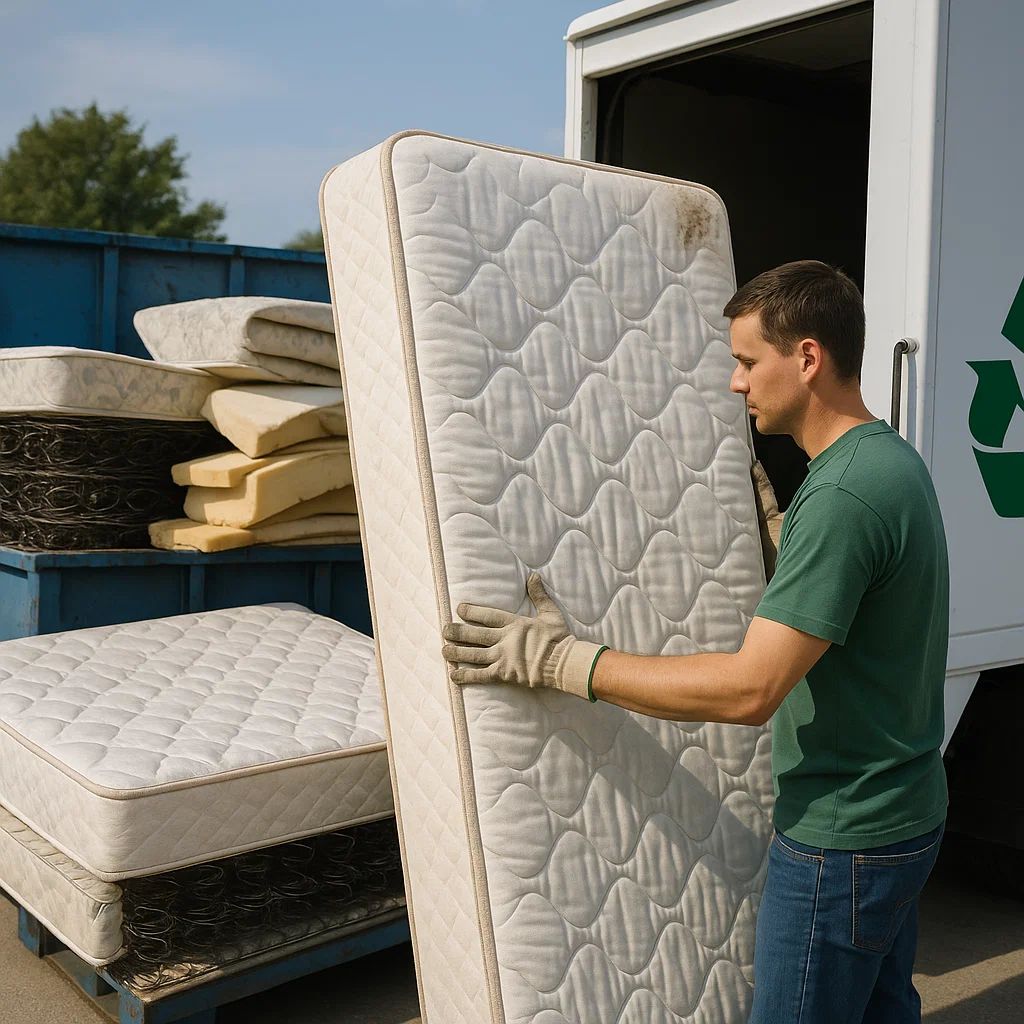
Because mattresses are bulky, heavy, and often difficult to maneuver, homeowners should always hire a professional junk removal service for mattress removal. Professional crews have the proper equipment and experience to safely remove, transport, and dispose of mattresses, ensuring that recyclable materials are directed to the appropriate recycling facilities whenever possible. This not only saves time and effort but also helps support environmentally responsible disposal practices.
Materials separated include:
- Steel coils
- Foam layers
- Fabric coverings
- Wood foundations
- Fiber padding
Step 4: Material Processing
Steel Recycling
Steel components are compressed and shipped to metal recycling facilities. Organizations such as the Mattress Recycling Council highlight how foam recycling helps reduce landfill waste while extending the life of valuable materials.
Foam Processing
Foam is shredded and transformed into reusable materials.
Textile Recovery
Fabric materials are processed into industrial textile products.
Wood Recycling
Wood components are chipped and repurposed.
Step 5: Manufacturing New Products
Recovered materials become:
- Carpet padding
- Insulation products
- Construction materials
- New metal products
- Industrial textiles
What Percentage of a Mattress Can Be Recycled?
Mattress Recycling Efficiency
Most traditional mattresses are highly recyclable.
Typical Material Recovery Rates
| Mattress Component | Recyclable? |
|---|---|
| Steel Springs | Yes |
| Foam Layers | Yes |
| Fabric Cover | Yes |
| Wood Foundation | Yes |
| Fiber Padding | Yes |
Average Recovery Rate
Many recycling facilities can recover between 80% and 90% of mattress materials.
Types of Recyclable Mattresses
Innerspring Mattresses
Why They Are Easy to Recycle
Contain large amounts of steel that can be recovered efficiently.
Hybrid Mattresses
Multiple Recyclable Components
Hybrid mattresses combine:
- Springs
- Foam
- Textiles
- Making them suitable for recycling.
Memory Foam Mattresses
Special Foam Recovery Process
Memory foam can be shredded and reused in various industrial applications.
Latex Mattresses
Eco-Friendly Recycling Potential
Natural latex is often recyclable and may also be biodegradable under certain conditions.
Benefits of Mattress Recycling
- Reduces Landfill Waste
- Recycling diverts bulky waste from landfills.
Conserves Natural Resources
Recovered materials reduce demand for natural resources.
Supports Circular Economy Practices
Materials remain in productive use rather than becoming waste.
Lowers Environmental Impact
Reduced resource extraction and manufacturing energy consumption.
How to Dispose of Your Old Mattress Responsibly
Learning how to dispose of an old mattress properly is important for both environmental and safety reasons. Following the right disposal steps helps reduce landfill waste and ensures materials are handled responsibly
- Donate If the Mattress Is Still Usable
- Donation Options
- Local charities
- Furniture banks
- Community organizations
- Homeless shelters (where accepted)
Use Mattress Recycling Programs
Benefits
- Environmentally responsible
- Material recovery
- Reduced landfill waste
Retailer Take-Back Services
Many mattress retailers offer removal and recycling services when delivering a new mattress.
Municipal Collection Programs
Check local waste management guidelines for mattress recycling options.
Signs It’s Time to Replace Your Mattress
Physical Wear and Damage
Look for:
- Sagging
- Broken springs
- Visible tears
- Uneven surfaces
Poor Sleep Quality
An aging mattress may contribute to:
- Back pain
- Joint discomfort
- Interrupted sleep
Age of the Mattress
Most mattresses last between 7 and 10 years, depending on materials and usage.
Future Trends in Mattress Recycling
- Increased Recycling Regulations
- Governments are adopting stricter waste reduction policies.
Design for Recycling
Manufacturers are developing mattresses that are easier to disassemble and recycle.
Sustainable Mattress Manufacturing
Growing demand for recyclable mattresses is influencing product design and material selection.
Common Myths About Mattress Recycling
Myth 1: Mattresses Cannot Be Recycled
Reality: Most mattress materials can be recovered and reused.
Myth 2: Recycling Costs More Than Disposal
Reality: Recycling often provides greater long-term environmental benefits.
Myth 3: Old Mattresses Have No Value
Reality: Steel, foam, wood, and textiles all retain recycling value.
Conclusion
Mattress recycling plays a vital role in reducing landfill waste and conserving valuable resources. By understanding how mattresses are recycled, homeowners can make more environmentally responsible disposal decisions.
Most mattresses contain recyclable materials such as steel, foam, fabric, and wood, allowing recycling facilities to recover and reuse up to 90% of their components. Whether through recycling programs, retailer take-back services, or donation options, there are several effective ways to dispose of an old mattress sustainably.
As recycling technology continues to improve and demand for sustainable products grows, mattress recycling will become an increasingly important part of responsible waste management and environmental protection.
If you need professional mattress removal services in Fresno, don’t let an unwanted mattress take up valuable space in your home. Our team provides fast, affordable, and eco-friendly mattress pickup and disposal solutions. Contact us today to schedule your pickup and enjoy a cleaner, clutter-free space while ensuring your mattress is handled responsibly.
Frequently Asked Questions (FAQs)
How are mattresses recycled?
Mattresses are recycled by dismantling them into steel, foam, fabric, wood, and fiber components that can be processed and reused in new products.
How are old mattresses recycled differently from new mattresses?
The recycling process is generally the same, although older mattresses may require additional inspection and sorting due to wear or contamination.
Can mattresses be recycled completely?
Most mattresses cannot be recycled 100%, but recycling facilities can typically recover 80–90% of their materials.
What materials from mattresses can be recycled?
Steel springs, foam, wood, textiles, and fiber padding are commonly recycled.
Are memory foam mattresses recyclable?
Yes. Memory foam mattresses can be processed and reused in carpet padding, cushioning products, and industrial applications.
How do I dispose of my old mattress responsibly?
You can donate it if it’s still usable, use a mattress recycling program, participate in municipal collection services, or arrange retailer take-back options.
What are recyclable mattresses?
Recyclable mattresses are designed with materials that can be recovered and reused at the end of their lifespan, reducing environmental impact.
Why is mattress recycling important?
Mattress recycling reduces landfill waste, conserves natural resources, lowers environmental impact, and supports sustainable waste management practices.