Replacing an old refrigerator, washer, or stove feels great — until you’re left staring at the bulky appliance sitting in your garage.How to Dispose of Old Appliances, you’re not alone. Many homeowners don’t realize that appliances can’t simply be tossed into regular trash. They often contain refrigerants, electrical components, heavy metals, and other materials that require careful handling.
Taking the time to dispose of appliances correctly not only protects the environment but also supports recycling systems that recover valuable materials like steel, copper, and aluminum. Responsible disposal reduces landfill waste, conserves natural resources, and keeps hazardous materials out of soil and water. Making the right choice today contributes to a cleaner and safer community tomorrow.
Why Proper Appliance Disposal Matters?
Appliances are large, complex products made of various materials. Disposing of them incorrectly can cause long-term environmental harm.
Cooling appliances contain refrigerants that contribute to climate change if released improperly. Many units contain metals like copper and aluminum that can and should be recycled. When these materials go to landfills, natural resources are wasted.
There are also legal considerations. Federal environmental regulations require certified removal of refrigerants before scrapping refrigerators and air conditioners. EPA guidelines specify safe disposal procedures for household appliances that use refrigerants, and failure to comply with these federal requirements can lead to penalties. Many municipalities enforce strict rules for bulk waste disposal. Ignoring these rules can lead to penalties.
In short, proper disposal protects the environment, conserves resources, and keeps you compliant with local laws.
How to Dispose of Old Appliances?(Step-by-Step)
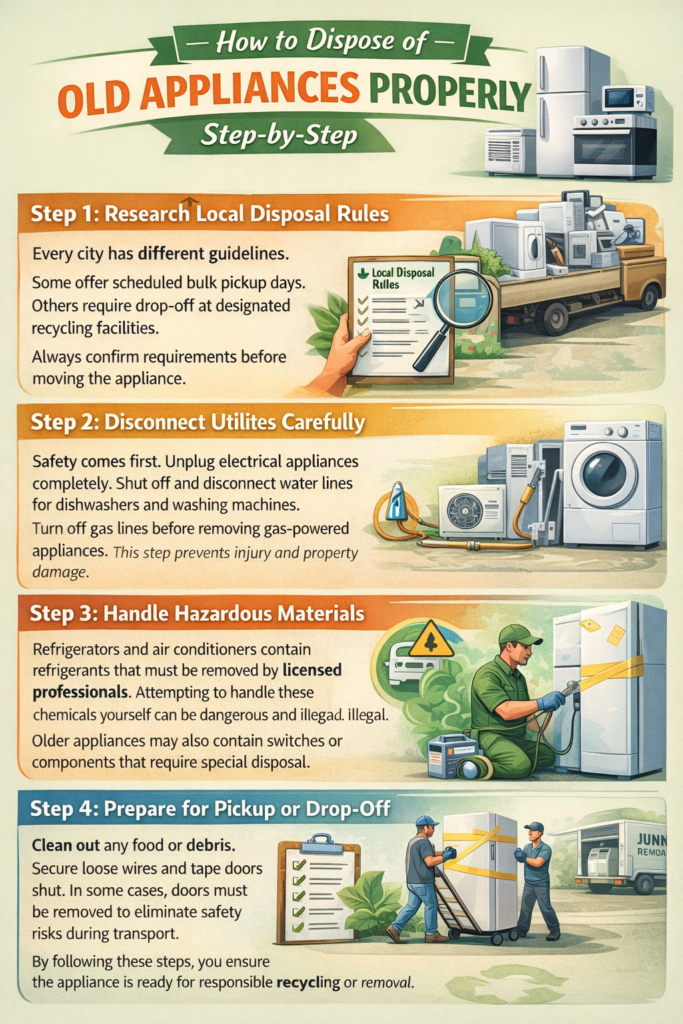
Understanding how to dispose of old appliances properly begins with preparation.
Step 1: Research Local Disposal Rules
Every city has different guidelines. Some offer scheduled bulk pickup days. Others require drop-off at designated recycling facilities. Always confirm requirements before moving the appliance.
Step 2: Disconnect Utilities Carefully
Safety comes first. Unplug electrical appliances completely. Shut off and disconnect water lines for dishwashers and washing machines. Turn off gas lines before removing gas-powered appliances.
This step prevents injury and property damage.
Step 3: Handle Hazardous Materials
Refrigerators and air conditioners contain refrigerants that must be removed by licensed professionals. Attempting to handle these chemicals yourself can be dangerous and illegal.
Older appliances may also contain switches or components that require special disposal.
Step 4: Prepare for Pickup or Drop-Off
Clean out any food or debris. Secure loose wires and tape doors shut. In some cases, doors must be removed to eliminate safety risks during transport.
By following these steps, you ensure the appliance is ready for responsible recycling or removal.
How to Dispose of Old Appliances Safely?
Safety should never be overlooked. Appliances are heavy and awkward to carry. Attempting to lift them alone can result in serious injury. Using a dolly or hiring help reduces risk. Sharp metal edges inside appliances can cause cuts. Wearing protective gloves is recommended.
For cooling units, never puncture or dismantle the system yourself. Professional refrigerant removal is required to prevent environmental harm.
Knowing how to dispose of old appliances safely protects both your health and the environment.
If managing these options feels overwhelming, Certified Companies can help and coordinate responsible disposal for homeowners who prefer a hands-off solution.
How to Dispose of Old Appliances for Free?
Many homeowners don’t realize that free disposal options are available if you know where to look. Some appliance pickup services offer completely free appliance removal and responsible recycling, handling heavy lifting and disposal at no cost to you. For example, platforms like Take My Appliance can connect you with local partners who will pick up major household appliances — such as refrigerators, washers, and dryers — and recycle them responsibly with no fee.
Utility companies and municipal programs often provide similar opportunities. Many communities and waste departments run free curbside or scheduled appliance pickup programs for bulky items, including old stoves and refrigerators, so you don’t have to pay to get them hauled away.
Retailers frequently include free haul‑away services when you purchase a new appliance, and some private services advertise free pickup and recycling of appliances across large service areas.
Donation is another free option if the appliance is still functional. Charities and resale outlets, including Habitat for Humanity ReStores and other nonprofit donation centers, often accept working refrigerators, washers, and stoves with no pickup fees, helping appliances find a new home instead of going to waste.
Scrap metal recycling may even provide a small payout depending on weight and metal value.
You May Also Read: How to get rid of small appliances
How to Dispose of Old Household Appliances? (Room-by-Room Guide)
| Room / Area | Appliance | Disposal Method | Safety / Tips | Notes |
|---|---|---|---|---|
| Kitchen | Refrigerator / Freezer | Certified recycling, municipal pickup | Remove food, tape or remove doors, refrigerant must be handled by professionals | Some utility companies offer free pickup or rebates |
| Oven / Stove / Dishwasher | Scrap metal recycling, bulk pickup | Disconnect electrical, gas, and water lines | Check local curbside rules | |
| Microwave | E-waste recycling center | Remove plug or batteries, clean interior | Retailers sometimes accept for recycling | |
| Coffee Maker / Blender / Toaster | E-waste recycling center | Remove batteries, unplug | Small appliances can also be donated if functional | |
| Laundry | Washer / Dryer | Scrap metal recycling or bulk pickup | Disconnect water hoses and power cords, drain water | Consider professional hauling if heavy |
| Iron / Steamer | E-waste recycling | Remove electrical components | Can be donated if functional | |
| Small Household | Vacuum Cleaner | E-waste recycling | Empty dust bags, remove batteries | Some resale stores accept working units |
| Fan / Heater / Air Purifier | E-waste recycling | Disconnect power cord, clean filters | Check local e-waste events | |
| Outdoor / Specialty | Electric Lawn Mower | E-waste or scrap metal recycling | Remove batteries, drain fluids | Gas-powered may require hazardous waste facility |
| Gas Lawn Mower / Leaf Blower | Hazardous waste drop-off | Drain fuel, oil, and fluids | Check local disposal rules | |
| Water Heater / AC Unit | Certified recycling or junk removal | Refrigerants or insulation are handled by professionals | Professional junk removal is often recommended | |
| Pool Pump / Dehumidifier | Scrap metal or e-waste recycling | Drain water, unplug | Small electronics can be donated if functional |
Many homeowners prefer expert assistance to ensure everything is handled legally and responsibly. For instance, Certified Company is offering residential junk removal services designed to simplify appliance removal while prioritizing environmentally responsible disposal.
Conclusion
Disposing of old appliances may seem like a simple task, but it carries important environmental and safety responsibilities. Appliances contain materials that can harm ecosystems if handled improperly, yet they also include valuable metals that can be recycled and reused.
Taking the time to research local regulations, disconnect utilities safely, and choose the correct disposal method protects both your home and your community. Whether you donate a working unit, recycle a broken one, or hire professionals to manage the process, responsible disposal makes a meaningful difference.
Understanding how to dispose of old appliances properly empowers you to reduce waste, follow environmental laws, and contribute to sustainability efforts. Every appliance disposed of the right way helps conserve resources and prevent pollution.
When handled carefully, appliance disposal becomes not just a cleanup task — but a responsible step toward a cleaner future.
Frequently Asked Questions
How do I dispose of old appliances properly?
Start by checking local waste regulations. Disconnect utilities safely, ensure hazardous components are professionally handled, and schedule recycling or pickup through approved services.
How to dispose of old appliances safely at home?
Unplug the appliance, shut off gas or water connections, use proper lifting equipment, and never attempt refrigerant removal yourself.
How to dispose of old appliances for free in my area?
Contact your local utility company, retailer, or municipal waste department. Many offer free pickup or recycling incentives.
Who picks up old appliances near me?
Municipal bulk pickup programs, appliance retailers, scrap metal recyclers, and professional junk removal companies often provide pickup services.
Can I throw a microwave in the trash?
In many areas, microwaves are considered electronic waste and should be taken to an e-waste recycling center rather than placed in regular trash.
Are appliances considered hazardous waste?
Some appliances, especially refrigerators and air conditioners, contain hazardous refrigerants and must be handled according to environmental regulations.
What should I do before scrapping a refrigerator?
You must ensure refrigerant removal is completed by a certified professional. Then clean the unit and prepare it for recycling.
How much does it cost to dispose of large appliances?
Costs vary by location. Some municipal programs are free, while private services may charge a pickup fee depending on size and weight.
Can I donate a broken appliance?
Most charities only accept working appliances. Broken units are typically better suited for recycling.
Do scrap yards accept appliances?
Yes, most scrap yards accept metal appliances. Payment depends on weight and current metal prices.