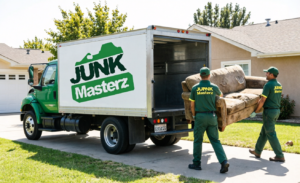
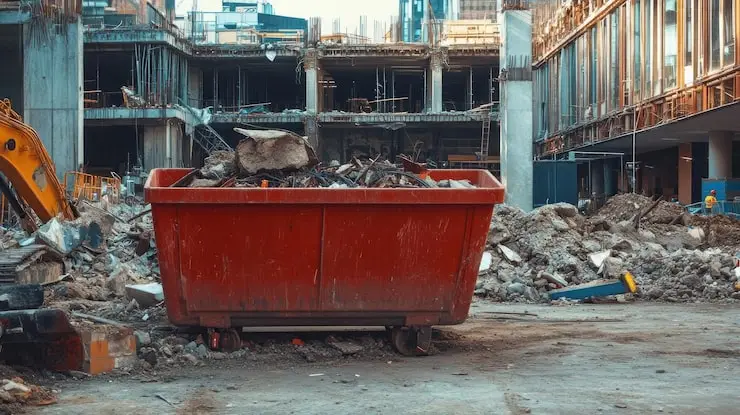
If you’ve ever stood in the middle of a torn-up kitchen or a half-demolished bathroom wondering who’s going to haul away the mountain of drywall, tile, and broken cabinets, you’re not alone. Every week, our crew at Junk Masterz gets calls from homeowners and contractors asking the same question: what is construction debris removal cost, really, once you factor in everything?
The honest answer is that it depends on more variables than most pricing pages let on. Weight, volume, material type, and even how far a crew has to carry debris from your backyard to the truck all shape the final number. This guide breaks down real 2026 pricing, project-by-project costs, and the practical decisions that actually move the needle on your bill.
What Is Construction Debris Removal?
Construction debris removal is the process of collecting, hauling, and disposing of materials left over from a build, remodel, or demolition. It covers everything from a single dumpster of drywall scraps after a bathroom gut job to multiple truckloads of concrete and framing lumber from a full home renovation.
Unlike household trash, this waste usually can’t go in your curbside bin. Most municipalities require construction and demolition (C&D) debris to be hauled to a licensed facility, and some materials, like treated wood or anything with lead paint, have specific handling rules.
Why Proper Construction Waste Removal Matters
A jobsite piled with debris isn’t just an eyesore. Nails poke through boards, drywall dust settles into HVAC systems, and stacked materials become tripping hazards for anyone walking the property. On active renovation sites, we’ve seen delays happen simply because a crew couldn’t get a ladder or material cart through a hallway blocked by old cabinetry.
There’s also a compliance angle. Many cities fine property owners for improperly disposed C&D waste, and insurance carriers sometimes flag cluttered job sites during inspections. Clearing debris promptly keeps your project, and your liability, in check.
What Is the Average Construction Debris Removal Cost?
For most homeowners in 2026, construction debris removal cost lands between $150 and $900 per project. Small pickups start around $150, while a full truckload of mixed material can reach $900 or more. Heavy debris, like concrete or brick, regularly pushes past that range.
| Service | Average Cost |
| Small debris pickup | $150 – $300 |
| Medium load | $300 – $600 |
| Full truckload | $600 – $900+ |
| Roll-off dumpster rental | $350 – $700 |
| Heavy concrete removal | $300 – $1,500+ |
These figures shift based on your city’s landfill fees, how far the crew has to travel, and whether the load is “clean” (single material) or “dirty” (mixed materials requiring sorting).
Construction Debris Removal Cost by Project Type
Pricing guides that only talk about truckloads miss the point that most people are planning around a specific project, not an abstract volume. Here’s how debris cost typically breaks down by the kind of work generating it:
- Bathroom remodel: Old tile, a vanity, drywall, and a toilet usually fill 1 to 3 cubic yards. Expect $150 to $350 for pickup.
- Kitchen remodel: Cabinets, countertops, appliances, and flooring generate 6 to 10 cubic yards. Budget $350 to $700.
- Flooring replacement: Torn-out carpet, hardwood, or tile runs 2 to 5 cubic yards. Cost typically falls between $150 and $400, though tile weighs more per yard than carpet.
- Deck or fence removal: Old lumber, hardware, and concrete footings add up fast, often 5 to 15 cubic yards. Cost: $300 to $800, higher if footings need to be broken up.
- Whole-home renovation or demolition: Full gut jobs can produce 20 cubic yards or more, frequently requiring multiple pickups or a large roll-off. Cost: $700 to $1,500+.
- Window or door replacement: Minimal debris, mostly old frames and trim. A single small pickup around $150 usually covers it.
On a recent kitchen remodel we handled in the Fresno area, the homeowner assumed a single pickup would clear everything. Once we weighed the load, granite countertop offcuts alone accounted for nearly a third of the total tonnage, which is a detail that’s easy to underestimate until the truck is actually loaded.
Construction Debris Removal Cost by Truck Volume
Many companies, including ours, price jobs by how much of the truck bed your debris fills rather than a flat per-item rate. This method tends to be more transparent for customers because you can see the container fill up before committing.
| Truck Volume Used | Average Price Range |
| 1/4 truck | $150 – $300 |
| 1/2 truck | $300 – $500 |
| 3/4 truck | $450 – $700 |
| Full truck | $650 – $900+ |
Keep in mind that a “full truck” of lightweight insulation and a “full truck” of broken concrete are priced very differently once weight enters the equation, which is why volume alone never tells the whole story.
How to Calculate Debris Removal Costs
Before you call around for quotes, it helps to have a rough number in mind. Here’s the same approach our estimators use on-site.
Estimate the Volume
Walk the space and picture how much debris will actually leave the property, not how much square footage the room covers. A small bathroom remodel might only produce 2 to 4 cubic yards, while a full renovation can hit 20 cubic yards or more.
Identify the Type of Material
Separate mentally between lighter materials (drywall, wood, cardboard) and heavier ones (concrete, brick, tile, asphalt). This single step often predicts your final cost more accurately than volume alone.
Consider the Weight
A cubic yard of insulation might weigh 50 pounds. The same volume of broken concrete can weigh over a ton. Since many facilities charge by weight for heavy materials, this is where estimates commonly go wrong if it’s overlooked.
Include Labor Costs (with $ range)
If debris needs to be carried down stairs, pulled from a basement, or hauled through a narrow side yard, expect a labor surcharge of roughly $100 to $300 on top of the base price. Point-of-origin labor, meaning debris that hasn’t been staged near the truck, is one of the most common reasons a quote changes on pickup day.
Factors That Affect Construction Debris Removal Cost
Type of Material
Concrete, brick, and asphalt cost more to remove than wood or drywall because of both weight and the extra equipment sometimes needed to break them down.
Amount of Debris
Larger cleanups need more truck trips or a bigger dumpster, which raises both labor and disposal costs proportionally.
Labor Requirements
Multi-story access, tight stairwells, or debris that needs to be sorted on-site all add time, and time is billed either hourly or as a flat surcharge.
Transportation Distance
Rural properties or jobsites far from a disposal facility mean more fuel and drive time, which shows up in the final quote.
Local Disposal Fees
Landfill tipping fees vary block by block in some counties. This is one of the biggest hidden drivers of construction debris removal cost, and it’s rarely something a national pricing chart can predict for your specific address.
Construction Waste Removal Cost by Material
| Material | Average Removal Cost |
| Wood | $150 – $400 |
| Drywall | $200 – $500 |
| Roofing Shingles | $250 – $600 |
| Concrete | $300 – $1,500+ |
| Bricks | $300 – $1,200 |
| Asphalt | $300 – $1,200 |
| Metal | $100 – $400 |
| Mixed Construction Debris | $300 – $900 |
Separating clean loads, like all-metal or all-wood, before pickup often qualifies for lower disposal rates since the crew doesn’t need to sort anything at the facility.
Concrete Demolition and Removal Cost
Concrete is consistently the most expensive material to remove because of sheer weight. A single 10-foot by 10-foot patio slab can weigh several tons once broken up.
Concrete demolition and removal cost typically runs $300 to over $1,500, influenced by:
- Slab thickness
- Whether rebar or wire mesh reinforcement is present
- Site accessibility for equipment like skid steers or jackhammers
- Whether a recycling facility will accept the clean concrete, which can lower disposal fees compared to a standard landfill
Hazardous Waste Removal Cost
Not every material on a jobsite can go into a standard load. Asbestos, lead-based paint, old fluorescent bulbs, and certain solvents require specialized handling under state and local regulations.
Typical hazardous material costs include:
| Hazardous Material | Removal Cost |
| Asbestos | $5 – $150 per square foot |
| Lead paint debris | $150 – $300 flat fee |
| Batteries | $0.10 – $10 per pound |
| Chemicals and solvents | $0.80 – $4 per pound |
| Fluorescent lightbulbs | $1 – $2 each |
If you suspect a material might be hazardous, particularly in homes built before 1980, it’s worth having it tested before demolition begins. Mixing hazardous waste into a standard load can result in the entire load being rejected at the facility, which costs far more in the long run than a separate hazardous pickup.
Cost to Dump Construction Debris
If you’re hauling debris yourself, landfill and recycling center fees still apply. The cost to dump construction debris generally includes:
- Minimum disposal fee: $25 to $75
- Per-ton disposal fee: $40 to $120
- Heavier materials like concrete or brick often carry higher per-ton charges
Some facilities also charge more for mixed, unsorted loads compared to clean, single-material loads, so a few minutes of sorting before your trip can genuinely lower the gate fee.
Dumpster Rental vs. Professional Debris Removal vs. Curbside Pickup vs. DIY
| Method | Cost | Best For |
| DIY dump run | $30 – $100 per load | Small jobs, single trips |
| Curbside/one-time pickup | $150 – $350 | Renovation leftovers already staged |
| Dumpster rental (10-20 yard) | $350 – $700 per week | Multi-day projects with ongoing debris |
| Professional debris removal crew | $300 – $900 | One-time cleanups, heavy demolition |
| Contractor-arranged disposal | Built into project bid | Full renovations managed by a GC |
Each option trades convenience for cost in a slightly different way. A dumpster rental saves money if your project runs several days and you’re willing to load it yourself, but it also occupies driveway space and comes with weight limits that can trigger overage fees. A professional crew costs more per load but eliminates the physical labor and the risk of overloading a rental container.
What Is the Cheapest Way to Get Rid of Construction Debris?
Renting a dumpster and loading it yourself is almost always the lowest-cost option per cubic yard, especially for ongoing projects. It removes the labor line item entirely, since you’re doing the loading.
That said, “cheapest” only holds up if you actually have the time and physical capacity to load heavy materials safely. For a single small job, a one-time pickup from a local crew can end up cheaper than a week-long dumpster rental once you account for the rental period you don’t fully need.
Can You Put Construction Debris in Regular Trash or at the Curb?
In most cities, no. Standard municipal trash pickup is not designed for construction and demolition materials, and putting bulky debris like drywall or tile at the curb without authorization can result in a fine.
Some municipalities do allow small amounts, generally under 2 cubic yards, if it’s bagged or bundled and scheduled as a special pickup. Always check your city’s sanitation department rules before setting anything out, since requirements vary block by block in some counties.
How Contractors Calculate Demolition Debris
Experienced contractors don’t guess. They typically walk the site and calculate based on:
- Total square footage being demolished
- The specific materials involved (framing, drywall, flooring, fixtures)
- Estimated density and weight per material type
- Available truck or dumpster capacity
- Local landfill or recycling facility fees
This method prevents the two most common mistakes we see: under-ordering a dumpster size and needing a costly second pickup, or over-ordering and paying for space that never gets filled.
Who Is Responsible for Construction Debris Removal, Contractor or Homeowner?
This depends entirely on what’s written into your contract. In most standard renovation agreements, the general contractor is responsible for debris removal, and it’s baked into the overall project bid.
However, this isn’t guaranteed, especially with smaller contractors or DIY-adjacent projects. Before work starts, confirm in writing whether debris removal is included. If it isn’t, you’ll need to budget separately, either through a rented dumpster or a dedicated hauling service.
Ways to Reduce Construction Waste Disposal Costs
- Separate recyclable materials like clean metal, cardboard, and untreated wood before pickup
- Donate usable cabinets, doors, and fixtures to local reuse organizations
- Rent the correct dumpster size the first time instead of ordering a second pickup
- Keep hazardous materials separate to avoid a full load being rejected
- Schedule one large pickup instead of several smaller ones
- Compare quotes from a few licensed local companies rather than accepting the first estimate
Should You Hire a Professional Construction Debris Removal Company?
For larger renovations or anything involving concrete, roofing debris, or multi-story access, a professional crew is usually the safer and more cost-effective route once you account for your own time and the risk of injury from handling sharp or heavy materials.
If you’re planning a renovation in the Central Valley, our team handles construction debris removal Fresno, CA homeowners and contractors rely on for same-day and next-day pickups, with pricing based on actual volume rather than guesswork.
Getting Estimates: Questions to Ask a Debris Removal Company
Before booking a crew, ask:
- Is pricing based on volume, weight, or a flat rate?
- Are hazardous materials accepted, and if not, what’s excluded?
- Is there a minimum charge for small loads?
- Do they recycle or donate eligible materials?
- Are workers insured, and is the company licensed to operate locally?
A company that answers these clearly and provides a written estimate before the truck arrives is generally the one worth booking.
Conclusion
Understanding what construction debris removal cost actually involves, from material type and weight to labor and local disposal fees, makes it far easier to budget accurately instead of getting surprised mid-project. Whether you’re clearing out a single bathroom remodel or managing debris from a full home renovation, the right removal method depends on your timeline, the materials involved, and how much of the physical work you want to take on yourself.
If you’d rather skip the guesswork, contact us at Junk Masterz for a straightforward, upfront quote based on your actual debris, not a generic estimate.
Frequently Asked Questions
What affects construction waste removal cost the most?
Material weight and type typically have the biggest impact, followed by labor requirements and local disposal fees. A small pile of concrete can cost more than a large pile of wood scraps.
How much does it cost to dump construction debris?
Landfill fees usually range from $25 to $75 as a minimum charge, or $40 to $120 per ton for heavier loads. Mixed, unsorted debris often costs more than clean, sorted material.
Who is responsible for construction debris removal?
It depends on your contract. Most general contractors include it in their bid, but homeowners handling their own project or working with a smaller contractor should confirm this in writing beforehand.
What is the cheapest way to get rid of construction debris?
Renting a dumpster and loading it yourself is typically the lowest-cost option, especially for multi-day projects. For small, one-time jobs, a single pickup can sometimes be cheaper than a full rental period.
What type of construction debris will junk removal companies take?
Most companies accept non-hazardous materials like wood, drywall, metal, and concrete. Hazardous items such as asbestos, lead paint, and chemical solvents usually require a separate, specialized removal service.