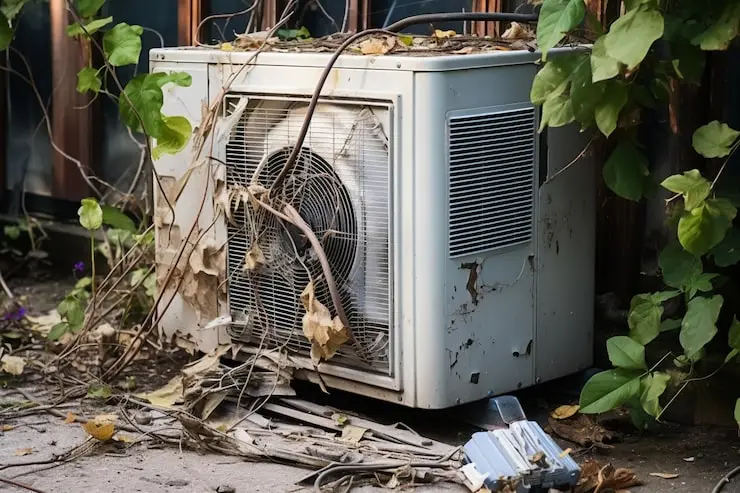
Getting rid of an old air conditioner can feel confusing. You might be wondering “what to do with old air conditioners?” or “How to dispose of an air conditioner?” Whether your AC stopped working, is outdated, or you’re upgrading, this guide breaks it down in simple steps. You’ll learn the best options to how to get rid of AC units in a way that helps the environment and keeps you out of trouble.
Most people want to dispose of air conditioners the right way because these units have chemicals and metals that can harm the earth if thrown in the trash. This blog will help you understand the safe choices and save money, too.
Why You Can’t Just Throw Away an Air Conditioner
Air conditioners contain special chemicals called refrigerants. These help cool the air but can damage the air and water if released. Some metals and parts can be dangerous if left in a landfill.
So before you think “how to get rid of AC in the garbage,” remember: regular trash is not safe or legal for AC disposal.
How to Dispose of an Air Conditioner? Step‑by‑Step
Here’s a simple step‑by‑step plan to help you figure out what to do with old air conditioners:
1. Check Local Rules
Most cities have rules for large appliances. Look online or call your city hall to find out the steps. Rules may differ for window units, central air systems, and portable ACs.
2. Find a Certified Recycler or Scrap Yard
Many recycling centers take old units for free or a small fee. They remove liquids like refrigerants safely and then recycle metal parts. This is the most environmentally safe way to dispose of an air conditioner.
In addition, recycling centers are designed for the safe disposal of old appliances, ensuring that hazardous materials are handled properly and valuable components are reused. This reduces landfill waste, prevents pollution, and makes the entire disposal process more eco-friendly and responsible.
3. Trade‑In or Return Program
Some manufacturers and stores offer trade‑in programs. When you buy a new AC, they may take your old one and recycle it for you. This makes it easier to figure out what to do with old air conditioners.
4. Special Pick‑Up Services
Many waste management companies offer curbside pick‑up of large items. You might need to schedule a special pick‑up or pay a fee. But this is often easier than transporting a heavy AC unit.
5. Donate If It Still Works
If your old air conditioner still cools air, it may still help someone. Many charities accept working appliances. This is a great way to get rid of an AC and help a family in need.
Ways to Get Rid of Different Types of AC Units
Different AC types need slightly different disposal methods.
Window or Wall Air Conditioners
These are easier to recycle. Most scrap yards take them. Some stores take these during the delivery of new units, too.
Central Air Conditioners
These are larger and may require a professional to remove refrigerants safely. Professional companies’ technicians can help you take them out and recycle them.
Portable ACs
Small and light, these can often be taken to recycling centers or donated if they still work. Just make sure you know how to dispose of an old air conditioner safely so that no fluids leak.
Avoid the Wrong Ways to Get Rid of an AC
There are some common mistakes people make when disposing of air conditioners. Don’t do these:
Throwing in regular trash
This is usually illegal and bad for the environment. The Institute for Environmental Research and Education’s comprehensive guide on proper air conditioner disposal options links to an expert resource covering disposal, recycling, and donation options.
Dumping it in nature
Throwing an old air conditioner into the environment, like forests, rivers, or open land, can seriously harm wildlife and soil. Chemicals inside the AC, especially refrigerants and oils, can leak into the ground and water, poisoning animals and contaminating ecosystems. Metals and plastics can also take hundreds of years to decompose, creating long-term pollution.. Learn more about how improperly handled refrigerants affect the environment here: What is the Environmental Impact of Large AC Unit Disposal — Okon Recycling explains how refrigerants used in air conditioners can harm the atmosphere and soil if released during disposal.
Removing refrigerant yourself
Air conditioners contain refrigerants like Freon, which are harmful if released into the atmosphere. Attempting to remove refrigerant yourself is dangerous and often illegal because it requires certified equipment and training. Mishandling refrigerants can cause frostbite, respiratory issues, and environmental damage.
What Happens During Proper AC Disposal
When you take your unit to a recycler, here’s what usually happens:
-
Refrigerants are removed safely.
These chemicals are collected by trained professionals so they don’t escape into the air.
-
Metals are separated.
Steel, aluminum, and copper inside the unit are sorted and recycled.
-
Other parts are processed.
Plastic and smaller components are taken apart and reused or recycled.
This process keeps hazardous material out of landfills and turns useful parts into new products.
How Much Does It Cost to Dispose of Your AC
Costs vary depending on where you live and the size of your unit. Sometimes it’s free, especially if you:
- Bring the unit to a recycling center
- Have a waste company pick it up during a special large‑item day
- Trade it in when buying a new AC
Other times, a small recycling fee may be charged. Check with local services first.
5 Best Places to Take Your Old Air Conditioner
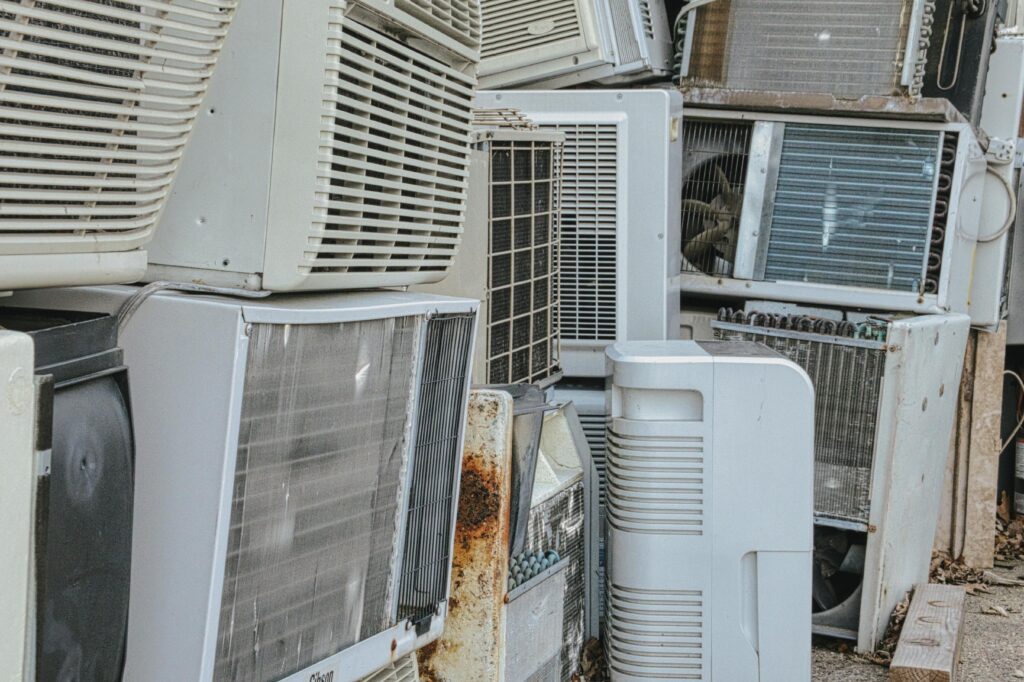
Here are common options:
1. Local Recycling Center or Scrap Yard
Recycling centers and scrap yards accept old air conditioners to safely recover metals, plastics, and refrigerants. They have the equipment to remove harmful chemicals and ensure parts are recycled properly. Taking your AC to a local recycler prevents environmental contamination and helps reduce landfill waste. Many recycling centers also accept window, wall, and portable units, sometimes even for free.
2. HVAC Company or Technician
Certified HVAC companies or technicians can remove, transport, and recycle old air conditioners. They are trained to handle refrigerants and other hazardous materials safely. This option is especially useful for central air systems or heavy units that are difficult to move. Using a professional ensures the disposal follows local laws and environmental safety standards.
3. Retailer Trade‑In or Disposal Program
Some retailers and manufacturers offer trade-in or take-back programs when you buy a new air conditioner. They will accept your old unit and often ensure it is recycled or donated responsibly. This is a convenient option because it combines purchasing a new AC with the eco-friendly disposal of the old one.
4. Municipal Waste Service
Many cities and towns provide special pick-up services for bulky items like old air conditioners. This might be part of a scheduled “large-item collection day” or an on-demand service for a small fee. Municipal services ensure your AC is disposed of legally and sent to a certified recycling facility rather than ending up in a landfill.
5. Donation Centers (If It Works)
If your old air conditioner still works, donating it to charities, community centers, shelters, or nonprofit organizations is a great way to give it a second life. This helps families in need and reduces waste. Before donating, check that the unit is clean, functional, and safe to operate. Some charities may even pick up the AC from your home for free.
Conclusion
Getting rid of an old air conditioner doesn’t have to be confusing or risky. By choosing the right method—whether it’s recycling, donating, or using a certified disposal service—you can safely protect the environment, comply with local laws, and even save money. Remember, how to dispose of an air conditioner the right way matters: refrigerants and metals inside your unit can be harmful if handled incorrectly.
Take action today by checking local recycling programs, contacting HVAC professionals, or exploring trade-in and donation options. Not only will you get rid of your AC responsibly, but you’ll also contribute to a cleaner, greener planet. Your old air conditioner can become part of something new instead of ending up in a landfill.
FAQS
Q: Can I just throw my old AC in the trash?
A: No, you should never throw an air conditioner in the regular trash. AC units contain refrigerants and metals that are harmful to the environment. If released, refrigerants can damage the ozone layer and contribute to climate change. Local laws often prohibit disposing of AC units this way. Always use a certified recycling center, waste management service, or donation program to get rid of your AC safely.
Q: What to do with old air conditioners that still work?
A: If your AC unit is still working, consider donating it to charities, shelters, or community centers. You can also sell it online or trade it in when buying a new unit. This helps someone in need and ensures the appliance doesn’t go to waste. Working units can still cool a home efficiently, so giving them a second life is both practical and eco-friendly.
Q: Who removes the refrigerant?
A: Certified HVAC technicians or recycling centers handle refrigerants. These professionals are trained to safely extract chemicals like Freon, preventing leaks that can harm the environment. Attempting to remove refrigerants yourself is dangerous and often illegal, so it’s best to rely on certified experts for proper disposal.
Q: Is there a fee to dispose of an old air conditioner?
A: Sometimes yes, sometimes no. Fees depend on your location, type of AC, and the service you choose. Many local recycling centers offer free disposal for certain units, especially during scheduled collection days. Other times, trade-in programs or special pick-up services may charge a small fee. It’s always a good idea to call ahead and check before dropping off your AC.
Q: Where can I recycle my AC for free?
A: Many towns, cities, and states offer free recycling programs for old appliances, including air conditioners. Some programs are seasonal or require scheduling a special pick-up. Check your local municipal website, recycling centers, or certified HVAC companies to find free options near you. Recycling your AC safely ensures metals, plastics, and refrigerants are handled responsibly.