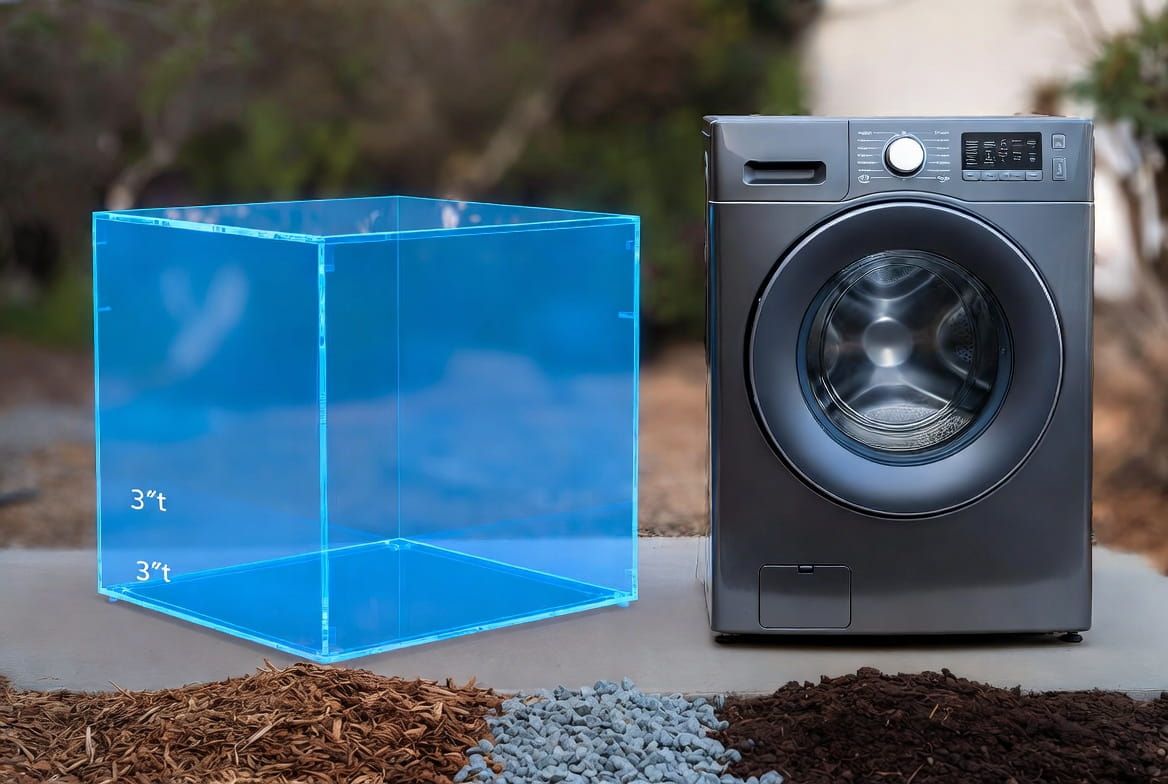
Have you ever stood in your backyard, staring at a pile of mulch or a truckload of topsoil, and wondered, “How long is a cubic yard, anyway?” It’s a question that pops up all the time for homeowners tackling landscaping projects, DIYers pouring concrete, or anyone ordering bulk materials. The short answer? A cubic yard isn’t about length—it’s a measure of volume. But that simple cube of space turns out to be one of the most practical units you’ll ever use around the house or job site.
In this guide, we’ll unpack everything clearly and conversationally so you can order the right amount of material without guesswork or costly mistakes. Whether you’re asking “what is a cubic yard,” “what are the dimensions of a cubic yard,” or “how to measure for cubic yards,” we’ve got you covered with straightforward explanations, real-world examples, and step-by-step calculations. By the end, you’ll feel confident tackling your next project—and your content will align perfectly with how people actually search today.
What Is a Cubic Yard?
A cubic yard is a standard unit of volume in the imperial (U.S.) system. It represents the space inside a cube that measures one yard in length, width, and height.
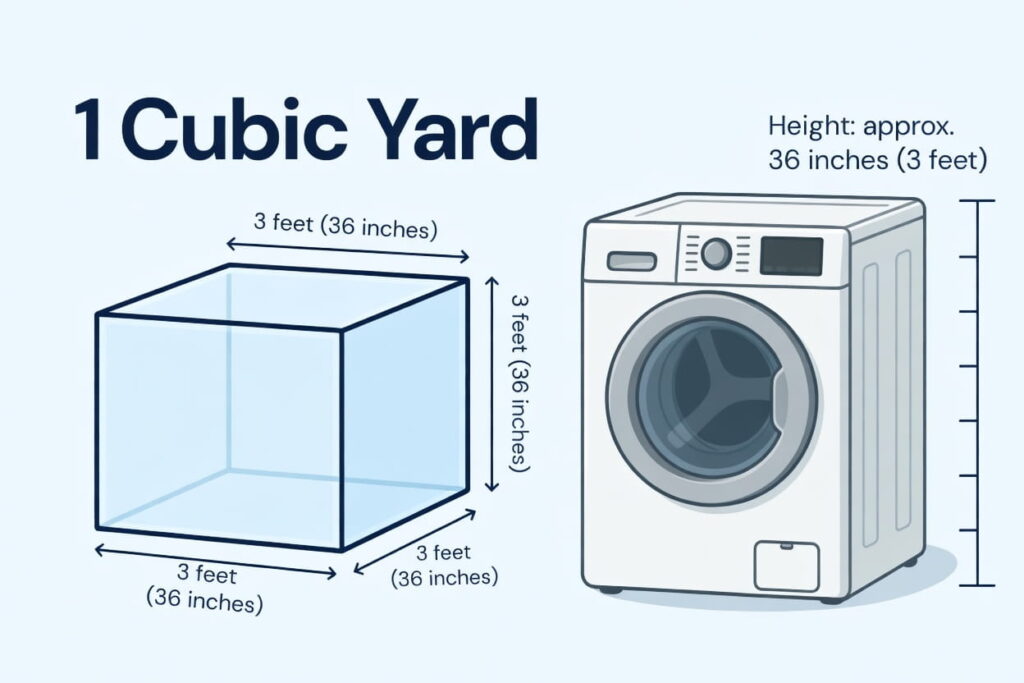
Since 1 yard = 3 feet, one cubic yard equals a 3 ft × 3 ft × 3 ft cube. That’s exactly 27 cubic feet of material.
What is a cubic yard measurement? It’s pure volume — not weight. The same cubic yard of dry mulch weighs far less than the same volume of wet concrete. Suppliers sell bulk materials by volume (cubic yards) because it’s consistent regardless of material type.
This unit has been the go-to in construction and landscaping for decades because it’s practical for large quantities. One cubic yard is big enough to matter but small enough to visualize.
What Are the Dimensions of a Cubic Yard?
How Long Is a Cubic Yard? The Complete Guide to Volume, Measurements, and Real-World Use
Here’s the simple answer to what the dimensions of a cubic yard:
- Length: 3 feet (36 inches)
- Width: 3 feet (36 inches)
- Height: 3 feet (36 inches)
Visualize it as a large household appliance — roughly the size of a standard washing machine or three stacked kitchen trash cans.
A full-size pickup truck bed (typically 8 feet long) holds about 2 to 3 cubic yards when loaded level. That mental picture helps when suppliers quote “five yards” — you can picture five washing-machine-sized piles.
Why Cubic Yards Matter When You Rent a Dumpster
When it’s time to clean out your garage, renovate your home, or tackle a big landscaping project, one of the most important decisions you’ll make is what size dumpster to rent. And that decision almost always comes down to cubic yards.
Dumpster rental companies size and price their containers based on cubic yard capacity. Understanding what a cubic yard is and how to measure for cubic yards helps you choose the right dumpster — so you don’t pay for space you don’t need or run out of room halfway through your project.
Common Dumpster Sizes (in Cubic Yards)
| Dumpster Size | Best For | Approximate Dimensions (L x W x H) | Holds Roughly |
|---|---|---|---|
| 10 Yard | Small cleanouts, minor renovations | 12 ft x 8 ft x 4 ft | 1–2 rooms |
| 15 Yard | Kitchen or bathroom remodels | 14 ft x 8 ft x 4.5 ft | 3–4 rooms |
| 20 Yard | Medium home cleanouts | 16 ft x 8 ft x 5 ft | Garage + basement |
| 30 Yard | Major renovations, roofing | 20 ft x 8 ft x 6 ft | Whole house projects |
| 40 Yard | Large construction or demolition | 22 ft x 8 ft x 8 ft | Commercial jobs |
Why Cubic Yards Make a Big Difference
- Cost Control: A 20-yard dumpster usually costs significantly less than a 30-yard one. If you only need 18 cubic yards but rent a 30-yard container, you’re overpaying for unused space.
- Space Efficiency: Knowing the dimensions of a cubic yard helps you estimate how much debris you’ll actually generate. One cubic yard is roughly the size of a washing machine — so 20 cubic yards equals about 20 washing machines worth of material.
- Avoiding Overflows: Most rental companies charge extra fees if your dumpster goes over the fill line. Accurate estimation using cubic yard measurement prevents surprise charges.
- Weight Limits: Heavier materials (concrete, dirt, brick) often have weight restrictions even in large dumpsters. Understanding volume helps you combine it with weight awareness.
Pro Tip for Estimating Dumpster Size
Use this simple method:
- Measure the length, width, and height of the pile of waste you expect (in feet).
- Multiply: Length × Width × Height = cubic feet.
- Divide by 27 → cubic yards.
- Add 20–30% extra space for easy loading and safety.
For example, a standard single-car garage cleanout usually needs a 15–20 yard dumpster. A full house renovation often requires a 30–40 yard dumpster.
How Much Does 1 Cubic Yard Weigh?
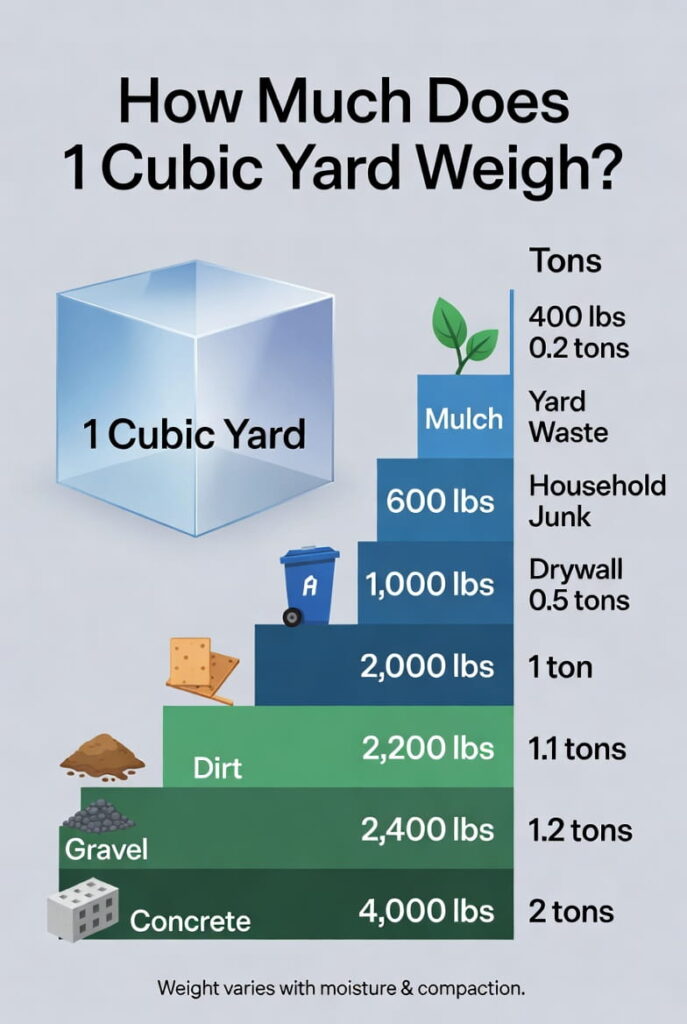
Before you rent a dumpster or order materials, you need to know this important fact: volume and weight are not the same. One cubic yard of material can weigh anywhere from 400 pounds to over 4,000 pounds depending on what it is.
This is critical when renting a dumpster because most companies set both volume limits (cubic yards) and weight limits (tons). Filling a dumpster with heavy material like concrete can reach the weight limit long before you reach the volume limit — and that means extra fees.
Here’s what 1 cubic yard typically weighs for common materials:
| Material Type | Weight (Pounds) | Weight (Tons) | Notes |
|---|---|---|---|
| Mulch (dry shredded) | 400 – 750 lbs | 0.2 – 0.38 tons | Lightweight, fluffy |
| Yard Waste / Leaves | 350 – 700 lbs | 0.18 – 0.35 tons | Very light when dry |
| Household Junk / Trash | 450 – 800 lbs | 0.23 – 0.4 tons | Mixed furniture, boxes |
| Drywall / Sheetrock | 750 – 1,100 lbs | 0.38 – 0.55 tons | Broken pieces |
| Topsoil / Dirt (dry) | 1,800 – 2,200 lbs | 0.9 – 1.1 tons | Common for landscaping |
| Gravel / Crushed Stone | 2,500 – 2,900 lbs | 1.25 – 1.45 tons | Driveway base material |
| Sand | 2,600 – 2,900 lbs | 1.3 – 1.45 tons | Wet sand is heavier |
| Concrete (broken) | 3,600 – 4,200 lbs | 1.8 – 2.1 tons | Heaviest common debris |
Pro Tip: Always check with your local dumpster rental company for their exact weight limits. Many 20-yard dumpsters have a 4–6 ton maximum weight allowance.
Understanding these weights helps you avoid surprise overage fees and choose the perfect dumpster size for your project
What Is the Size of a Cubic Yard? Real-World Comparisons
What is the size of a cubic yard in everyday terms?
- Covers 100–108 square feet at a 3-inch depth (perfect for mulch).
- Covers 81 square feet at 4 inches deep.
- Covers 162 square feet at 2 inches deep.
For concrete or gravel, it fills a perfect 3×3×3 space with no gaps. Think of it as 27 one-foot cubes stacked together.
Pro comparison: One cubic yard is roughly the volume of a large refrigerator or the amount of material that fits in half a standard pickup truck bed.
These visuals make ordering less intimidating and help you plan better.
Weights of Common Materials Per Cubic Yard
Volume stays the same, but weight changes dramatically:
| Material | Approximate Weight per Cubic Yard | Notes |
|---|---|---|
| Mulch (dry/shredded) | 400–800 lbs | Varies with moisture |
| Topsoil (loose) | 2,000–2,200 lbs | Dry conditions |
| Topsoil (wet/packed) | 2,500–3,400 lbs | After rain |
| Gravel (dry 3/4″) | 2,565–2,800 lbs | Common driveway base |
| Sand (dry) | 2,700–2,800 lbs | Play sand or mason sand |
| Concrete (mixed) | 3,700–4,050 lbs | Ready-mix average |
| Crushed Stone | 2,700 lbs | Standard |
What Is a Cubic Yard Measurement? Key Conversions You’ll Use
Understanding cubic yard measurement means knowing how it relates to other units. Here are the most common conversions:
- 1 cubic yard = 27 cubic feet
- 1 cubic yard = 46,656 cubic inches
- 1 cubic yard = 0.7646 cubic meters (handy if you’re working with metric plans)
- 1 cubic yard = 202 gallons (approximately, for liquid equivalents)
Pro tip: When suppliers talk in cubic feet but you think in yards, just divide by 27. It’s the magic number that keeps everything consistent.
How to Measure for Cubic Yards: A Simple Step-by-Step Guide
This is where most people get stuck—and where clear instructions pay off. Here’s exactly how to measure for cubic yards, whether your project is a simple rectangle or an irregular shape.
Step 1: Measure in feet
Take the length, width, and depth (or height) of the space you want to fill. Convert inches to feet by dividing by 12.
Step 2: Multiply by cubic feet
Length × Width × Depth = total cubic feet.
Step 3: Convert to cubic yards
Divide that number by 27.
Example: Rectangular garden bed
Your bed is 12 feet long, 6 feet wide, and you want 4 inches (0.333 feet) of mulch. 12 × 6 × 0.333 = 24 cubic feet. 24 ÷ 27 ≈ 0.89 cubic yards. Round up to 1 cubic yard, and you’re safe.
For circular areas (like around a tree): Measure the radius, square it, multiply by π (3.14), then multiply by depth in feet, and divide by 27.
For the most accurate calculations, use trusted tools like the Cubic Yards Calculator from CalculatorSoup.
Irregular shapes
Break them into smaller rectangles or circles, calculate each, and add them up.
Always add 5–10% extra for waste, settling, or uneven ground—especially with mulch or soil. Concrete pros often add 5–10% for spillage.
Online calculators from trusted sites like CalculatorSoup or Inch Calculator make this even easier—just plug in your numbers.
Practical Applications: When Cubic Yards Matter Most
You’ll run into cubic yard measurements in everyday projects:
- Landscaping: Mulch, topsoil, compost.
- Hardscaping: Gravel for paths, sand for pavers.
- Construction: Concrete slabs, driveways, and footings. If you’re working with concrete, the experts at Concrete Network offer an excellent project calculator with built-in waste factors.
- Waste management: Dumpster rentals (many are sized in cubic yards).
- Gardening: Raised beds or filling planters.
Knowing what a cubic yard measurement is keeps your budget tight and your project on schedule. Order too little, and you’ll make extra trips; order too much, and you’re paying for unused material.
Common Mistakes to Avoid When Calculating Cubic Yards
Even seasoned DIYers slip up. Here are the big ones:
- Forgetting to divide by 27 (leaving you with cubic feet instead).
- Measuring depth in inches but forgetting to convert to feet.
- Ignoring slopes or curves—always break irregular areas into simpler shapes.
- Skipping the extra percentage for compaction or waste.
- Confusing square yards with cubic yards (one is area, the other is volume).
-
Hire a professional company for fast and reliable junk removal services.
Double-check your math twice, and consider using a free online tool for peace of mind.
Conclusion
Understanding How Long Is a Cubic Yard? isn’t really about length — it’s about gaining control over your projects. That simple 3 ft × 3 ft × 3 ft space (27 cubic feet) might look small on paper, but it’s the difference between a weekend well spent and an expensive headache.
The real value comes when you stop guessing and start measuring with confidence. Whether you’re calculating what a cubic yard is, figuring out the dimensions of a cubic yard, or learning how to measure for cubic yards for your next mulch, gravel, concrete, or soil delivery, this knowledge saves you time, money, and frustration. One wrong order can cost you hundreds of dollars and wasted hours. One accurate calculation can turn a stressful project into a smooth, satisfying success.
FAQS
What is a cubic yard?
It’s the volume of a 3 ft × 3 ft × 3 ft cube—exactly 27 cubic feet of space.
What is the measurement of a cubic yard?
One yard (3 feet) in length, width, and height. It equals 27 cubic feet or about 0.76 cubic meters.
What is the size of a cubic yard?
Roughly the size of a washing machine or three trash cans side-by-side. It covers 100–108 square feet at a 3-inch depth for mulch.
What are the dimensions of a cubic yard?
3 feet long × 3 feet wide × 3 feet high.
How to measure for cubic yards?
Measure length, width, and depth in feet, multiply them, then divide by 27. Add 5–10% extra.
How many cubic feet are in a cubic yard?
Exactly 27.
How much does a cubic yard of mulch weigh?
Usually 400–800 pounds, depending on moisture and type (dry shredded hardwood is lighter).
Will one cubic yard fit in my pickup truck?
Most standard pickup beds hold 2–3 cubic yards when filled to the level.
What is a cubic yard measurement used for?
Bulk materials like concrete, soil, gravel, and mulch in construction and landscaping.
Do I need to round up when ordering?
Yes—always round up slightly and add for waste to avoid short orders.